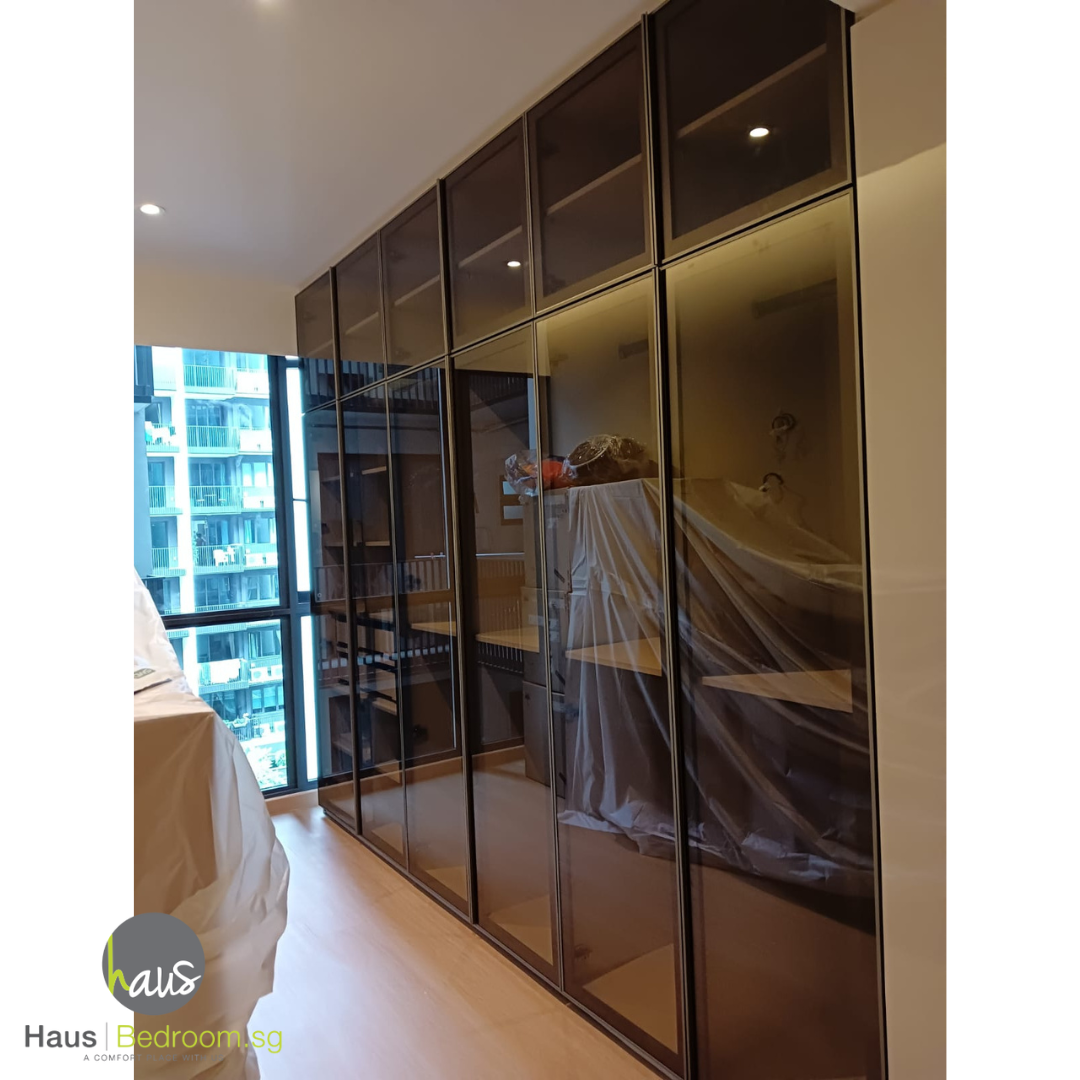
Most kitchen cabinets in Singapore fail the same way. Water gets into the board under the sink, the panel swells, the laminate lifts, and a few years later termites find it. The layout was fine. The material was the problem.
This guide compares the three cabinet materials Singapore homeowners usually choose between, aluminium, stainless steel and plywood, and shows what to check before you buy an aluminium kitchen. HausBedroom has been building cabinets in Singapore since 2012, including our own laser-welded aluminium line, HausAluminium.
Key takeaways
- Aluminium suits most Singapore kitchens: moisture-resistant, termite-proof, and typically lasting 15–25 years in wet zones.
- Plywood costs less and has the widest range of finishes, but needs good sealing and ventilation to avoid swelling and termites.
- Stainless steel handles heavy wok cooking and heat best, but is heavy, costly and looks only metallic.
- Not all aluminium is equal. Look for laser-welded panels rather than honeycomb panels, and check what the doors are made of.
- Formaldehyde-free only with welded aluminium doors. WPC laminated doors cost less but are not formaldehyde-free.
Contents
- Why material matters in a Singapore kitchen
- Aluminium vs stainless steel vs plywood
- How HausAluminium is built
- Plywood: pros and cons
- Stainless steel: when it's worth it
- Who should choose which
- How to choose a good aluminium cabinet
- Design ideas with aluminium
- Cost over the life of your kitchen
- Beyond the kitchen: shoe and balcony cabinets
- Maintenance and care
- FAQs
1. Why Material Matters in a Singapore Kitchen
Three things wear kitchen cabinets out in Singapore:
- Humidity and water. Year-round humidity, plus daily spills around the sink and dishwasher. Wood-based boards absorb moisture at exposed edges and around cut-outs, then swell or delaminate.
- Termites. A constant risk in Singapore homes, and they attack wood-based cabinets from the inside, often unseen until the damage is done.
- Heat. Hobs and ovens put sustained heat on nearby cabinets, which can scorch laminate edges over time.
Aluminium deals with all three. It is moisture-resistant and won't rot or swell, termites can't damage it, and an aluminium carcass won't burn or deform under normal kitchen heat.
2. Aluminium vs Stainless Steel vs Plywood
| Aluminium | Stainless steel | Plywood with laminate | |
|---|---|---|---|
| Moisture | Moisture-resistant; won't swell or rust | Moisture-resistant; surface can mark or corrode if scratched | Can swell or delaminate if water gets in |
| Termites | Cannot be damaged | Cannot be damaged | Vulnerable |
| Heat | Carcass won't burn or deform | Best heat resistance | Laminate edges can scorch near hobs |
| Formaldehyde | Free with welded aluminium doors; WPC doors are not | None in the steel itself | Depends on board grade (E1 to ENF) |
| Look | Powder-coated colours; laminate finishes on WPC doors | Metallic only | Widest range, including natural wood looks |
| Weight | Light | Heavy; needs strong wall support | Moderate |
| Typical lifespan | 15–25 years in wet zones | Long-lasting with care | Around 10–15 years, depending on sealing and ventilation |
| Cost | $$ mid-range | $$$ premium | $–$$ budget to mid |
For more on board grades, see our guide to formaldehyde in cabinets: E0, E1 and ENF.
3. How HausAluminium Is Built
HausAluminium cabinets start with a laser-welded aluminium carcass, finished in powder coat. The panels are welded into one solid piece rather than screwed or glued together.
Laser-welded, not honeycomb. Some aluminium cabinets use honeycomb panels: a lightweight core sandwiched between thin aluminium sheets. We use laser-welded panels instead, because they make the cabinet more rigid and noticeably more solid to the touch.
Each shelf is rated for 30 kg. You then choose how the doors, and the rest of the kitchen, are built. Here are three options, each from a real HausBedroom kitchen.
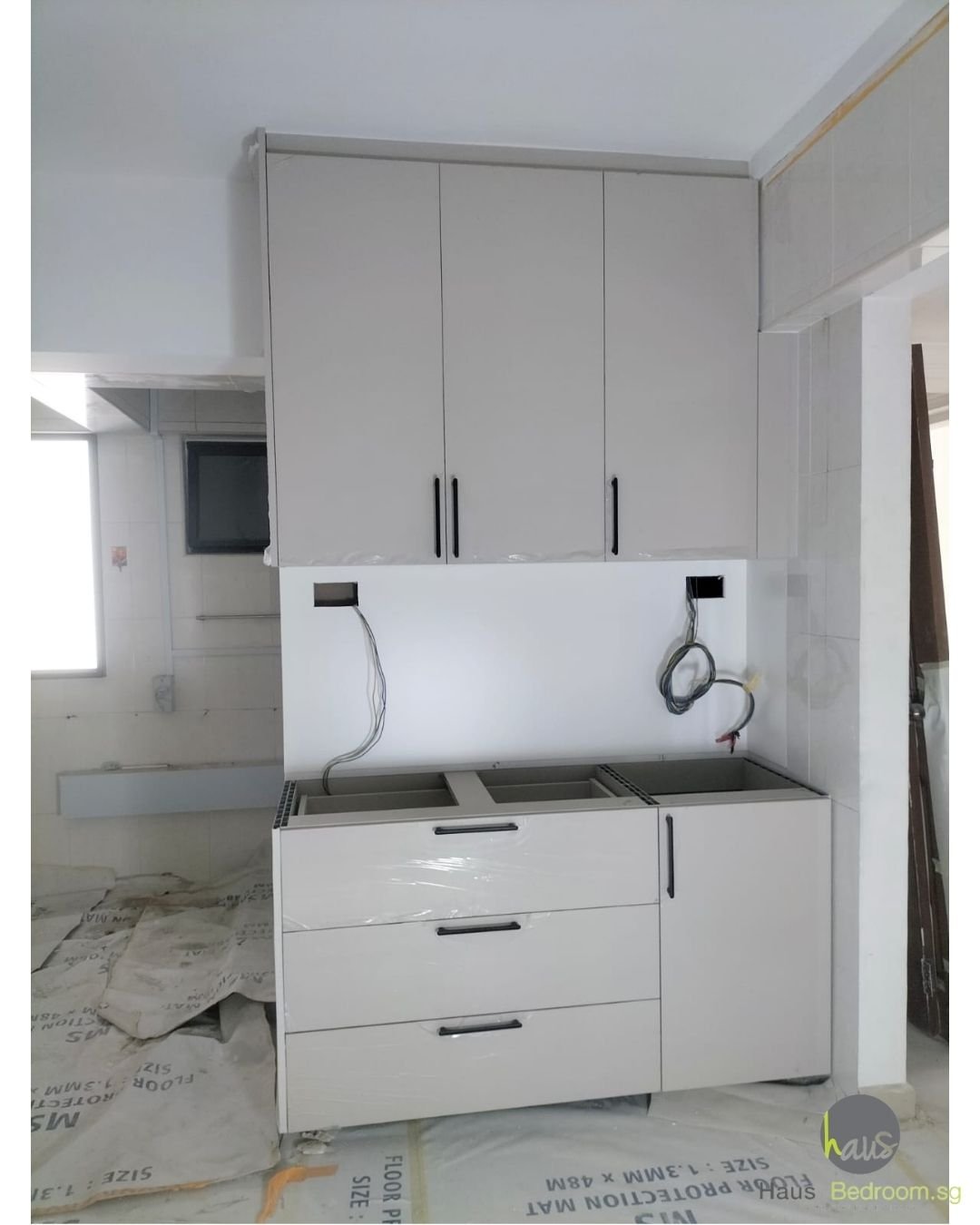
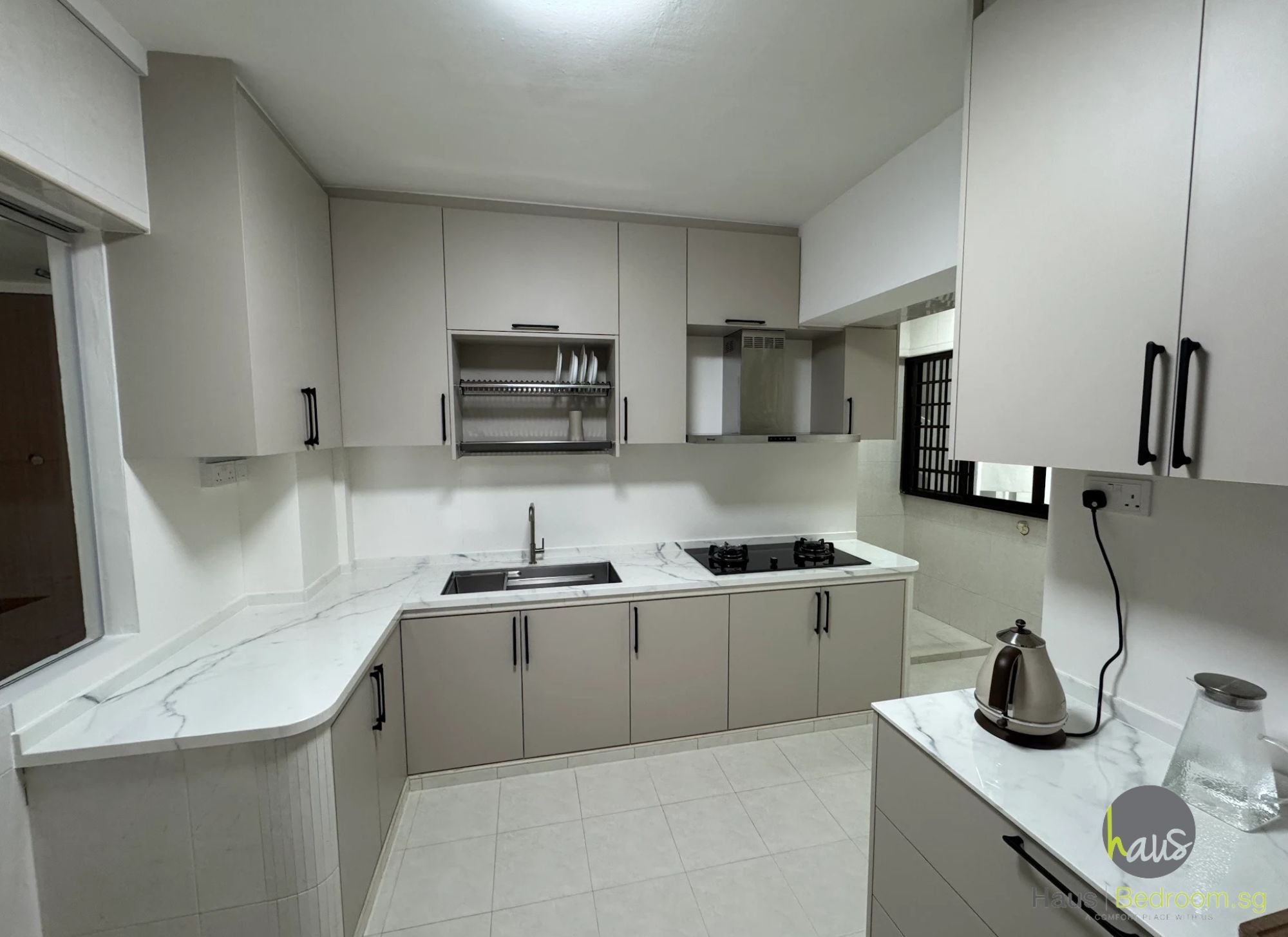
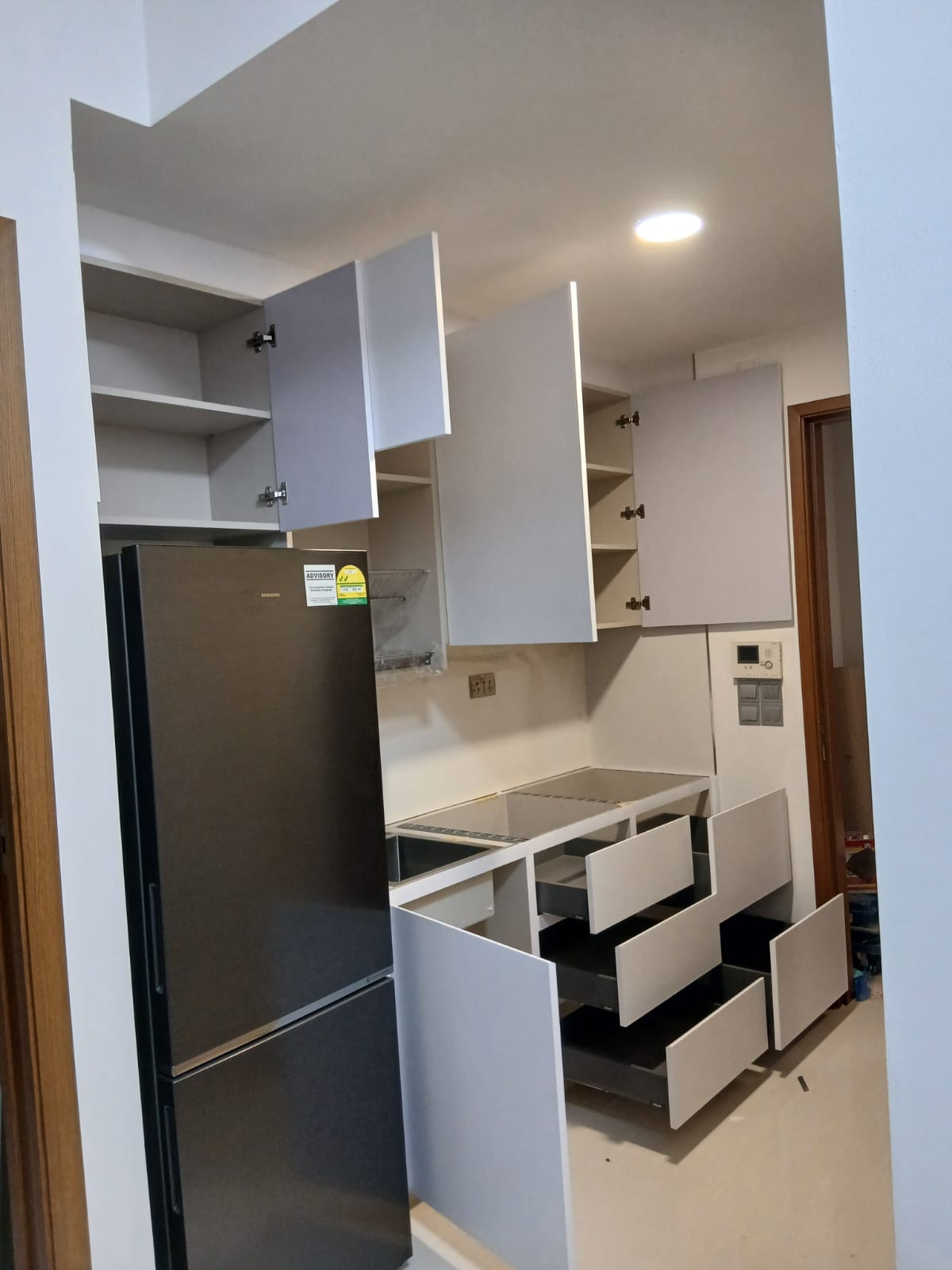
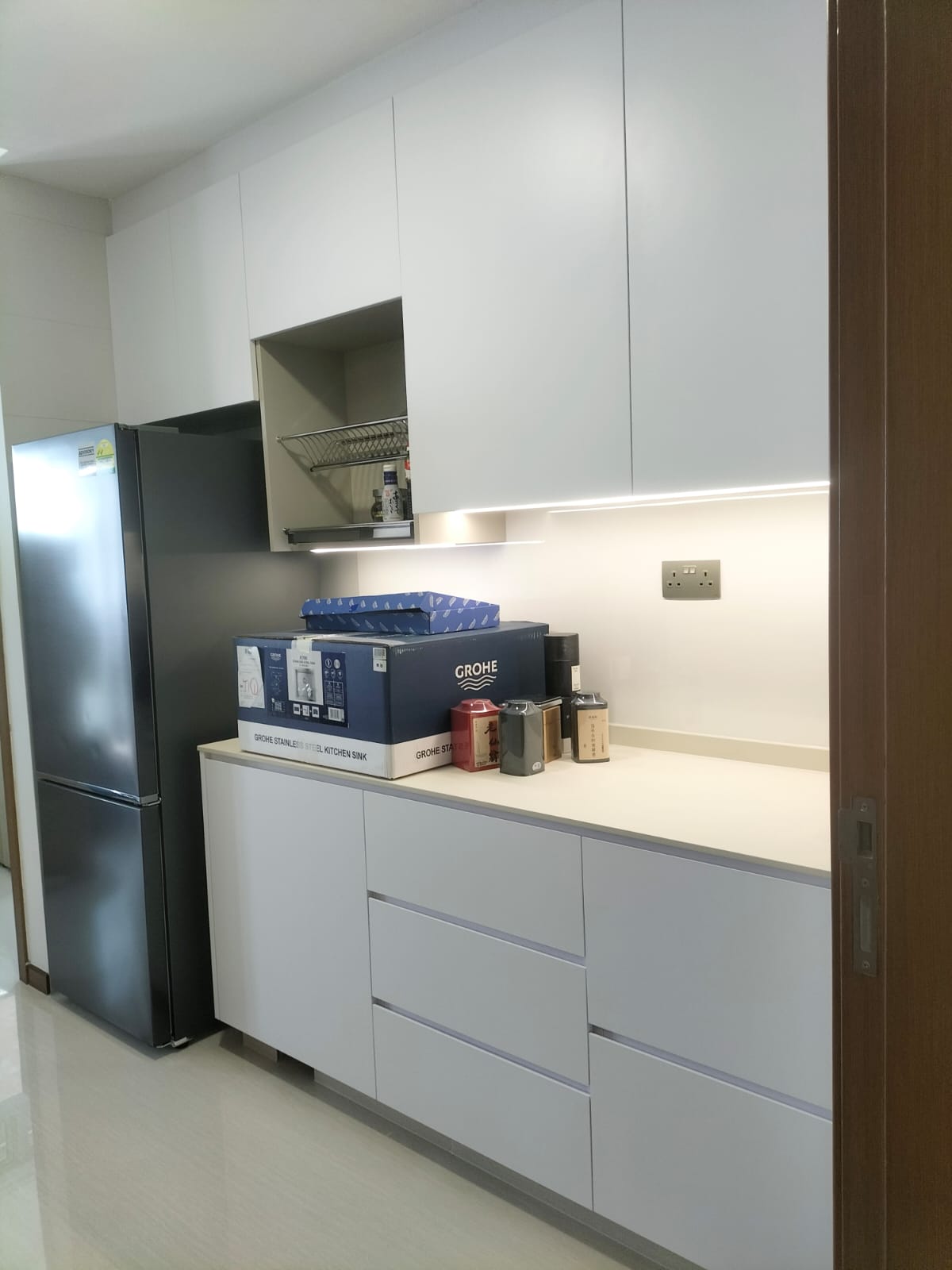
Option 1: Full aluminium (welded carcass and welded doors)
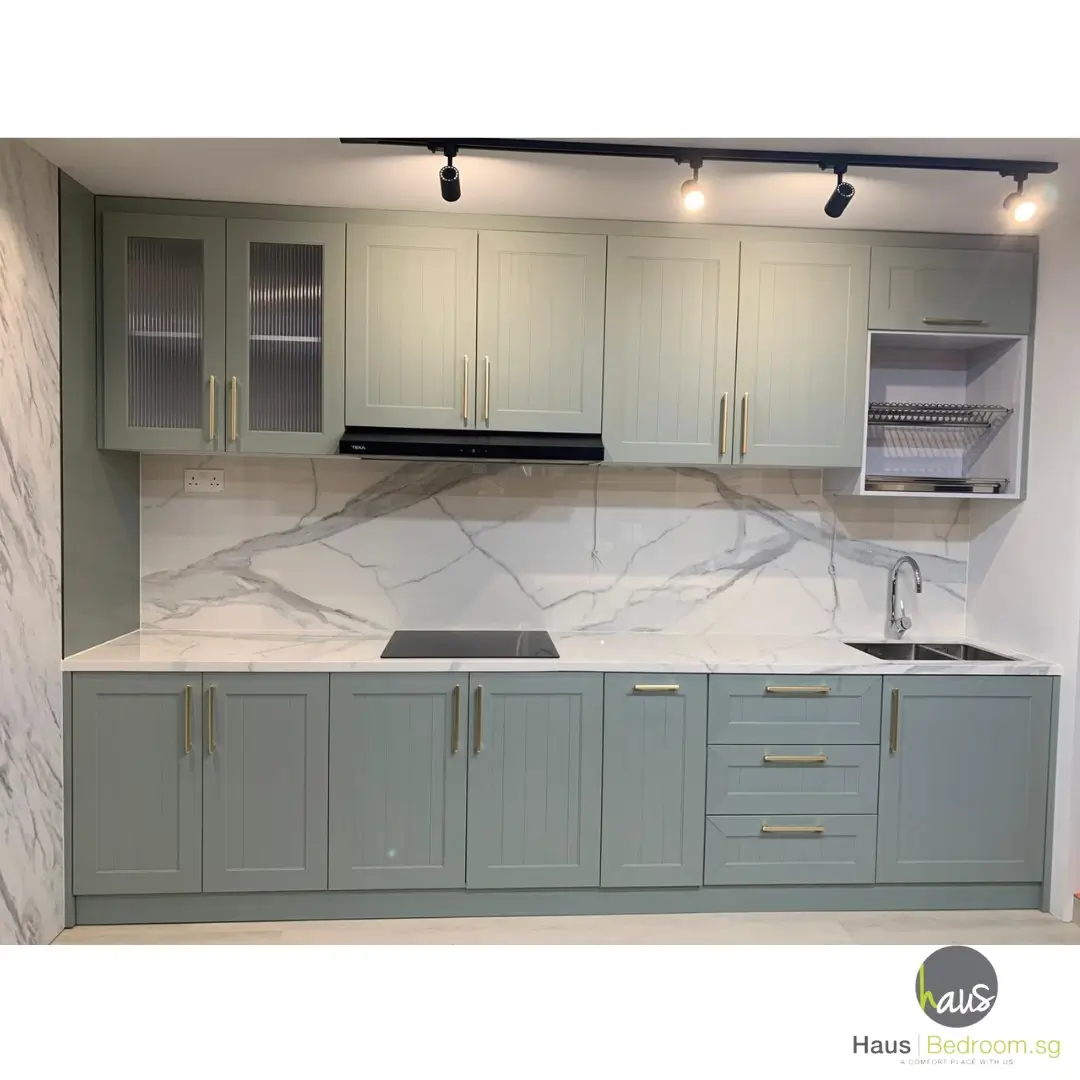
Carcass and door panels are both laser-welded aluminium. This is the fully formaldehyde-free option, and the most durable in wet areas. The kitchen below is in an HDB flat in Choa Chu Kang.
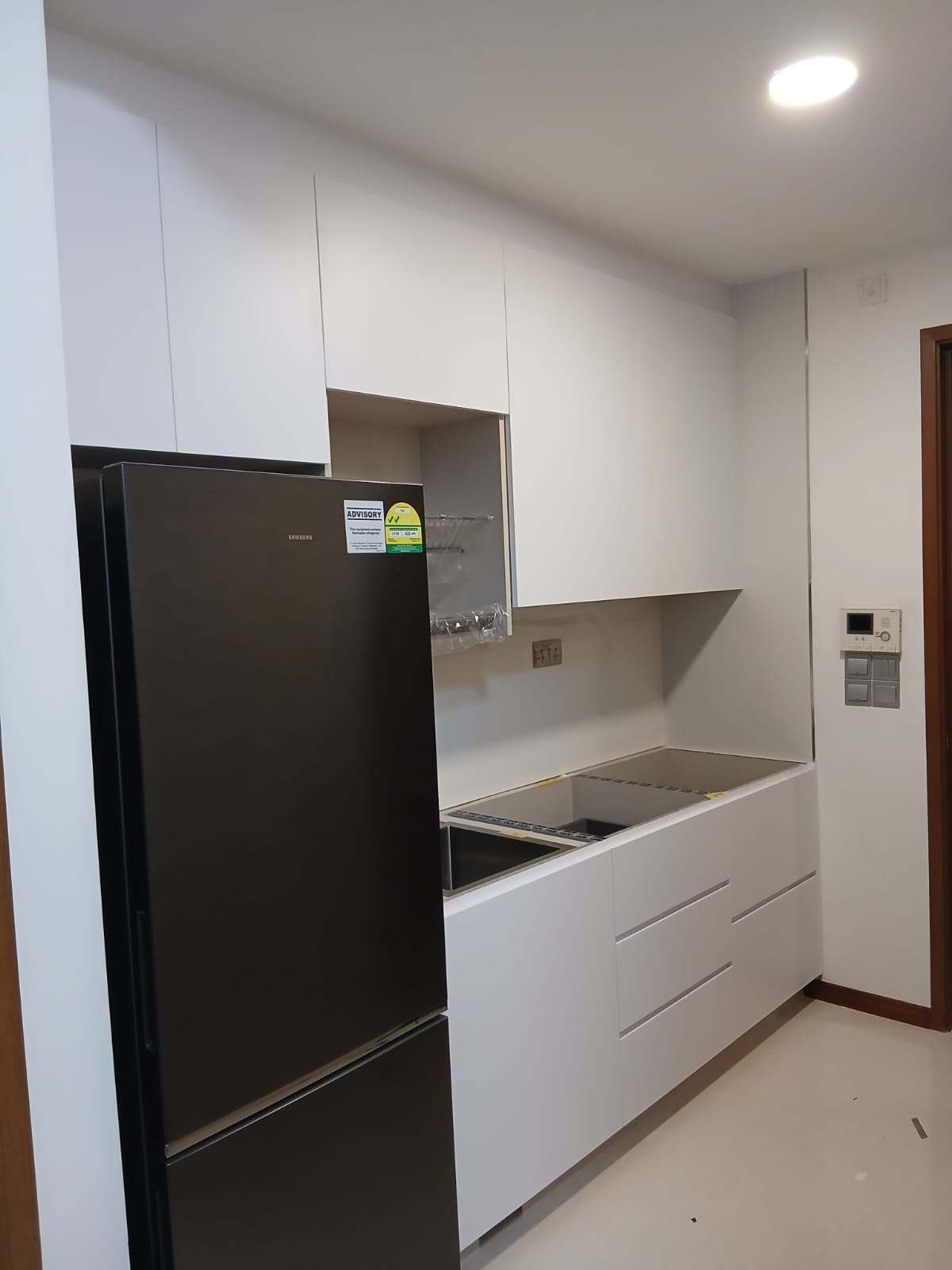
Option 2: Welded carcass with WPC laminated doors
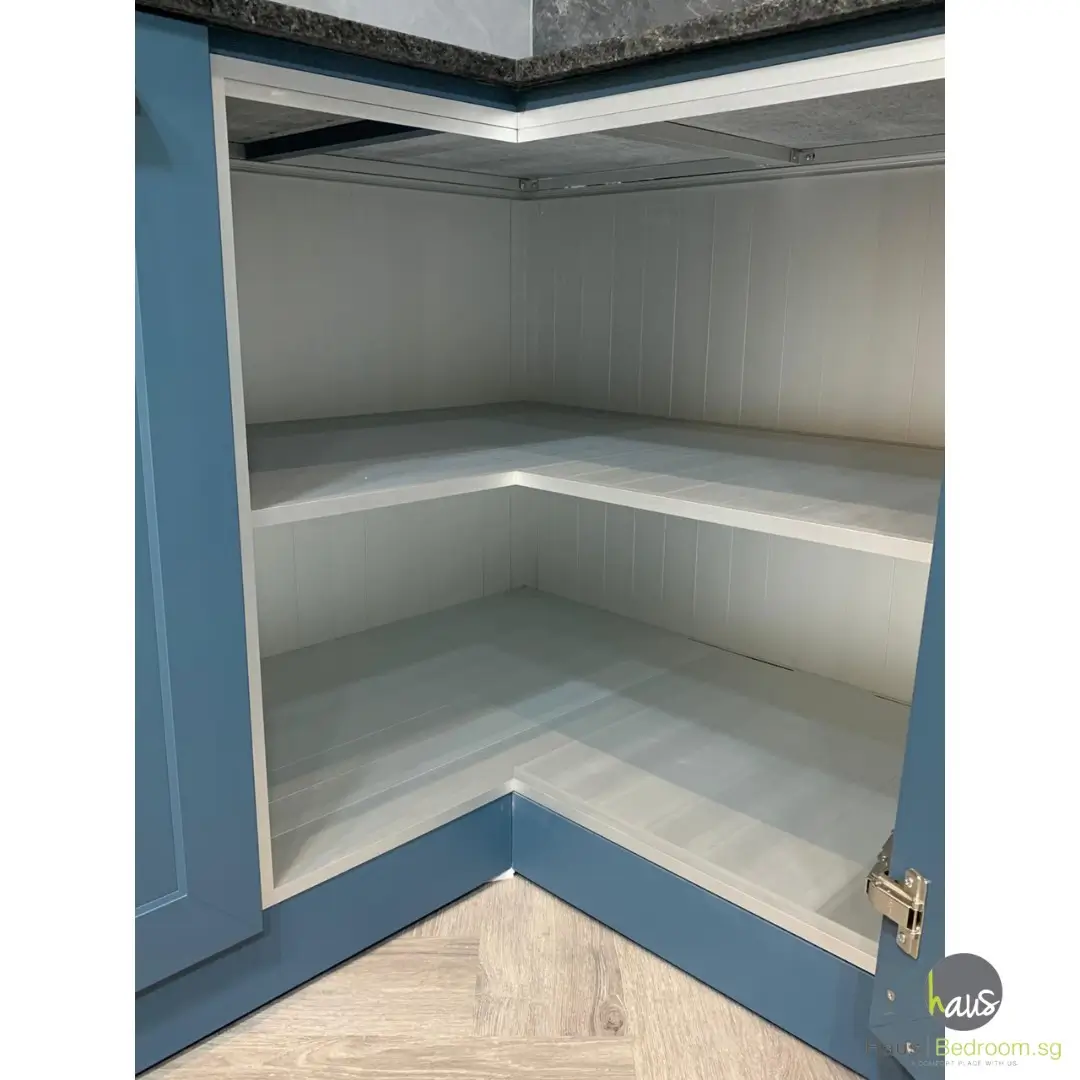
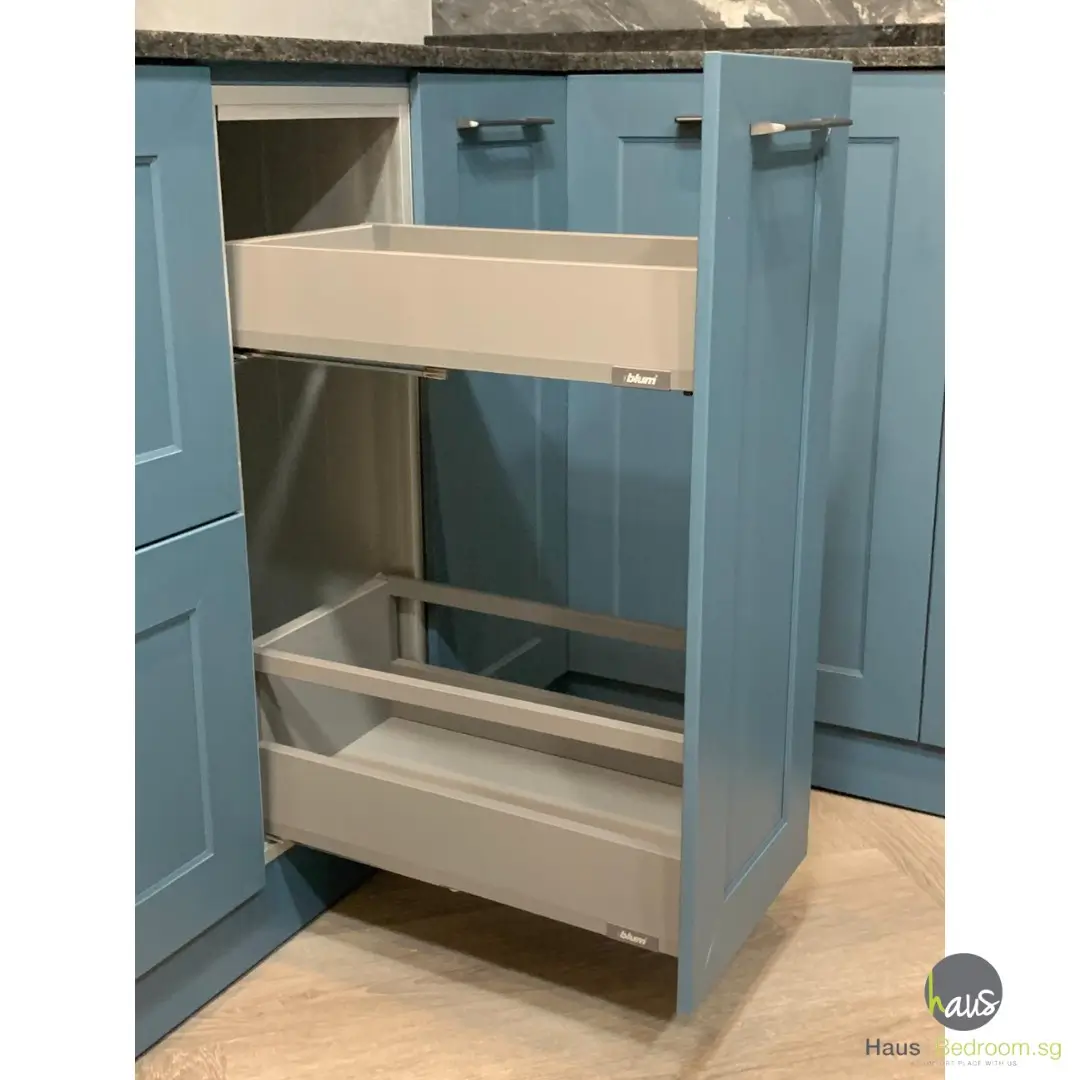
The same laser-welded aluminium carcass, with WPC doors finished in laminate. It costs less and gives you more laminate finishes, including woodgrain, with the same wet-zone durability. The WPC doors are not formaldehyde-free. The kitchen below is in a condo in Geylang, fitted with Blum Merivobox drawers and Blum hinges.
Option 3: Hybrid (aluminium where the water is)
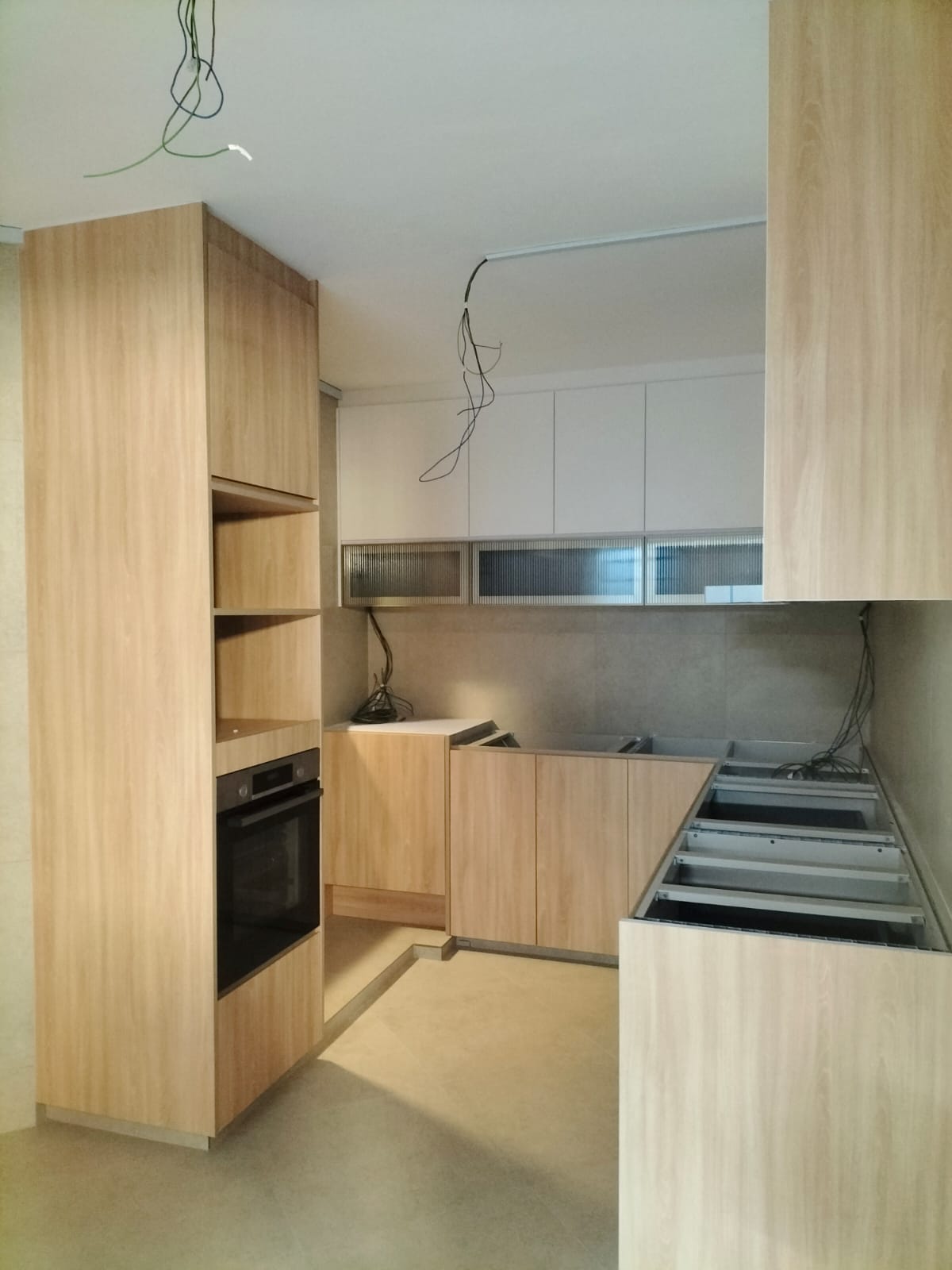
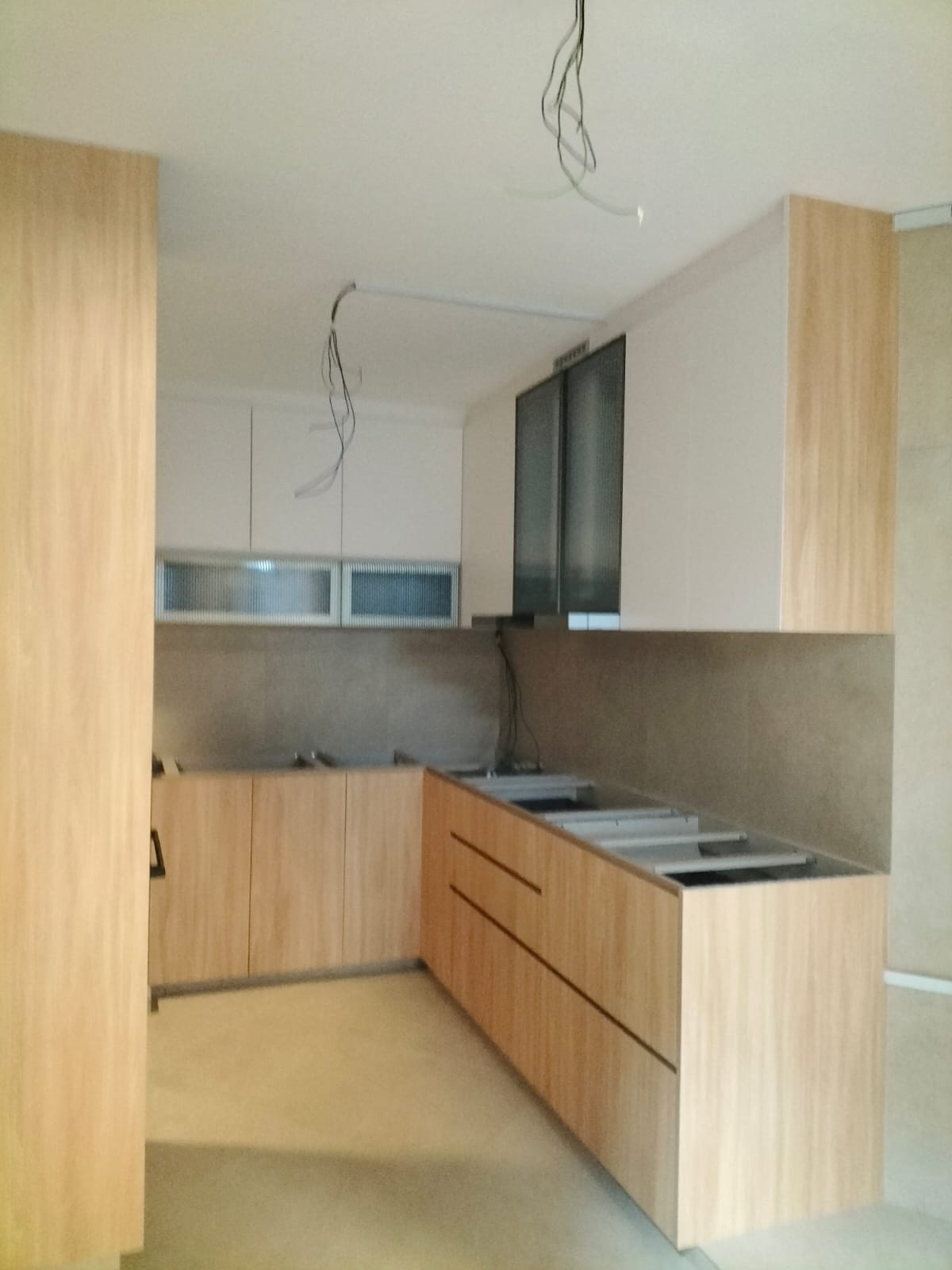
If budget is tight, put aluminium where it matters most. In this resale HDB kitchen in Sengkang, the base cabinets around the sink and hob are a laser-welded aluminium carcass with WPC laminated doors, while the wall cabinets above, which stay dry, are plywood. Some of the doors are aluminium-framed with fluted glass.
All three options take the same fittings: soft-close hinges, drawer runners and pull-out systems.
4. Plywood Kitchen Cabinets: Pros and Cons
Plywood with a laminate finish is still the most common choice in Singapore kitchens, mainly for cost and looks.
- Pros: lowest cost, the widest range of finishes including natural wood looks, easy to customise and repair.
- Cons: can swell or delaminate if water gets past the edges, vulnerable to termites, and formaldehyde levels depend on the board grade.
If you go with plywood, choose a good board grade, make sure every edge is sealed, especially around the sink, and keep the area ventilated. Our custom kitchen carpentry page covers the options.


5. Stainless Steel: When It's Worth It
Stainless steel is the standard in commercial kitchens, and it has a place at home too.
- Choose it if: you do frequent high-heat wok cooking, or you want an industrial look.
- Drawbacks: heavy, so it needs strong wall support; premium pricing; metallic finish only; shows fingerprints and dents; doors can be noisy.
6. Who Should Choose Which
| If you are… | Consider |
|---|---|
| A busy family in an HDB or BTO kitchen | Aluminium |
| Working to a tight budget | Plywood, well sealed, with a good board grade |
| Wanting aluminium but watching the budget | Hybrid: aluminium base cabinets, plywood wall cabinets |
| Cooking with a wok at high heat every day | Stainless steel |
| After a specific look in a condo kitchen | Aluminium with WPC laminated doors, or plywood |
| Replacing a wooden kitchen damaged by water or termites | Aluminium |
7. How to Choose a Good Aluminium Cabinet
Aluminium cabinets vary a lot in quality. Check these five things before you commit:
- Panel construction. Ask whether the panels are laser-welded or honeycomb. Laser-welded panels are more rigid and feel more solid. Panel thickness matters too: thicker panels flex less.
- Frame and structure. The carcass carries everything you put in it. Ask what each shelf is rated for, and how the cabinets are fixed to the wall.
- Doors. Find out what the doors are made of. Welded aluminium doors are formaldehyde-free; WPC or board doors are not, even on an aluminium carcass.
- Hardware. Hinges, runners and pull-outs get used every day. Choose soft-close fittings from a reputable brand.
- Customisation and installation. A kitchen built to your exact layout, with pull-out larders and corner units, uses every centimetre. Have it measured and installed by a team that specialises in aluminium cabinets.
8. Design Ideas With Aluminium
Aluminium no longer means a cold, utilitarian look. Three directions that work well:
- Modern minimalist. Handleless doors in a matte powder-coat, neutral colours and clean lines.
- Industrial. Dark powder-coated cabinets paired with wood accents and metal fittings.
- Scandinavian. White aluminium cabinets with woodgrain WPC doors or wood accents, and plenty of natural light.
9. Cost Over the Life of Your Kitchen
Aluminium usually costs more upfront than plywood. Over the life of the kitchen, the gap narrows: you won't be replacing termite-damaged carcasses or swollen panels under the sink.
To bring the upfront cost down, you have two levers: choose WPC laminated doors instead of welded aluminium doors, or go hybrid, with aluminium for the base cabinets where water and termites do the damage and plywood for the dry wall cabinets above.
If you're replacing a wooden kitchen, note that aluminium can't be fitted over existing wooden carcasses. We remove the old kitchen and install new aluminium cabinets in its place.
10. Beyond the Kitchen: Shoe and Balcony Cabinets
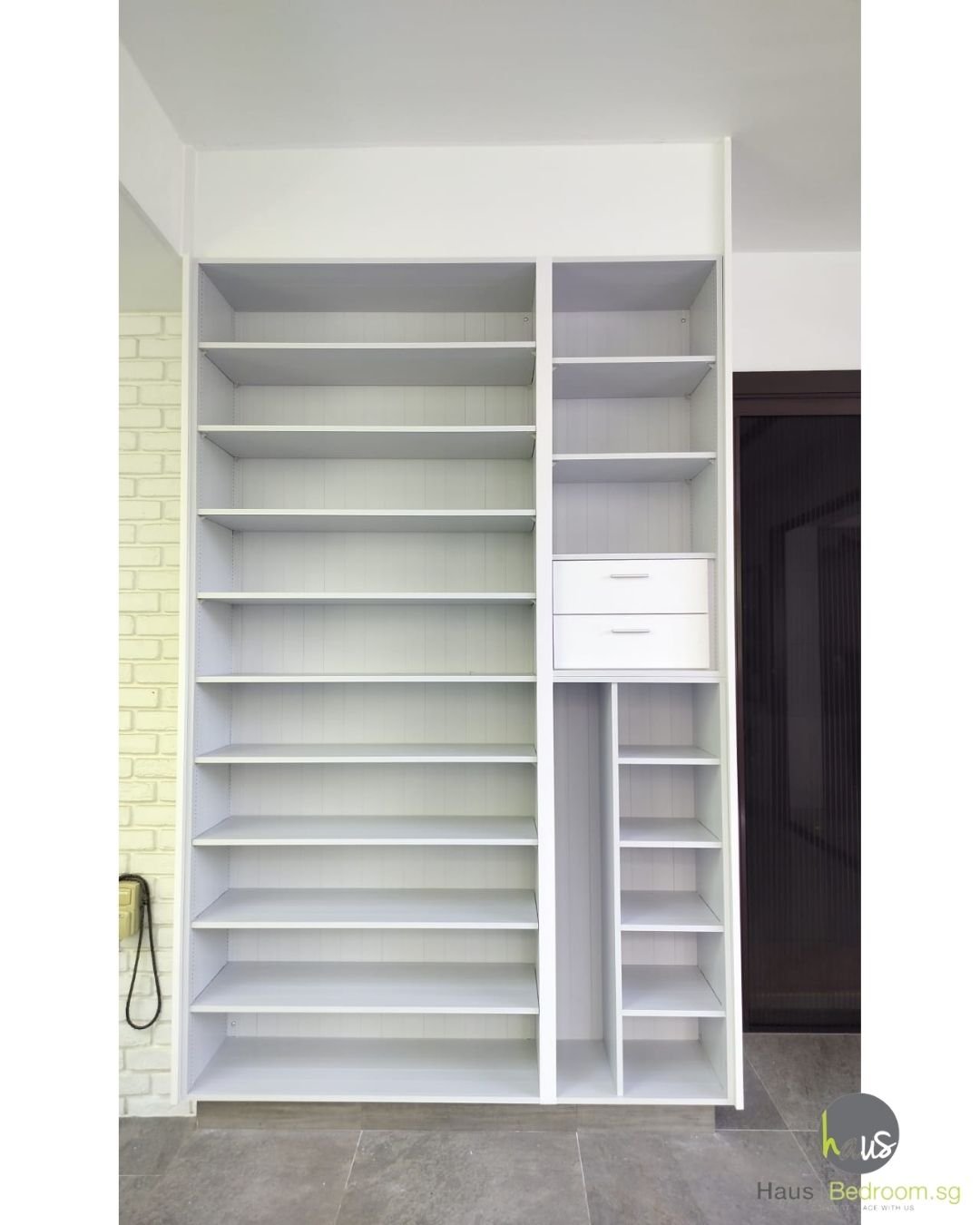
The same laser-welded, powder-coated construction works anywhere that wood would struggle with moisture. See also our bathroom and service yard cabinets.
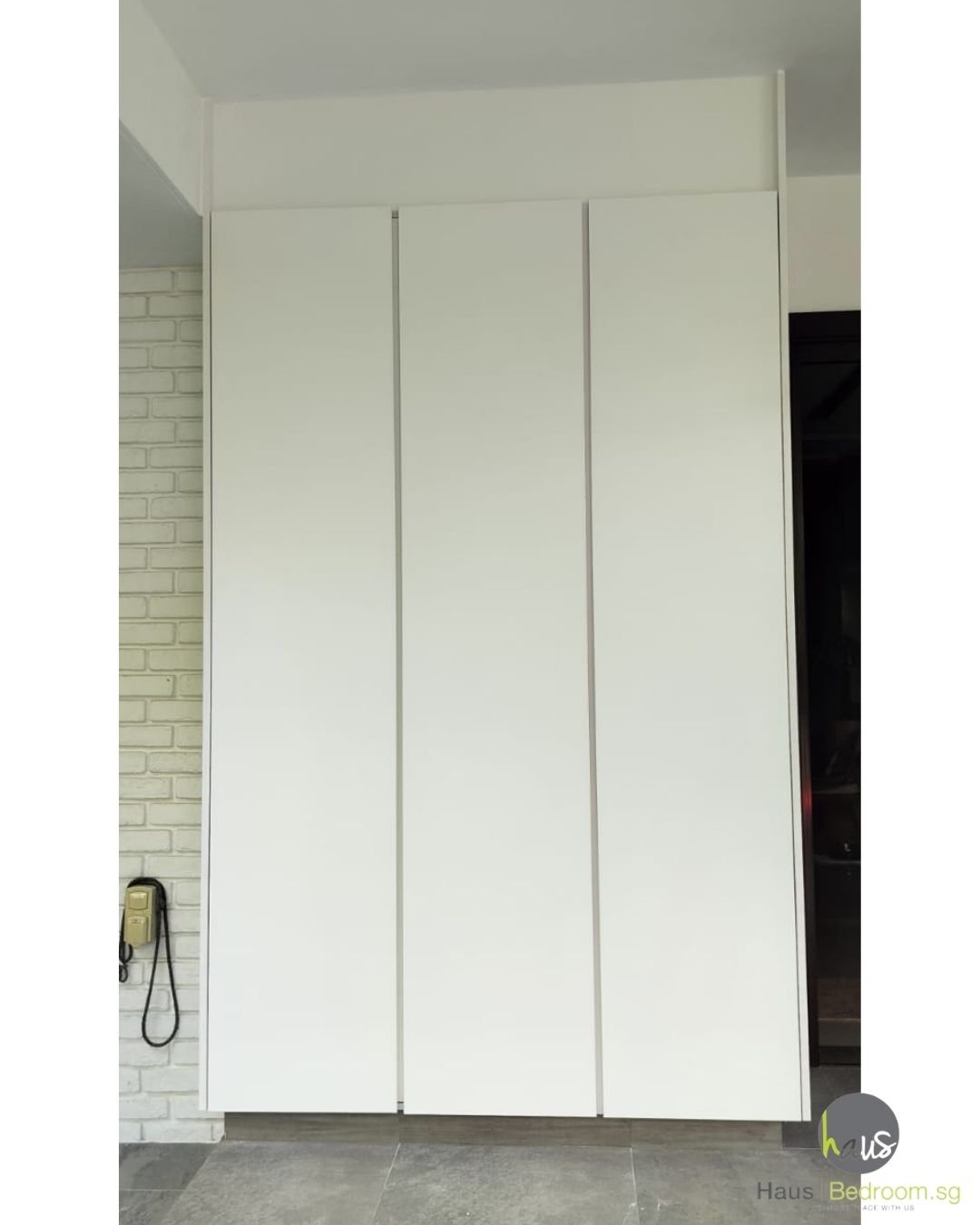
Full aluminium shoe cabinet, landed house in Bukit Timah
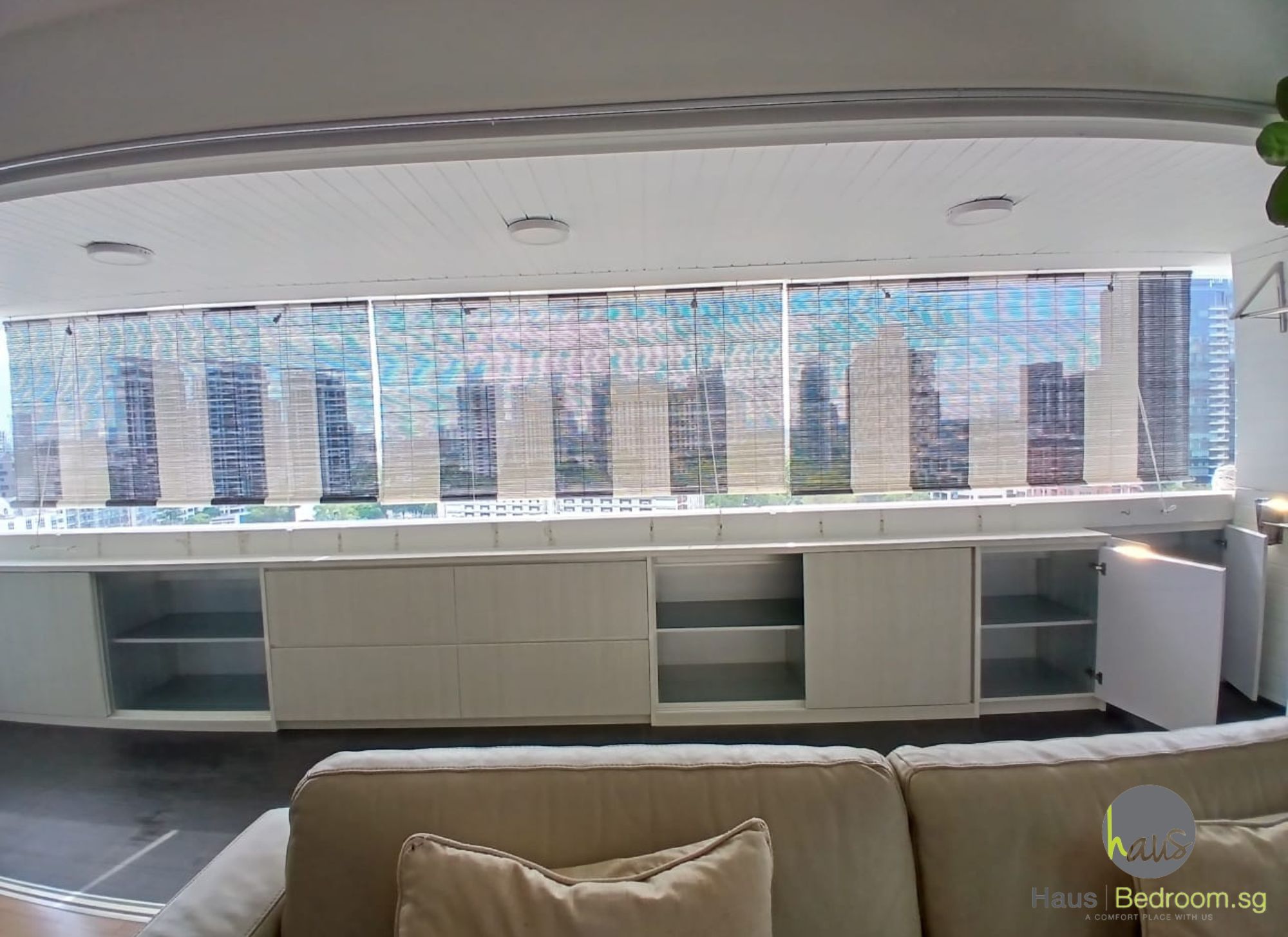
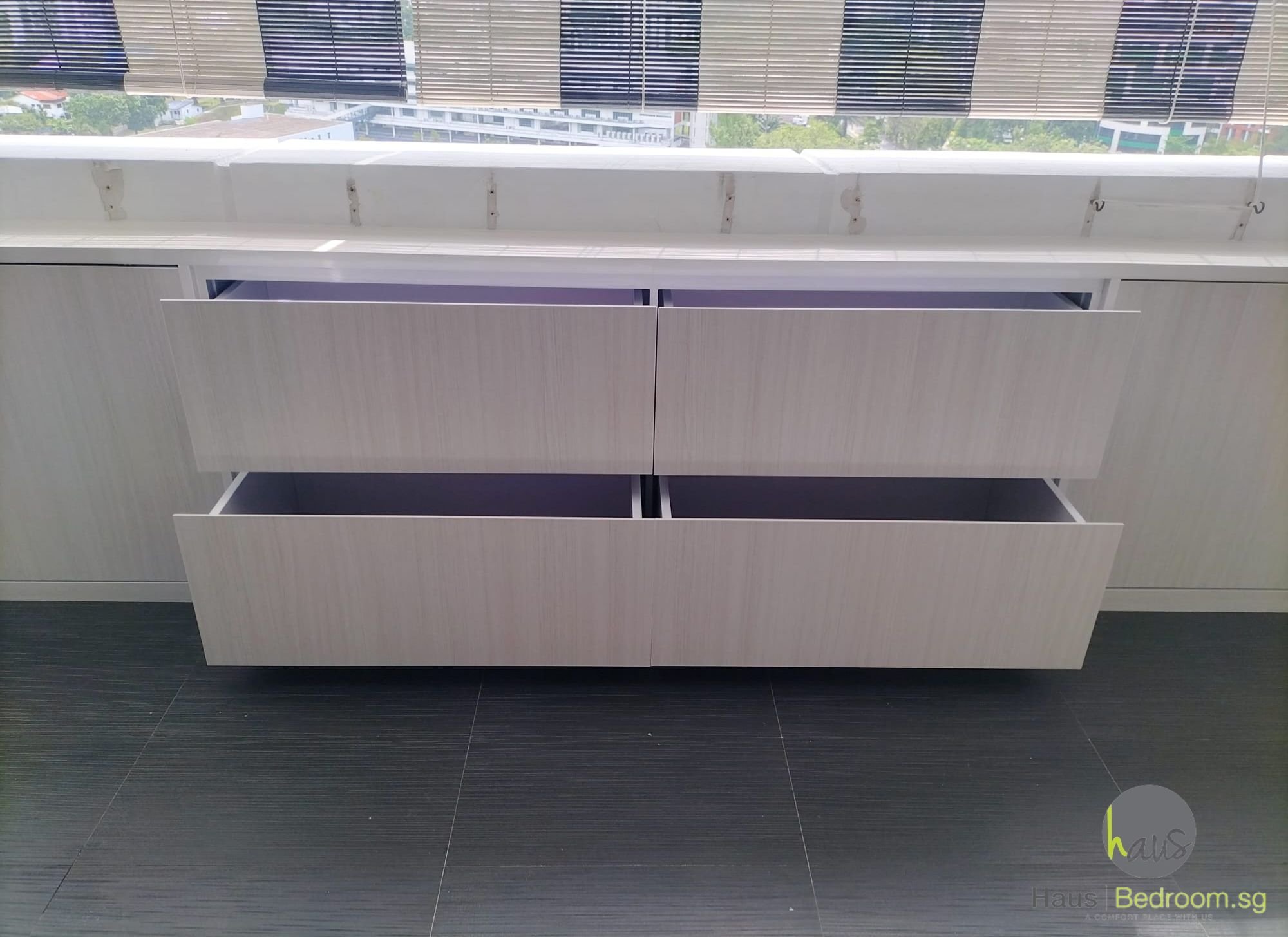
Balcony storage cabinet, condo in Orchard
Aluminium carcass with WPC doors in a laminate finish, built to stand up to balcony humidity.
11. Maintenance and Care
- Clean with a soft cloth and a mild, non-acidic detergent, then dry.
- Avoid abrasive pads, which can scratch the powder-coated finish.
- Wipe up spills promptly, especially around joints.
- Keep hinges and runners free of debris.
Frequently Asked Questions
Why are aluminium kitchen cabinets better for Singapore's climate?
Singapore's year-round humidity, kitchen heat and termites are hard on wood-based cabinets, which can swell, delaminate or be eaten from inside. An aluminium carcass is moisture-resistant, will not rot or swell, and termites cannot damage it.
Are aluminium kitchen cabinets formaldehyde-free?
It depends on the doors. A full aluminium cabinet, with a laser-welded carcass and welded aluminium door panels, is formaldehyde-free. WPC doors with laminate cost less and are just as suitable for wet areas, but they are not formaldehyde-free.
What is the difference between laser-welded and honeycomb aluminium panels?
Honeycomb panels have a lightweight core sandwiched between thin aluminium sheets. Laser-welded panels are joined into one solid piece, which makes the cabinet more rigid and solid to the touch. HausBedroom uses laser-welded panels and does not use honeycomb panels.
Can aluminium be fitted over my existing wooden kitchen cabinets?
No. Aluminium cannot be retrofitted onto existing wooden carcasses. We remove the old wooden kitchen and install new aluminium cabinets in its place.
How much weight can an aluminium kitchen shelf hold?
HausAluminium shelves are rated for 30 kg each, which comfortably holds plates, pots, appliances and dry goods.
Are aluminium kitchen cabinets more expensive than wooden ones?
Usually yes, upfront, compared with plywood. But aluminium does not need replacing because of termites or water damage, so it often costs less over the life of the kitchen.
How do I clean and maintain aluminium cabinets?
Wipe with a soft cloth and a mild, non-acidic detergent, then dry. Avoid abrasive pads, which can scratch the powder-coated finish. Wipe up spills promptly and keep hinges and runners free of debris.
Related Guides
- HausAluminium kitchen cabinets
- Kitchen countertops and backsplashes in Singapore
- 3 practical designs to maximise HDB kitchen cabinet space
- Kitchen renovation in Singapore: a step-by-step guide
- Formaldehyde in cabinets: E0, E1 and ENF explained
Replacing a Worn-Out Kitchen?
Send us photos of your current kitchen and your floor plan on WhatsApp. We'll tell you whether aluminium makes sense for your space, and which door option fits your budget.