
Why Sink Cabinets Swell, and How to Stop It
In most old kitchens we're asked to replace, the first cabinet to go is the one under the sink. The base panel bubbles, the edges peel, and the door stops closing flush. It isn't bad luck: the space under the sink gets more water and less air than any other part of the kitchen.
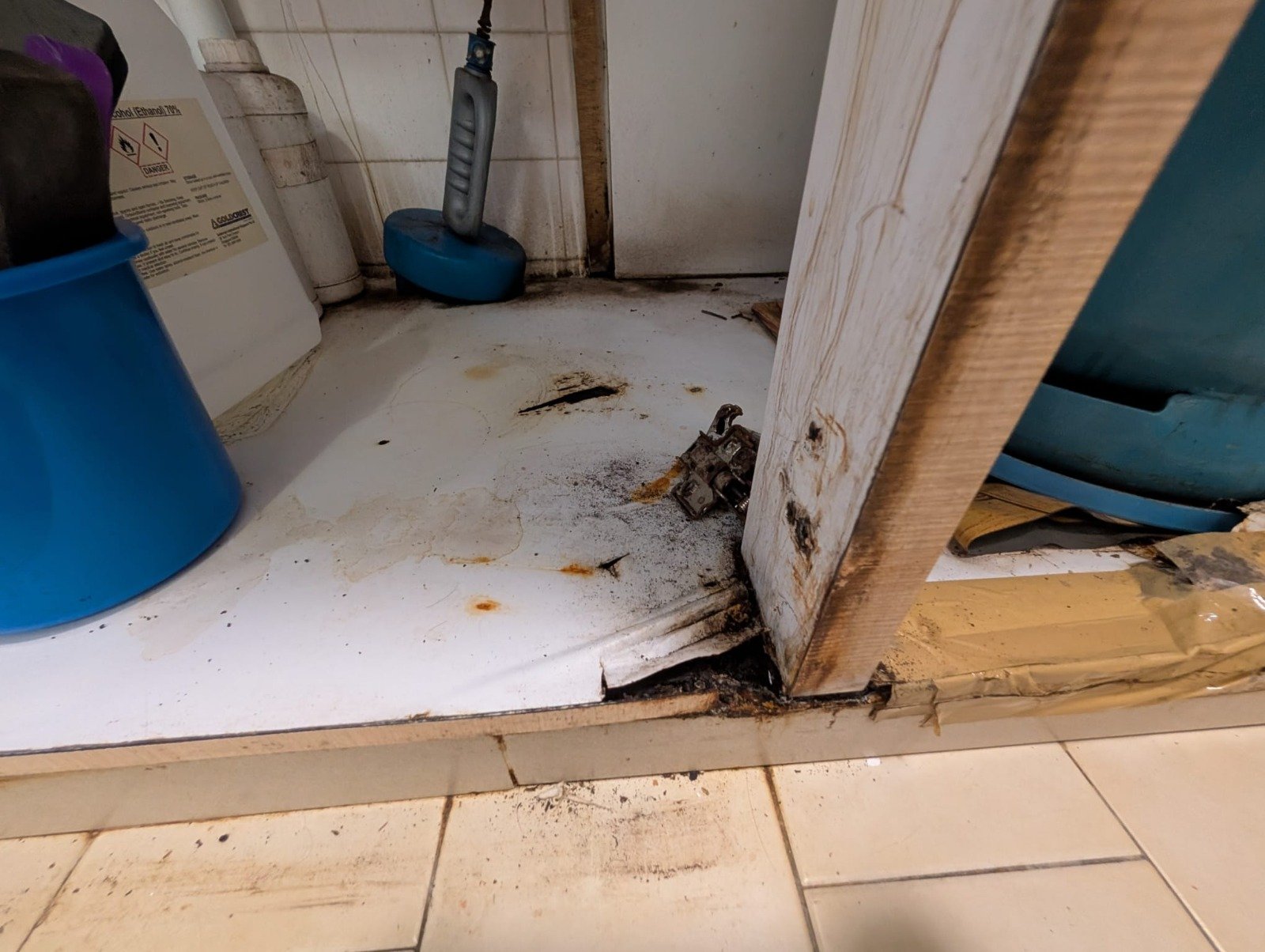
What happens under the sink
Water reaches the cabinet in four ways:
- Leaking joints. The waste trap, the tap hoses and the pipe joints loosen over time. A slow drip can go unnoticed for months.
- The sink edge. Water runs off the counter and over the edge of the sink, then seeps through any gap in the sealant into the board below.
- Wet things stored inside. Damp cloths, dripping detergent bottles and a dish rack placed on top of the cabinet all add water.
- Humidity. In Singapore's humid air, a closed cabinet with cold water pipes running through it stays damp, so a wet board never fully dries.
Once water gets into the cut edge of a wooden board, the board takes it up, swells and loses strength. Swelling doesn't reverse when it dries.
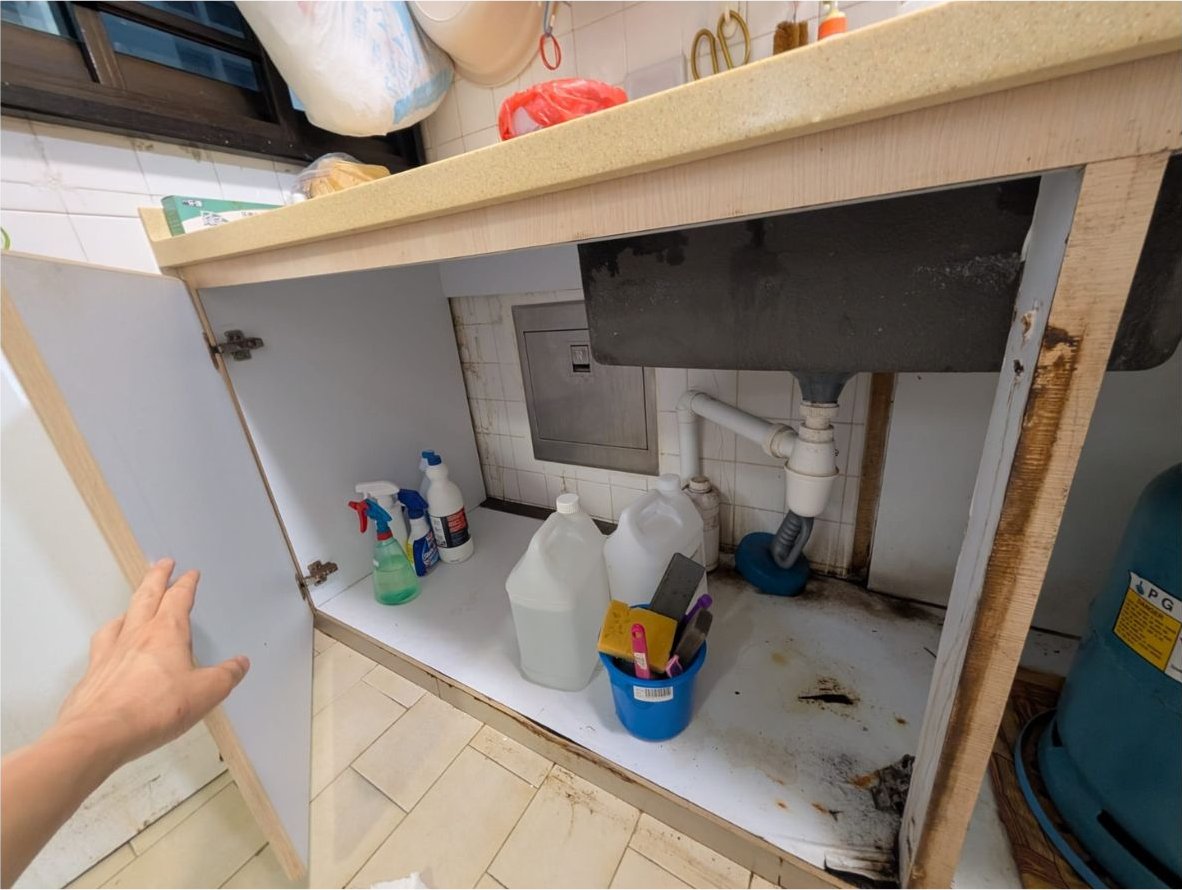
Warning signs to look for
- The base panel is bubbled, raised or soft when you press it
- The edge banding along the front is lifting or peeling
- The door no longer closes flush, or the hinge screws have pulled loose
- A musty smell when you open the cabinet
- Dark stains or mould at the back or around the pipes
How to prevent it
- Check the sealant around the sink and where the pipes pass through the cabinet, and redo it when it cracks or turns black.
- Check the pipe joints a couple of times a year: run the tap and feel under the trap with a dry tissue.
- Leave draining space. About 30 cm of counter beside the sink, away from the prep area, keeps wet dishes off the cabinet top.
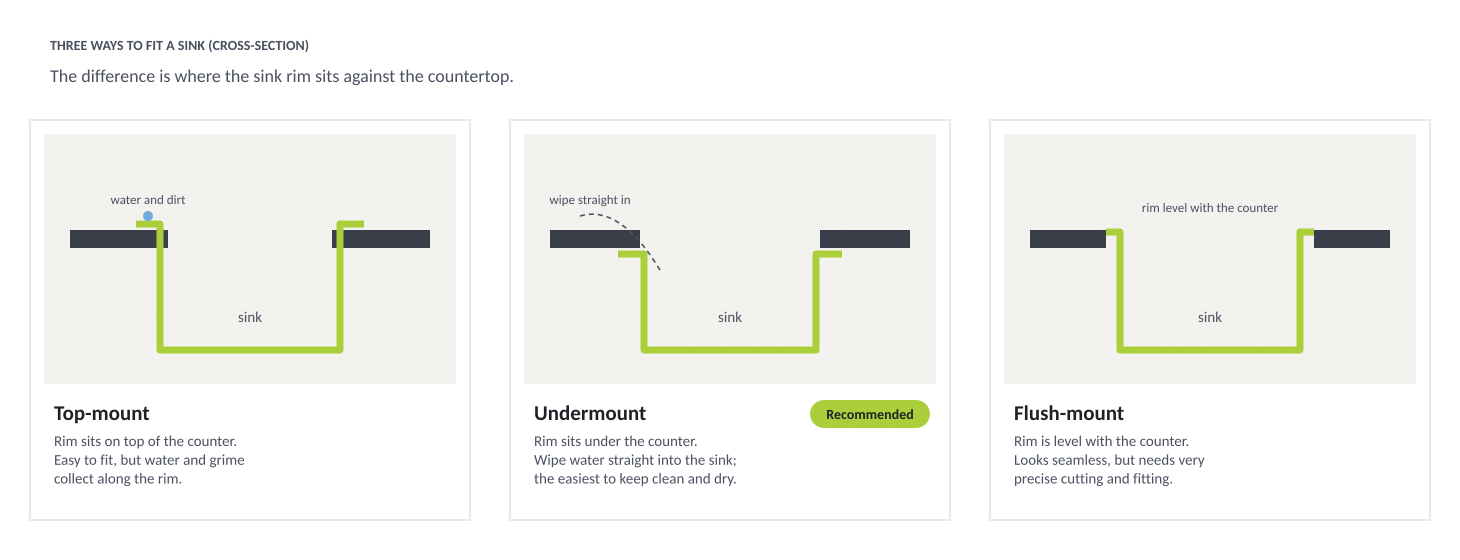
- Choose the sink type with care. An undermount sink sits under the counter, so water on the counter wipes straight into the sink. A top-mount sink sits on the counter and its rim collects water and dirt around the edge. A flush-mount sink, with its rim level with the counter, looks seamless but needs very precise cutting and fitting.
- Keep the cabinet dry inside. Store nothing wet, and use a waterproof mat on the base panel.
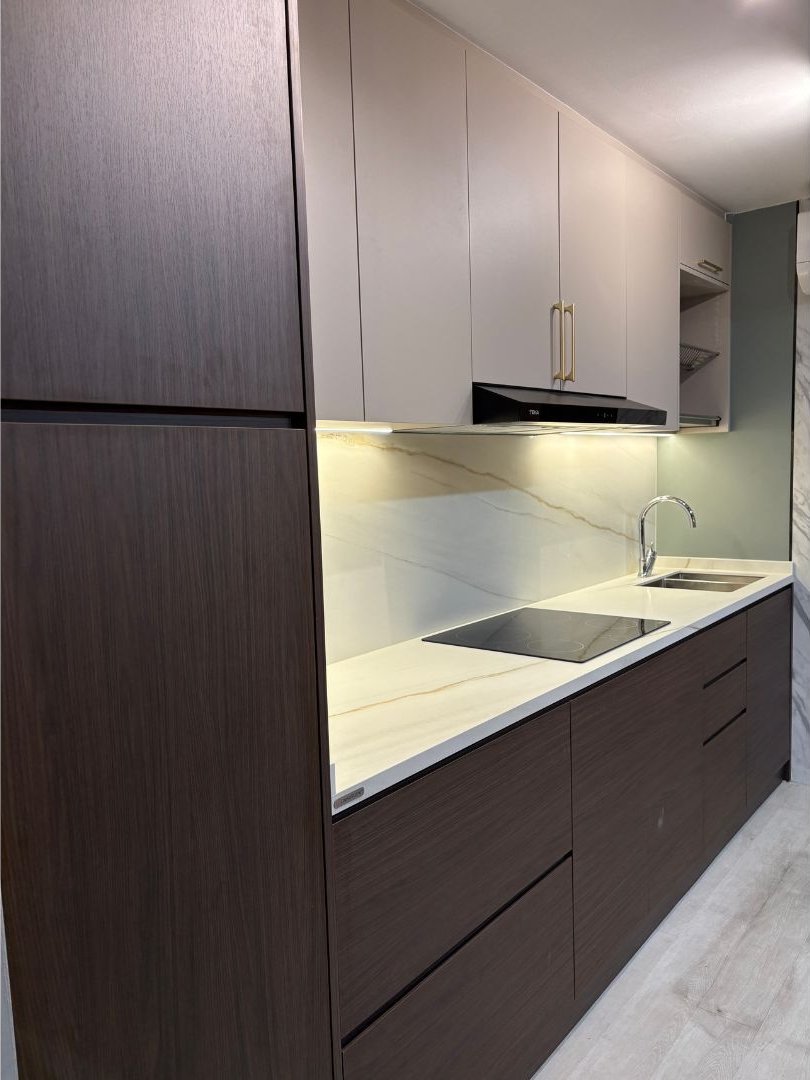
Set up the sink zone so it stays dry
A well-planned sink zone keeps water where it belongs. These are the sizes standard design guidelines recommend (the full set is in our kitchen heights and layout guide):
- 60–90 cm wide, with about 30 cm of counter beside it, away from the prep area, for draining dishes. Short on space? Drain over the sink with a rack, or use a dishwasher.
- One large single bowl. Woks and pots fit inside, instead of being washed half over the rim.
- Undermount, if you can, so water on the counter wipes straight into the sink.
- A bowl about 20 cm deep, at the right height. Set the counter at half your height plus 5 cm (85–90 cm for most people), so you're not stooping over the sink.
Inside the cabinet, use pull-out baskets or trays. They're common practice for any deep base cabinet, because everything comes out at once. Under the sink they have a second use: they let you see the pipes and the base panel, so a slow leak gets noticed early.
Your fix options
Reseal and repair. If the board is only stained and still firm, fix the leak, reseal the sink edge and let it dry. A swollen base panel can sometimes be replaced on its own.
Replace the sink cabinet. If the board is soft or the door hangs, the cabinet needs replacing. We can take out just the sink section of an existing kitchen and rebuild it in aluminium, but the countertop sits on top of it, and taking the cabinet out damages the countertop. So the countertop has to be replaced too: plan for it as part of the job.
Build the new kitchen with an aluminium sink cabinet. When you redo the kitchen, you can keep the rest in wood and build only the sink cabinet in aluminium. Our laser-welded, powder-coated aluminium cabinets don't swell when wet and last 15–20 years in wet zones. It adds about S$400 per sink cabinet compared with an all-wood kitchen, and it's the option most of our kitchen customers choose. See what whole kitchens cost in our kitchen cost guide. Aluminium can't be fixed onto existing wooden cabinets: it replaces them, either the sink section alone or the whole kitchen.
How we replace a sink cabinet
- Agree the scope. We walk you through exactly what changes, including the countertop above the sink cabinet, which has to be replaced.
- Remove and measure. We take out and dispose of the old sink cabinet, then measure the space exactly.
- Fabricate. We make the new aluminium sink cabinet to those measurements. Meanwhile, you decide whether to reuse your sink or choose a new one.
- Install. We come back and fit the new sink cabinet.
- Countertop, then plumbing. The new countertop goes in next. Once it's in, the plumber reconnects the sink and tap.
See the four ways to combine wood and aluminium on our kitchen cabinets page.
- Kitchen Cabinet Heights and Layout Guide for HDB Kitchens
- What a Kitchen Really Costs in Singapore: 4 Real Projects, Priced
- Wet Kitchen vs Dry Kitchen: What Goes Where
See all our kitchen systems on the kitchen cabinets page.
Frequently asked questions
Why is only my sink cabinet damaged?
It gets the most water from leaks, splashes and wet items, and the least air to dry out.
Can a swollen sink cabinet be repaired?
If the board is still firm, fixing the leak and resealing may be enough. Once it's soft or sagging, it needs replacing.
Can you replace only my sink cabinet?
Yes, in aluminium. The countertop above it has to be replaced at the same time, because taking the cabinet out damages it.
Is an aluminium sink cabinet worth it?
If you cook a lot or have had sink cabinet damage before, yes: it costs about S$400 more per sink cabinet and doesn't swell when wet.
Can you fit aluminium onto my existing wooden kitchen?
No. Aluminium cabinets replace the wooden ones rather than fixing onto them: either the sink section alone, with a new countertop, or the whole kitchen.
Which sink type is easiest to keep dry?
An undermount sink, because water on the counter wipes straight into it.
Is your sink cabinet starting to swell?
WhatsApp us a photo of it, and we'll tell you whether it can be repaired or needs replacing.
WhatsApp us a photo of your sink cabinetOr book a consultation, or visit our showroom at Eunos Technolink, #02-10.