
Short answer
Melamine is the hard-wearing budget choice. Thermofoil and PET sit in the middle, powder coat at the top of the middle, and lacquer and real wood veneer are the premium end. Each finish has one weakness worth knowing before you pay: a deep scratch through PET can't be touched up, lacquer chips, thermofoil can peel next to heat, and veneer changes colour in sunlight.
The six finishes at a glance
| Finish | Core board | Edges | Best at | Weak spot | Cost tier |
|---|---|---|---|---|---|
| Melamine | 18 mm particle board | PUR edge banding | Wear, stains, value | Flat doors only, visible edge seam | Budget |
| PET (flat-laminated film) | 18 mm MDF or particle board | PUR edge banding | Smudge-resistant matte, colour stays put | Deep scratches can't be repaired | Mid |
| Thermofoil / PVC wrap | 18–25 mm MDF | None, film wraps the edge | Shaker and profiled doors at a mid price | Peels near heat, cheap films yellow in sun | Mid |
| Powder coat | 18–22 mm MDF | None, coated on all six faces | Tough, sealed all round | Solid colours only, gouges need a factory remake | Upper-mid |
| Lacquer (PU paint) | 18–25 mm MDF | None, painted seamless | Any colour, gloss or matte, seamless edges | Chips under sharp knocks, longest lead time | Premium |
| Wood veneer | MDF | Matching veneer edging | Real timber grain | Shifts colour in UV, stains if the topcoat wears | Premium (highest) |
Cost tiers are relative, based on our HausSignature price lists, where melamine is the lowest-priced door finish, followed by PVC wrap, PET, then powder coat, then lacquer, then veneer.
A note on scope: these finishes apply to swing (casement) doors and drawer fronts on built-in and HausSignature cabinets.
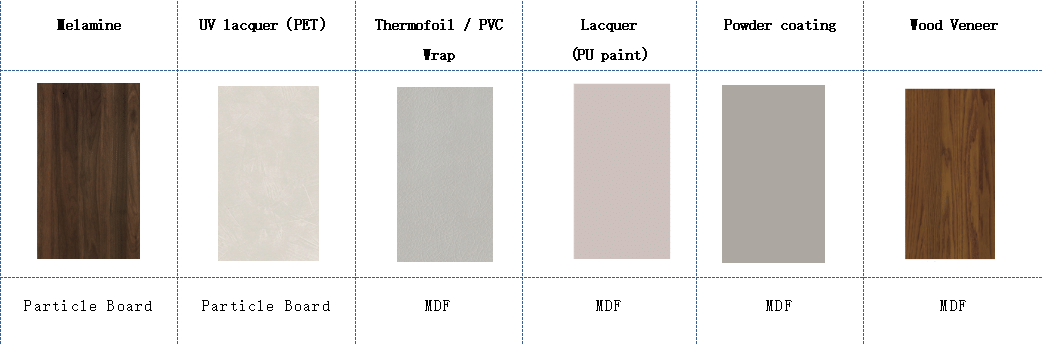
Melamine
What it is: A decorative paper (Schattdecor, Germany, in the factory spec) soaked in melamine resin and pressed onto both faces of particle board. Edges are sealed with Rehau PUR edge banding.
Why people choose it: It's the most cost-effective finish and one of the hardest wearing. It resists scratches, heat and stains, and comes in solid colours, wood grains, fabric and stone textures.
Honest weaknesses:
- Flat slab doors only. It can't be routed into shaker or carved profiles.
- Edge banding leaves a fine seam line, even with PUR or laser banding.
- If the banding fails, moisture reaches the particle board core and it swells.
Good for: Wardrobes, kitchen carcasses and doors, kids' rooms, rental units.
Local workshops mostly use a close cousin: HPL laminate glued onto plywood. It wears similarly, and the edge is still the weak point.
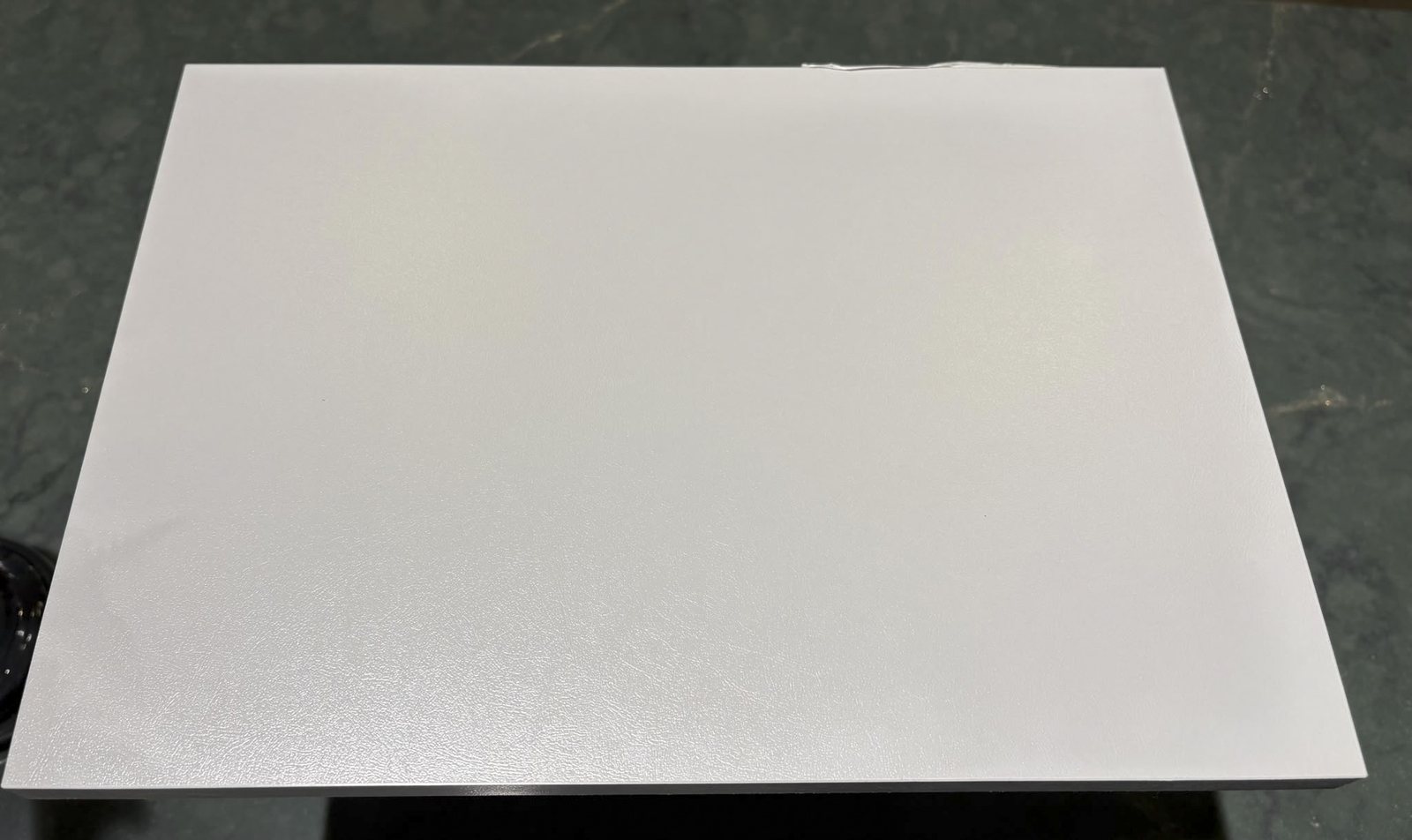
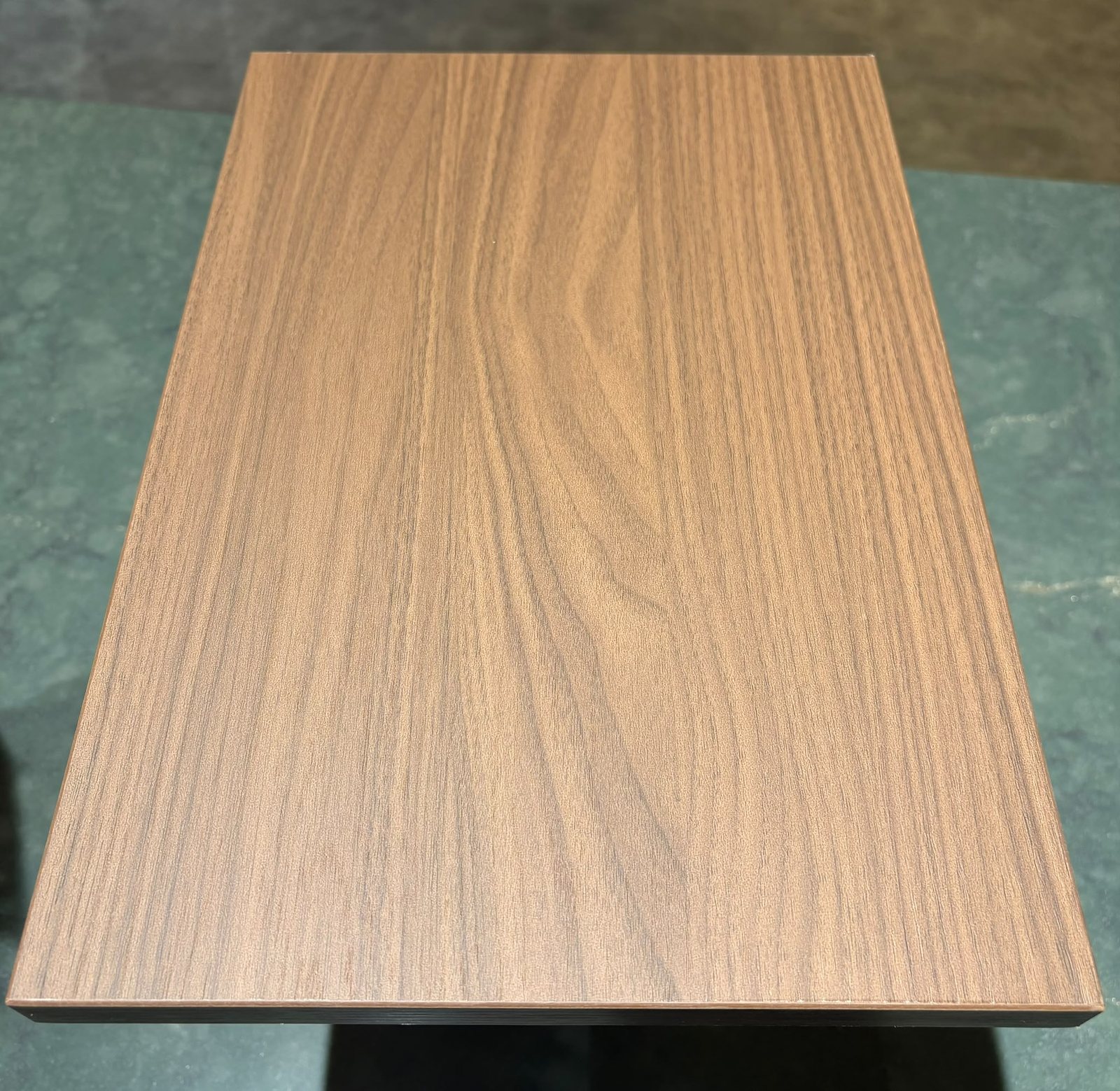
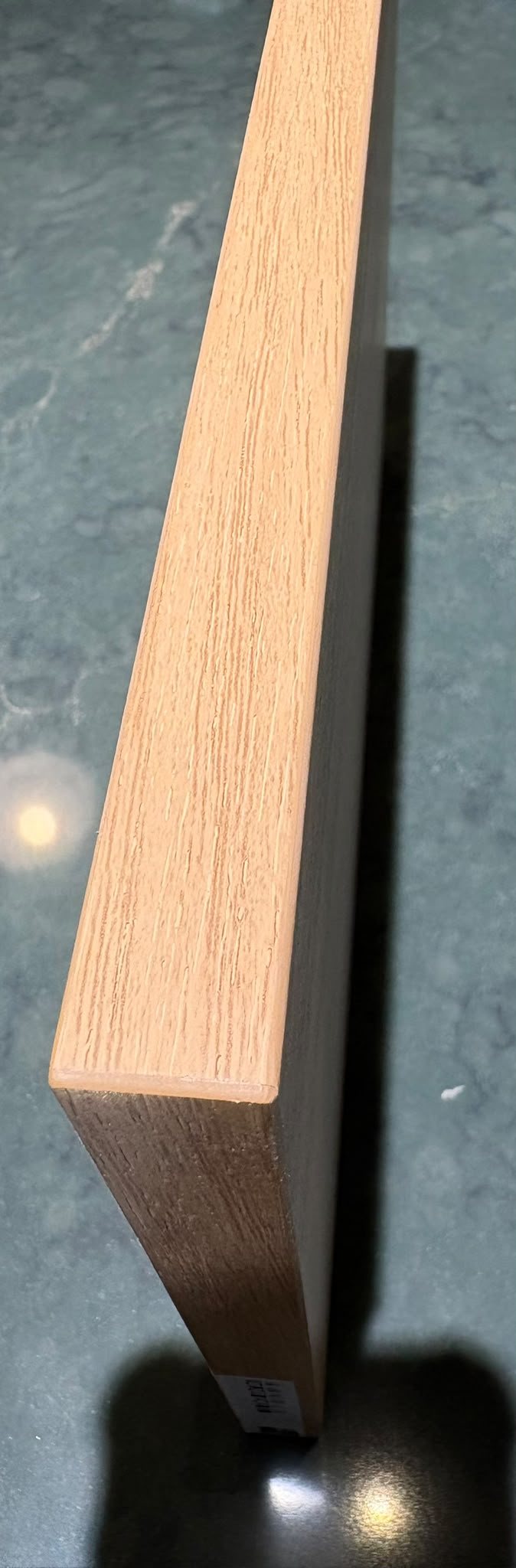
PET
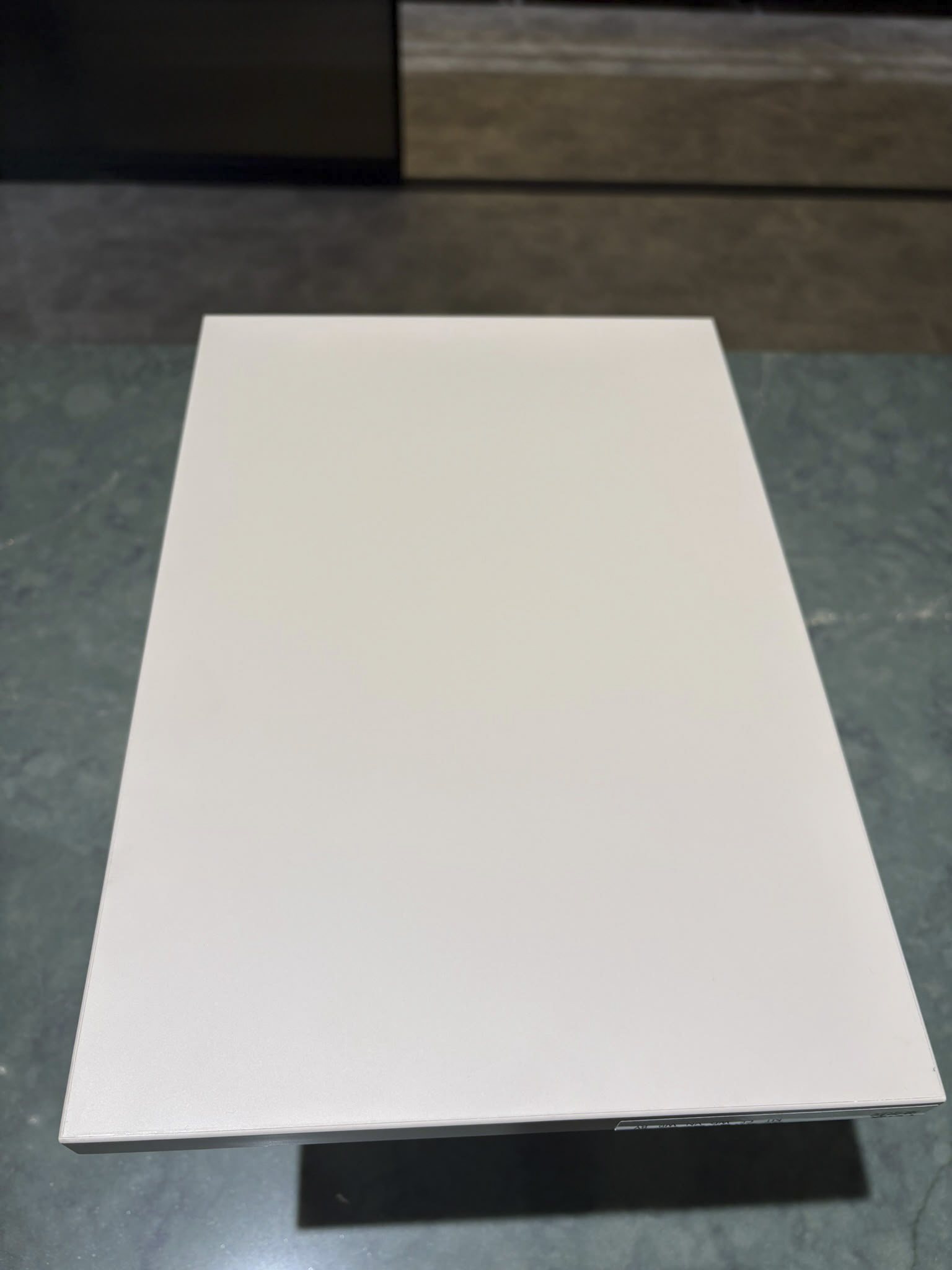
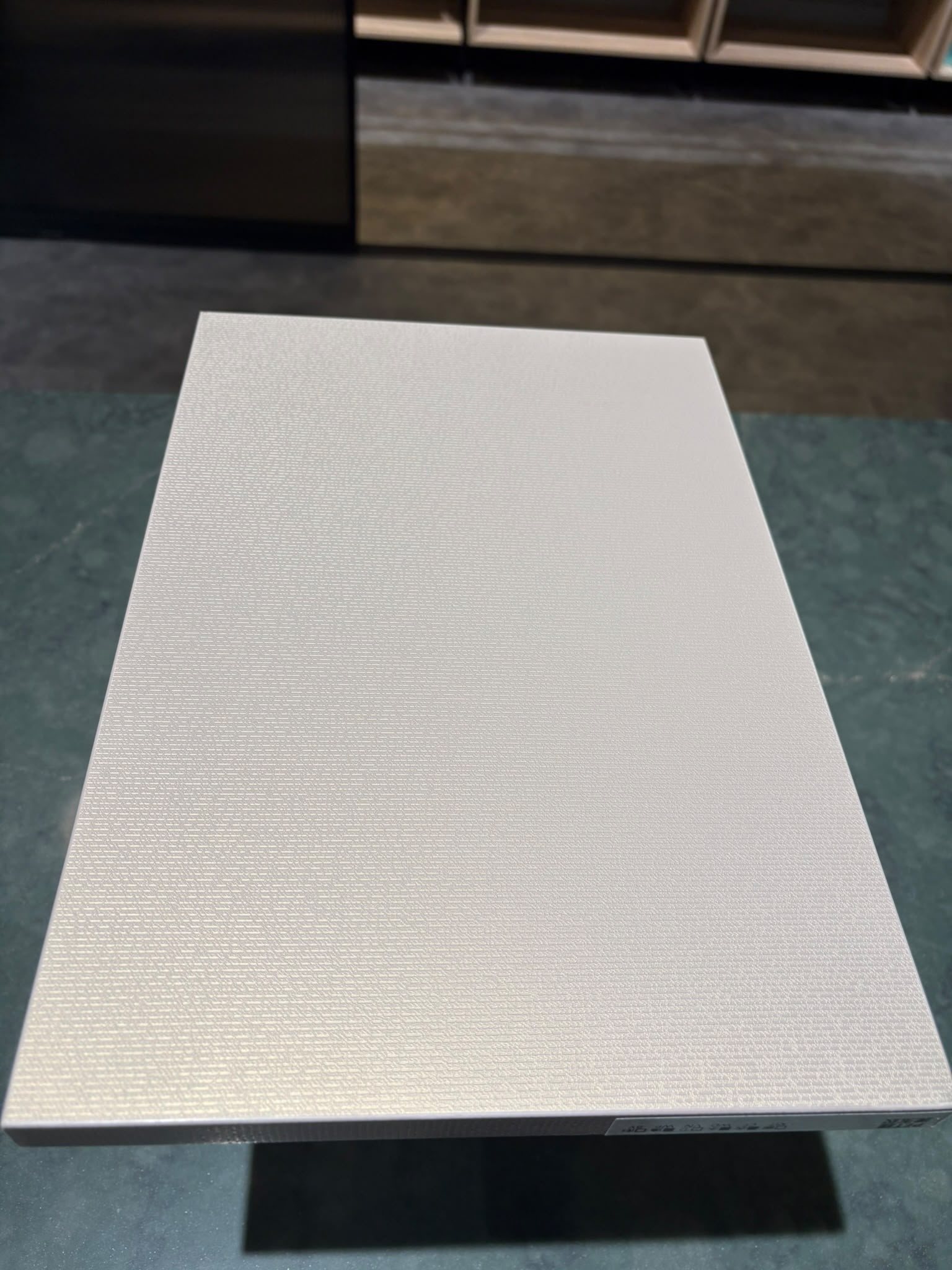
What it is: A PET film (described in the factory spec as medical-grade and food-grade resin) roller-pressed onto the board with PUR adhesive, then edge-banded.
Why people choose it: Super-matte PET has a soft, skin-like feel and resists fingerprints. Colour holds steady over time, and the film is chemically stable and low in water absorption.
Honest weaknesses:
- Flat panels only, like melamine.
- High-gloss PET shows fingerprints and grease. Ultra-matte PET can burnish into shiny patches if you scrub it with an abrasive pad.
- A deep scratch that cuts through the film to the board can't be touched up. The whole door gets replaced.
Good for: Modern kitchens and wardrobes where you want a clean matte look without paint pricing.
Want to touch all six finishes?
Book a showroom visitThermofoil / PVC wrap
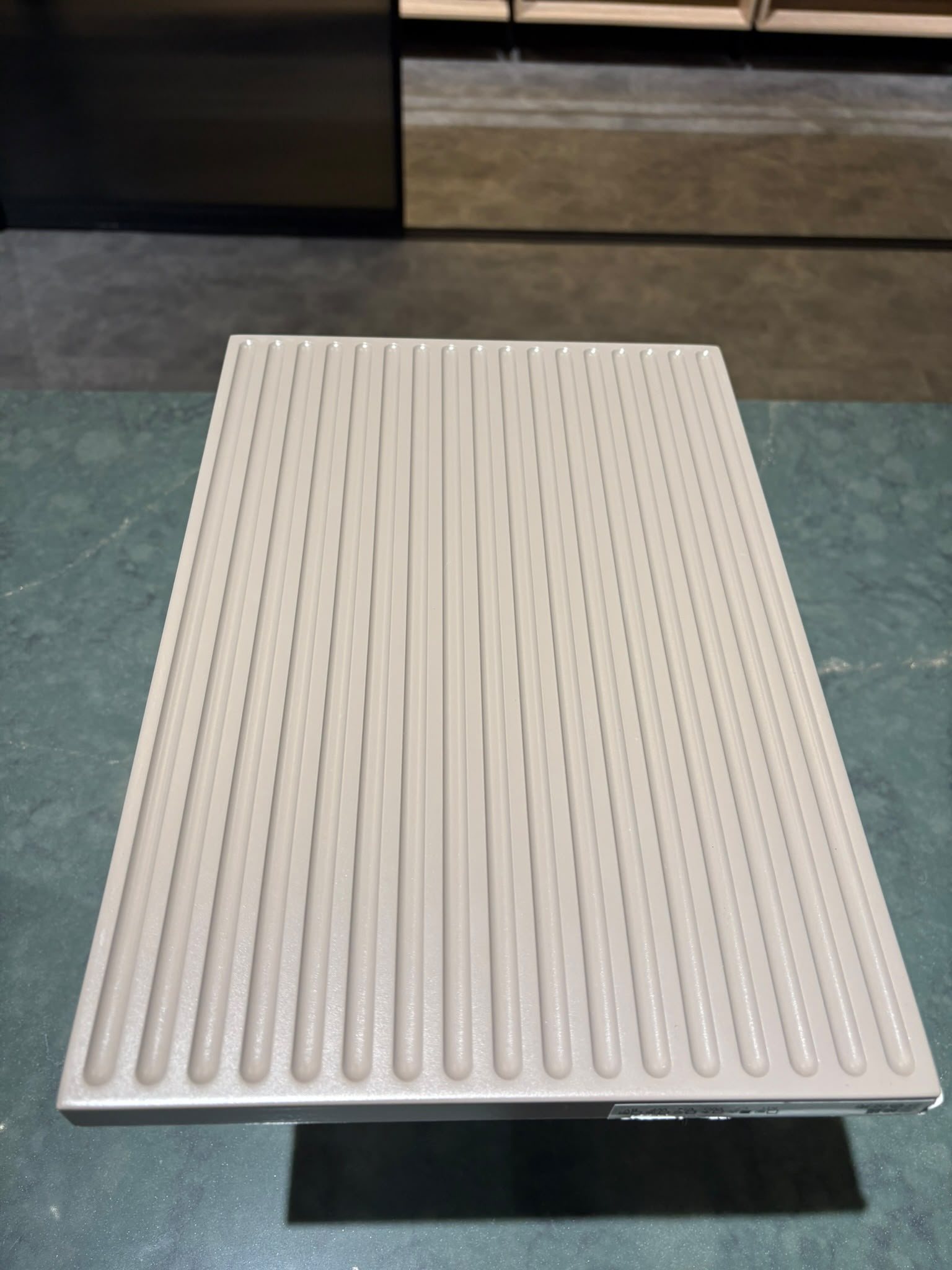
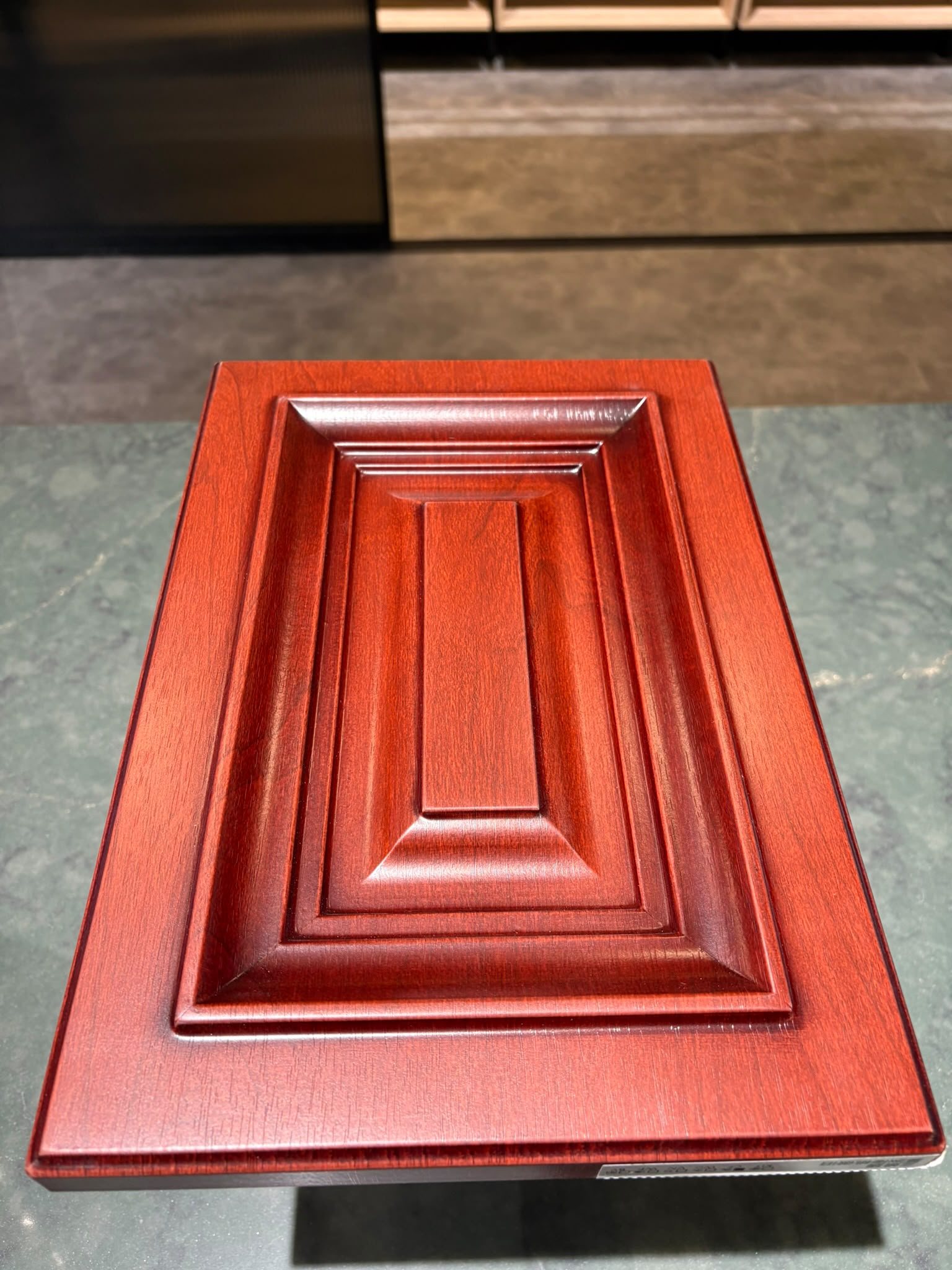
What it is: A PVC film (Renolit, Germany, in the factory spec) heated and vacuum-pressed over a routed MDF door, so the film wraps the face and edges in one piece. No edge banding is needed.
Why people choose it: It's the most affordable way to get shaker, framed and profiled doors, with the widest range of colours and profiles.
Honest weaknesses:
- Heat is its enemy. Next to an oven, hob, dishwasher or steaming kettle without a heat shield, the glue can soften and the film peels or shrinks.
- Lower-grade PVC films can yellow or fade in direct sun.
- Cheaper versions can show a slightly bumpy "orange peel" texture.
Good for: Bedroom wardrobes and kitchen wall cabinets away from heat. In compact BTO kitchens where the oven tower sits right beside a door run, ask for a heat shield or choose another finish for the doors next to it.
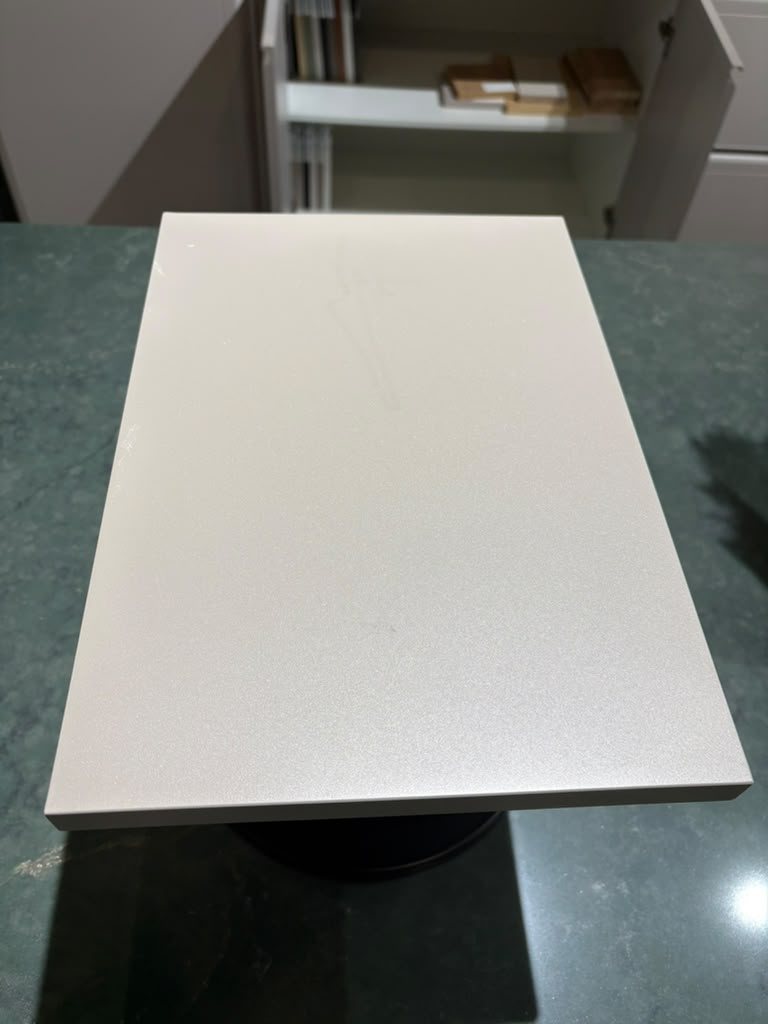
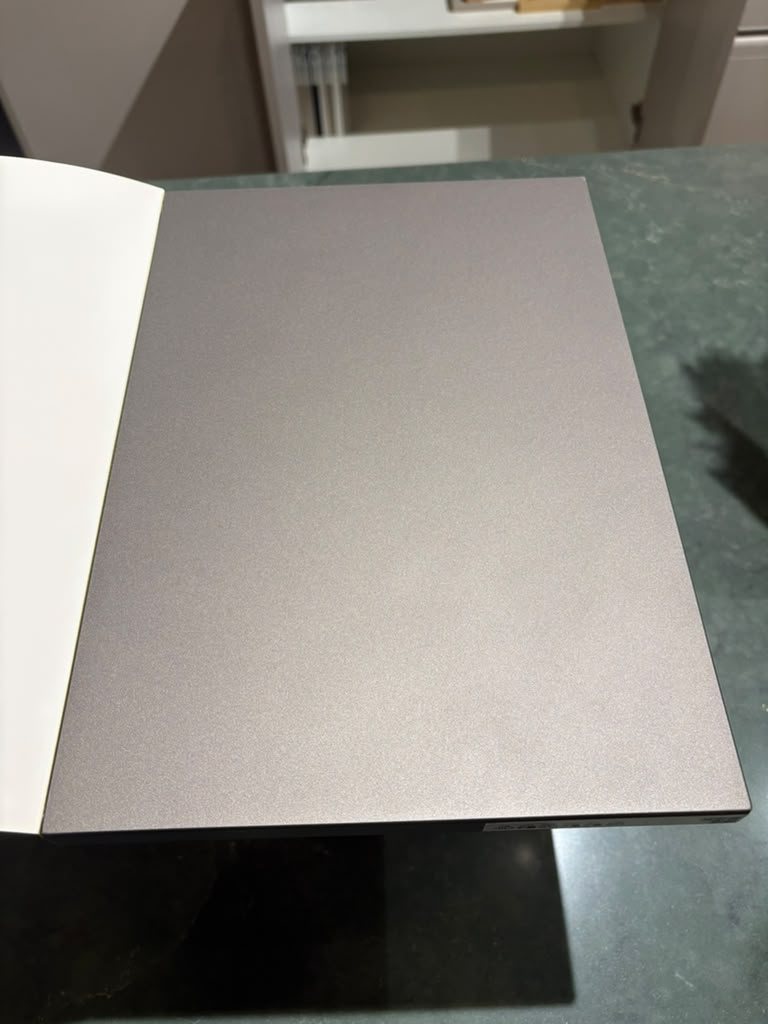
Powder coat
What it is: Powder sprayed electrostatically onto all six faces of an MDF door, then baked to cure. No edge banding.
Why people choose it: A hard, fully sealed surface with fine matte or sand textures. It resists scratches, wear and moisture, and colours stay stable.
Honest weaknesses:
- Solid colours and fine textures only. No wood grain.
- A deep gouge down to the board, for example during installation, is nearly impossible to repair on site. It usually needs a factory remake.
A note on formaldehyde: The powder itself contains no formaldehyde and is applied without solvents, so the coating adds essentially no VOCs. The door is still MDF underneath, so ask for the board grade like any other door.
Good for: Family kitchens and high-traffic wardrobes where you want a solid colour that takes knocks.
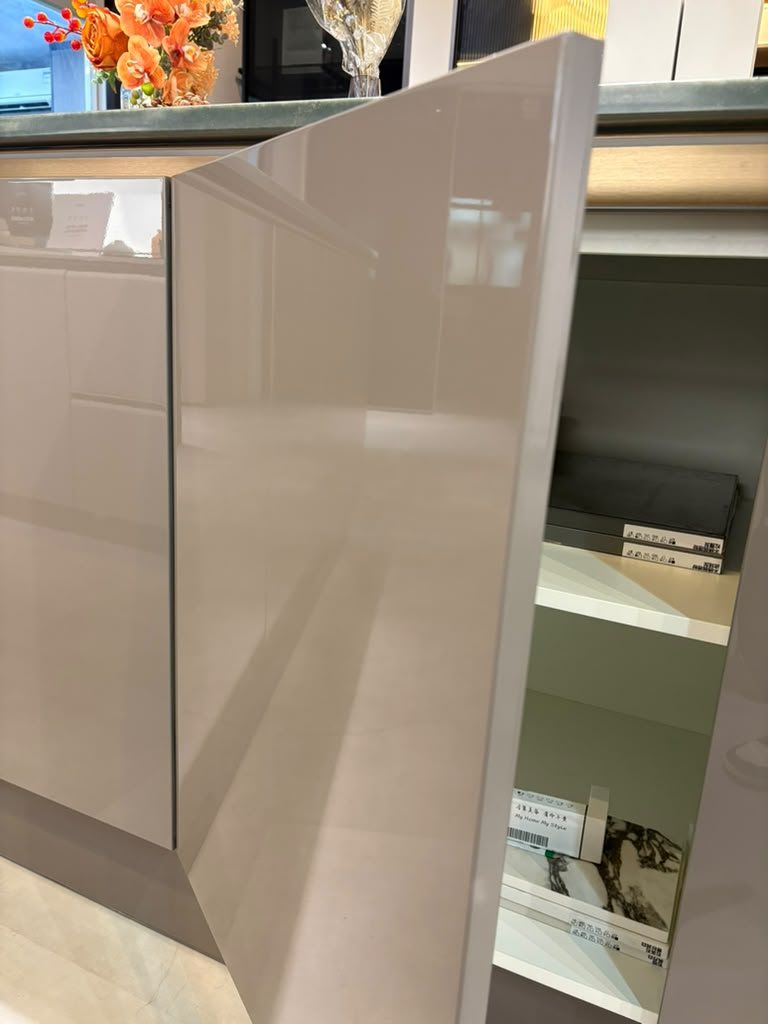
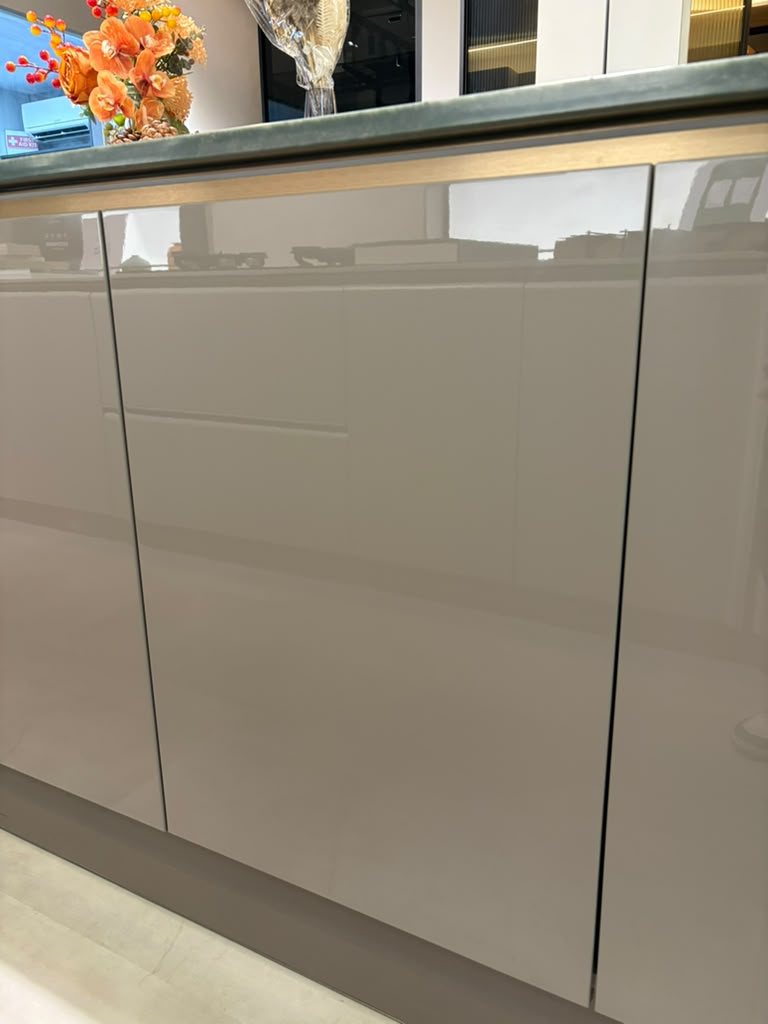
Lacquer (PU paint)
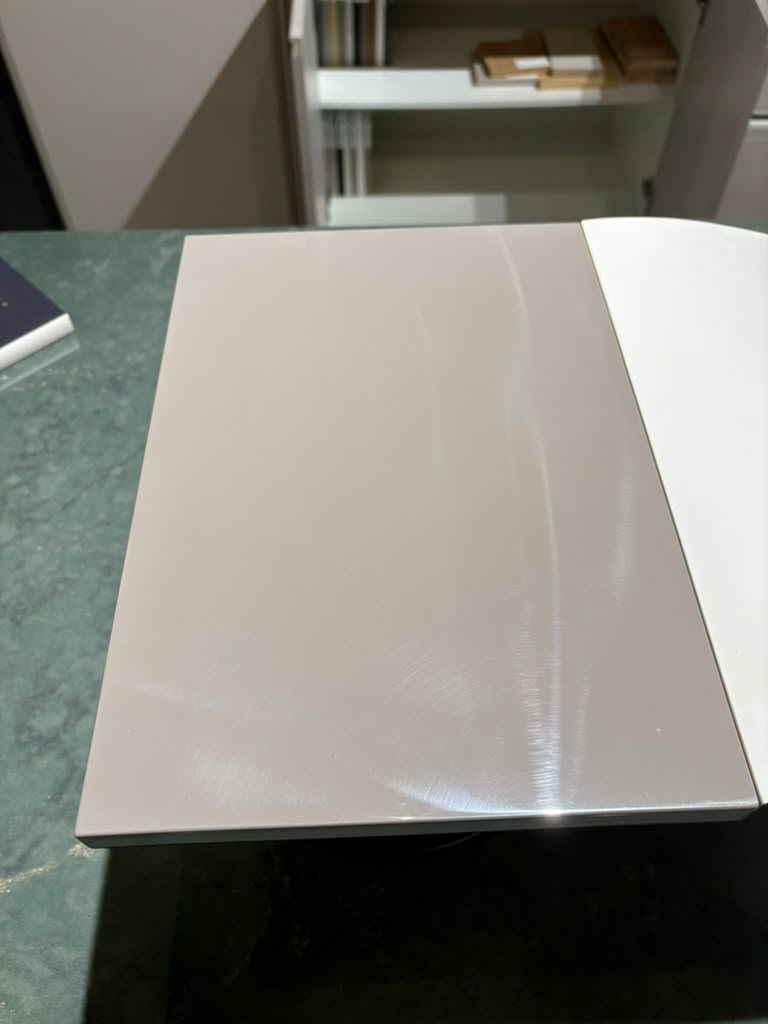
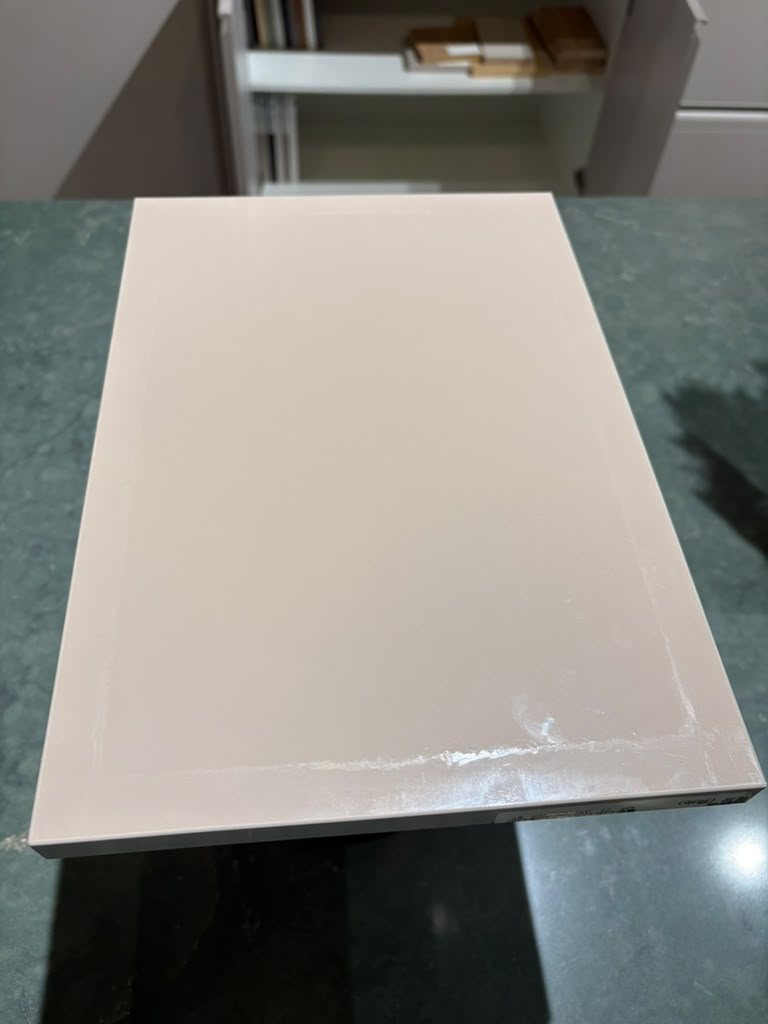
What it is: Multiple coats of paint sprayed onto MDF, sanded and baked between coats. Our HausSignature lacquer doors get seven coats. No edge banding: edges and corners are rounded and seamless.
Why people choose it: Any colour, in high gloss, soft matte or metallic. Smooth, uniform and seamless, it's the classic premium kitchen door.
Honest weaknesses:
- Lacquer forms a hard, brittle shell. A sharp knock from a pot or utensil can chip it down to the MDF.
- Gloss lacquer shows fingerprints and fine scratches from rough cloths.
- Highest cost after veneer, and the longest lead time: about 12 weeks on HausSignature, versus about 6 weeks for melamine and PVC.
Good for: Feature walls, living room cabinets and kitchens where the look matters most and the household is careful.
Wood veneer
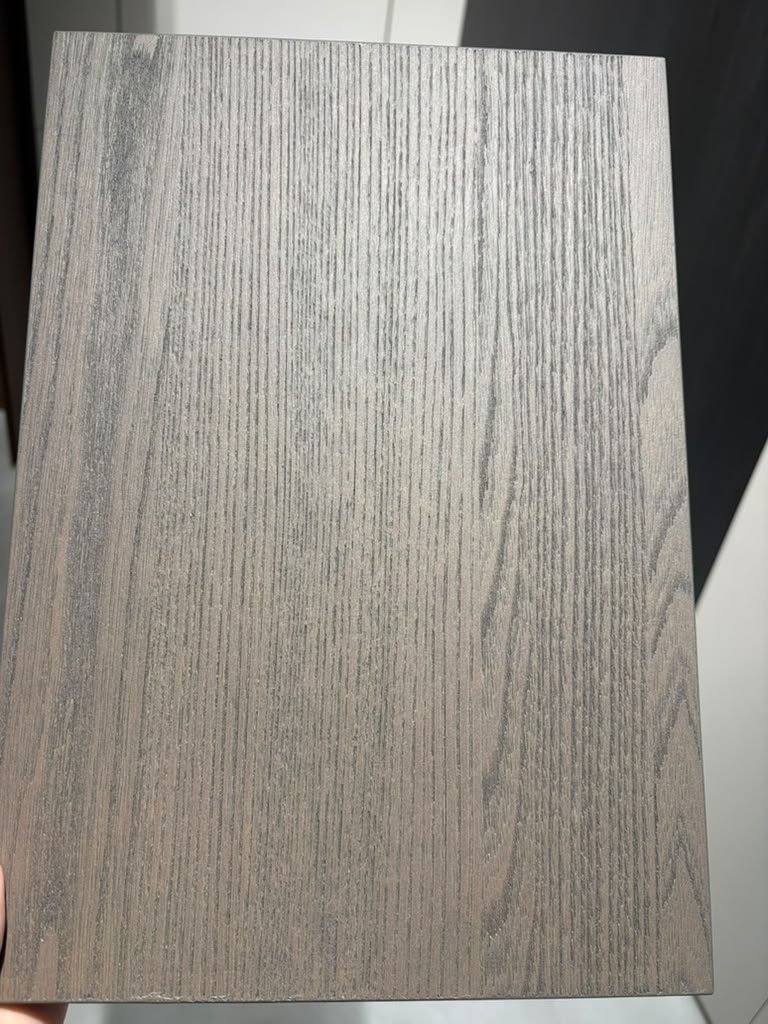
What it is: A thin layer of natural timber on an MDF core, with matching veneer edging and a protective lacquer topcoat. The MDF core keeps the door more stable than solid wood in changing humidity.
Why people choose it: Real wood grain and colour, at a lower cost than solid timber doors.
Honest weaknesses:
- It's real wood. If the topcoat wears, it can scratch, stain and take water damage.
- Colour shifts over the years under UV light: some species darken, some bleach, some turn amber.
- No two trees match. Consistent grain across a long run needs careful matching at the factory, which adds waste and cost.
- About 12 weeks lead time on HausSignature.
Good for: Bedrooms and living rooms away from direct afternoon sun. In a west-facing room, use blinds or choose a finish that holds its colour.
Which finish should you choose?
| If you want… | Choose | Avoid |
|---|---|---|
| The best value that lasts | Melamine | — |
| A matte, fingerprint-resistant modern look | PET (matte) or powder coat | High-gloss anything |
| Shaker or profiled doors on a mid budget | Thermofoil, away from heat | Thermofoil beside the oven |
| A tough solid colour for a busy family kitchen | Powder coat | Gloss lacquer |
| Any colour, seamless edges, a showpiece | Lacquer | — if you can't wait about 12 weeks |
| Real timber | Wood veneer | Rooms with strong direct sun |
Caring for each finish
- Melamine: Wipe with a damp cloth and mild detergent.
- PET: Soft cloth only. No scouring pads, especially on ultra-matte.
- Thermofoil: Keep heat away. Don't drape wet towels over the doors.
- Powder coat: Damp cloth. Report chips early.
- Lacquer: Microfibre cloth. Avoid abrasive cleaners.
- Wood veneer: Wipe spills straight away and keep out of direct sun.
Frequently asked questions
Which cabinet door finish is the most durable?
For everyday wear, melamine and powder coat. Lacquer is hard but brittle, and chips under sharp impacts.
Is laminate the same as veneer?
No. Laminate and melamine are printed decorative layers. Veneer is a thin slice of real wood.
Can I get shaker doors in melamine?
No. Melamine and PET are flat-pressed and can't follow routed profiles. Use thermofoil, lacquer or veneer on MDF.
Which finish is best near the hob or oven?
Avoid thermofoil next to heat sources unless a heat shield is fitted. Melamine and powder coat handle heat better.
Why does lacquer cost more and take longer?
Each door goes through several rounds of spraying, sanding and baking. On HausSignature, lacquer and veneer take about 12 weeks versus about 6 for melamine and PVC.
Free advice
Finishes look different in daylight than on a screen
Finishes look different in daylight than on a screen. Come and touch all six at our Eunos Technolink showroom (Mon–Sat, 9:30am–6:30pm), or WhatsApp +65 6842 1514 with a photo of your kitchen or bedroom and we'll suggest two finishes that suit it.