
Short answer
Hardware decides how a cabinet feels every day and whether doors stay aligned after a few years. Look for soft-close hinges with three-way adjustment, full-extension drawer runners rated for the weight you'll put in them, and lift-up door supports sized to the door's weight. On our custom built-in, HausSignature and HausAluminium cabinets we fit Blum hinges and runners.
Key facts
| Part | What to ask for | Why |
|---|---|---|
| Hinge type | Soft-close (damped), with three-way adjustment | Quiet closing; sagging doors can be re-aligned with a screwdriver |
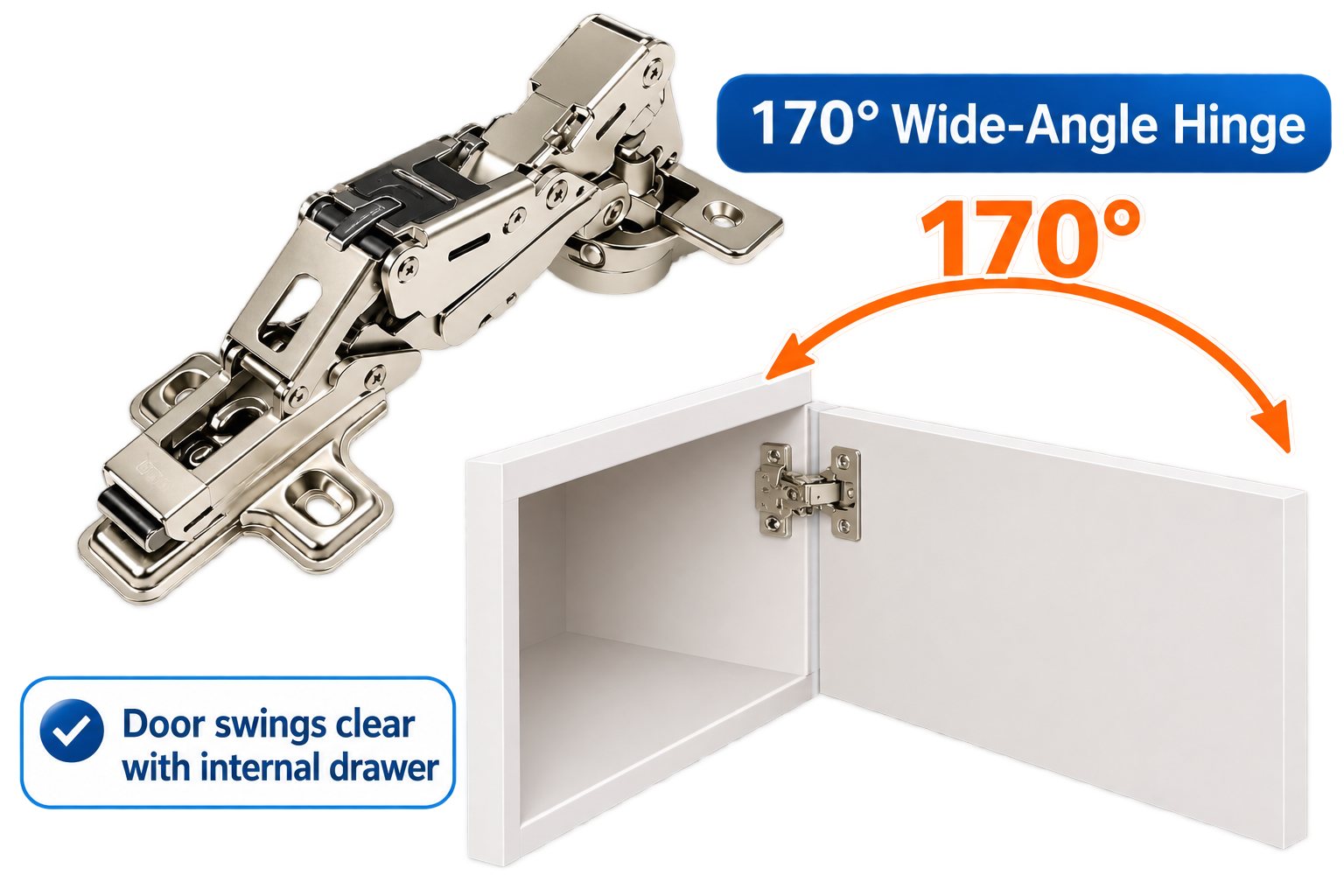
| Hinge angle | 105–110° standard; 155–170° wide-angle where drawers sit behind the door or at corners | Drawers behind a door need it to open wide |
| Lift-up door support | Matched to the door's size and weight | An undersized support lets the door drop |
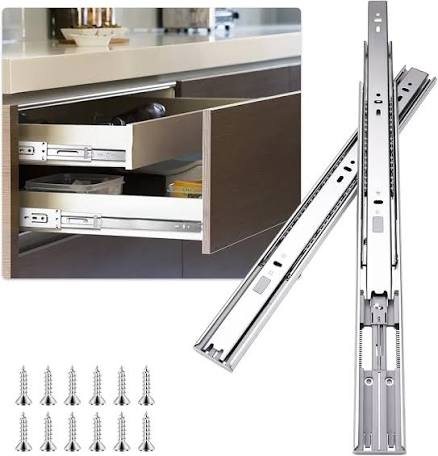
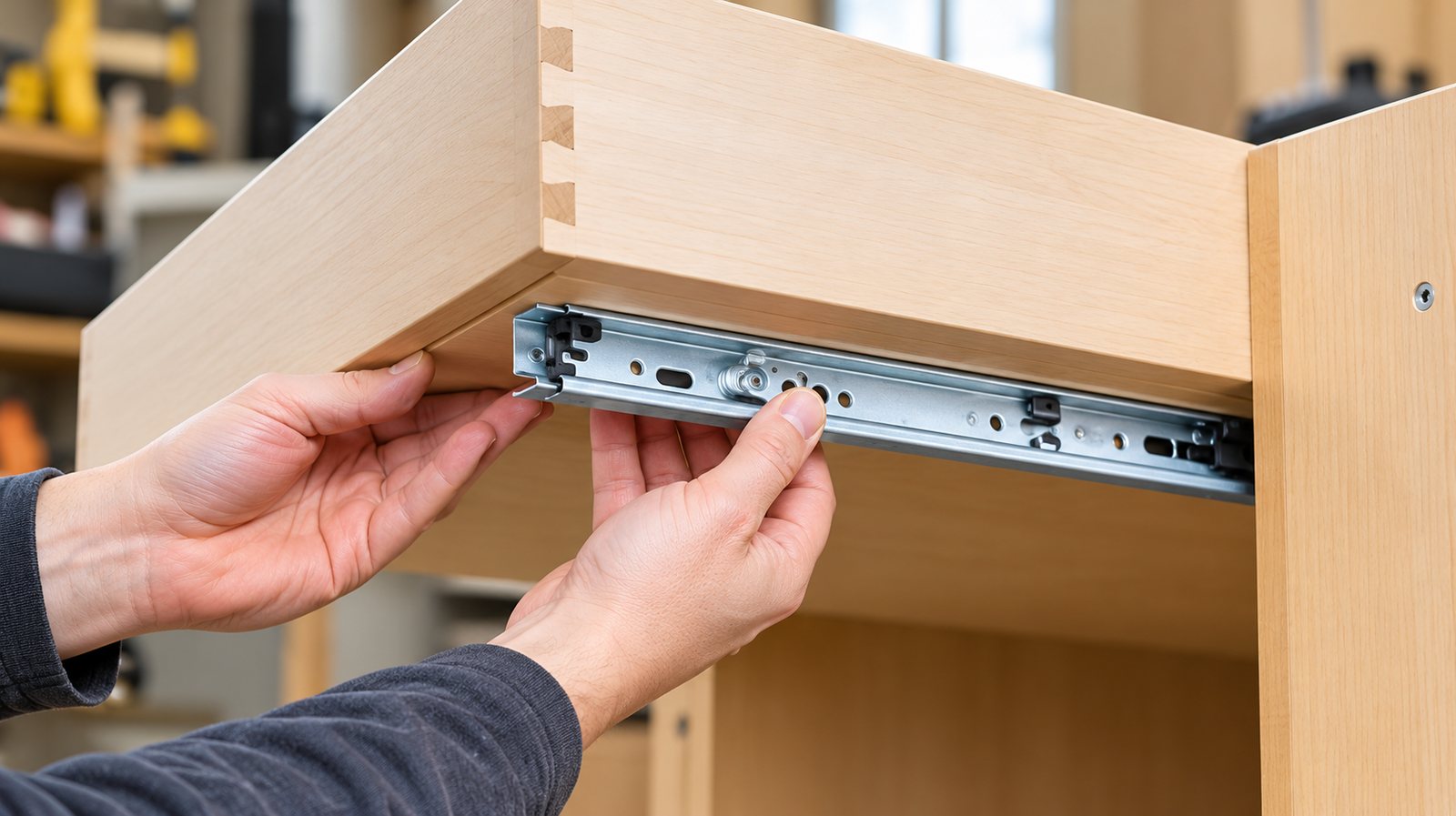
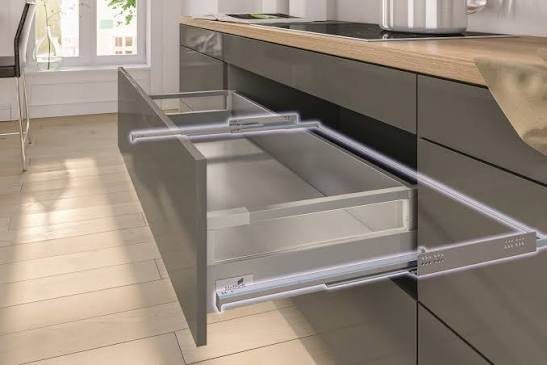
| Drawer runner | Full-extension, concealed undermount, soft-close | You can reach the back of the drawer; runners stay hidden |
| Wide drawers | Runners with a sync bar | Both sides move together, so the drawer doesn't twist |
| Brand | Named on the quotation | Hinge and runner brands are usually stamped on the part, so you can check |
Hinges
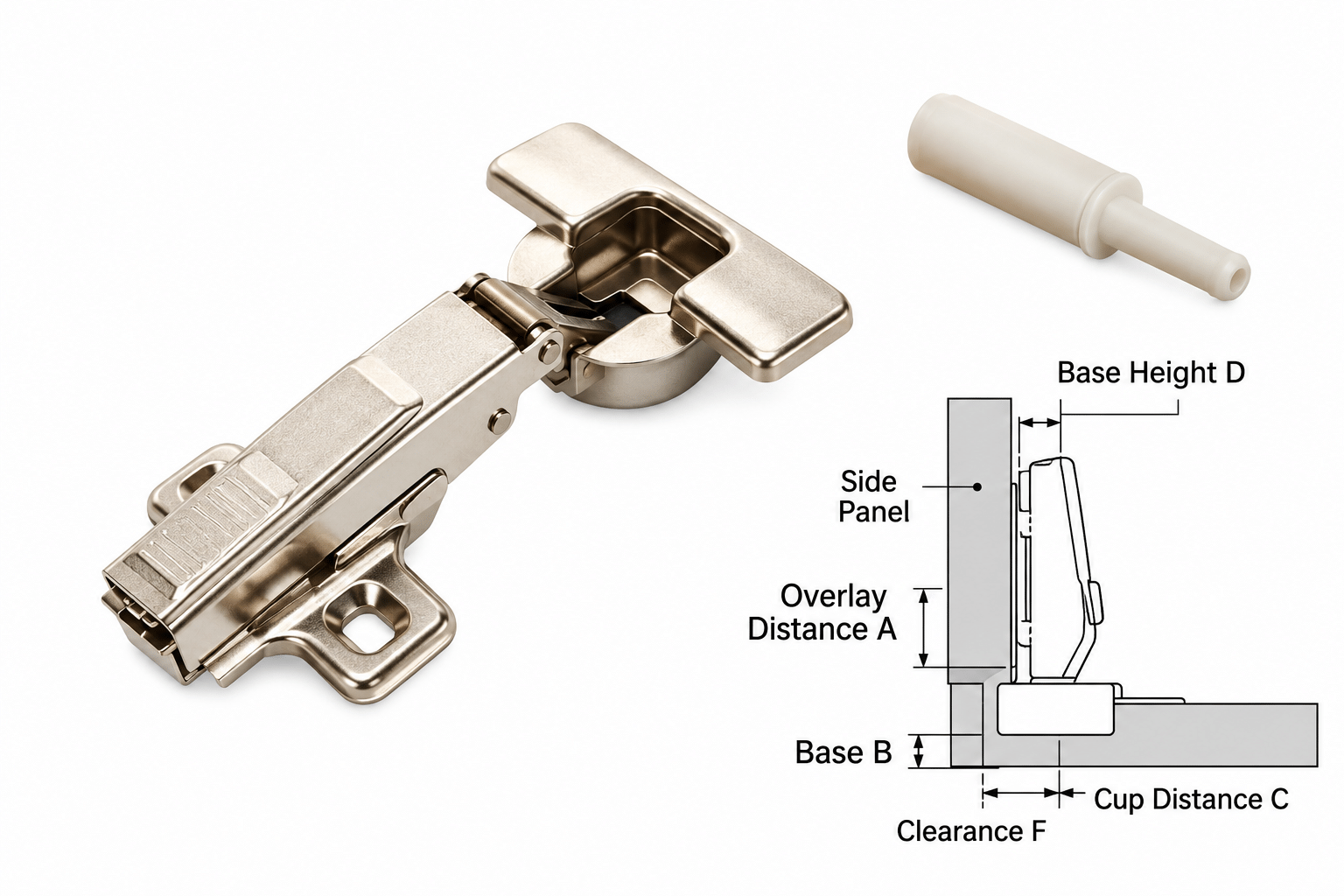
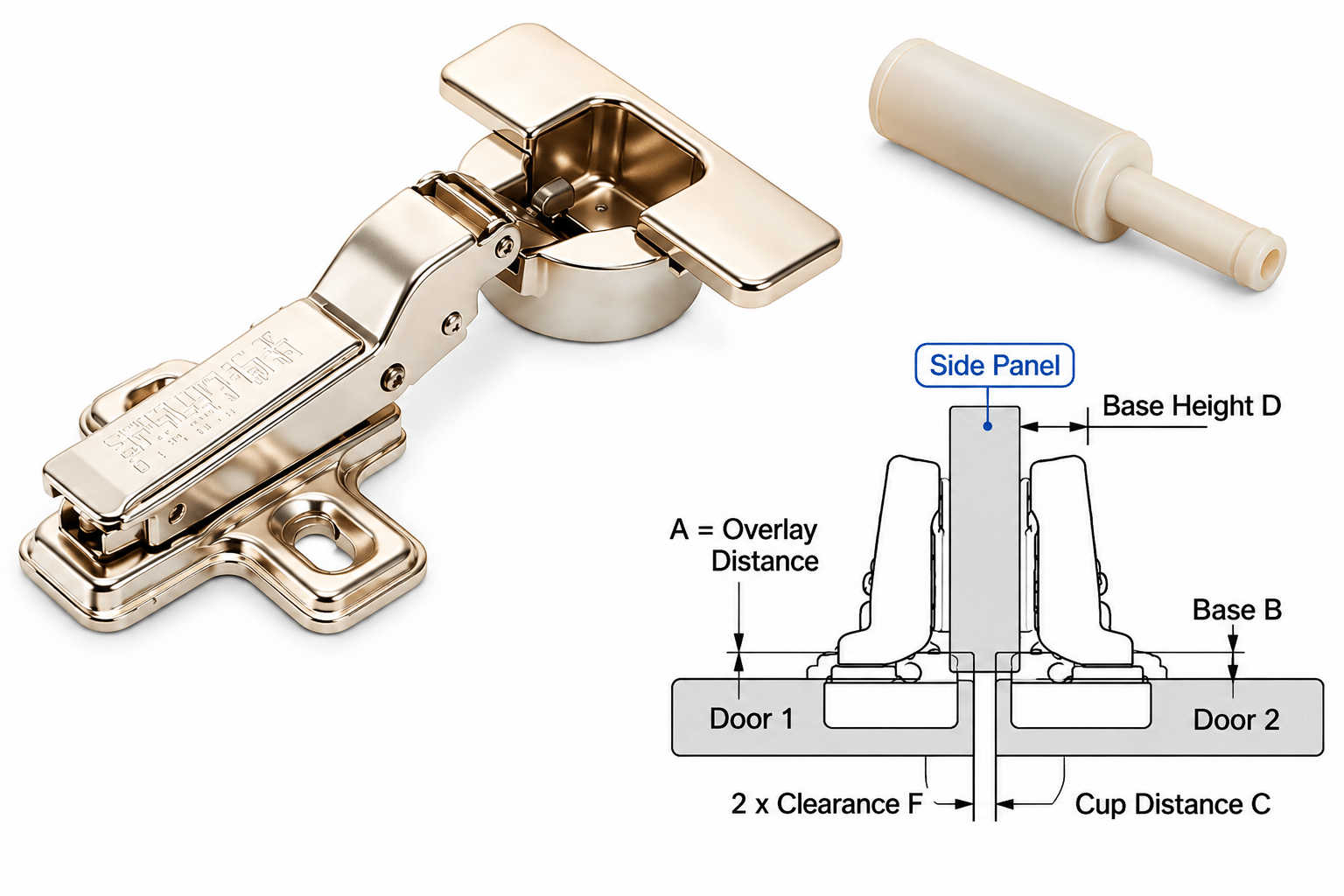
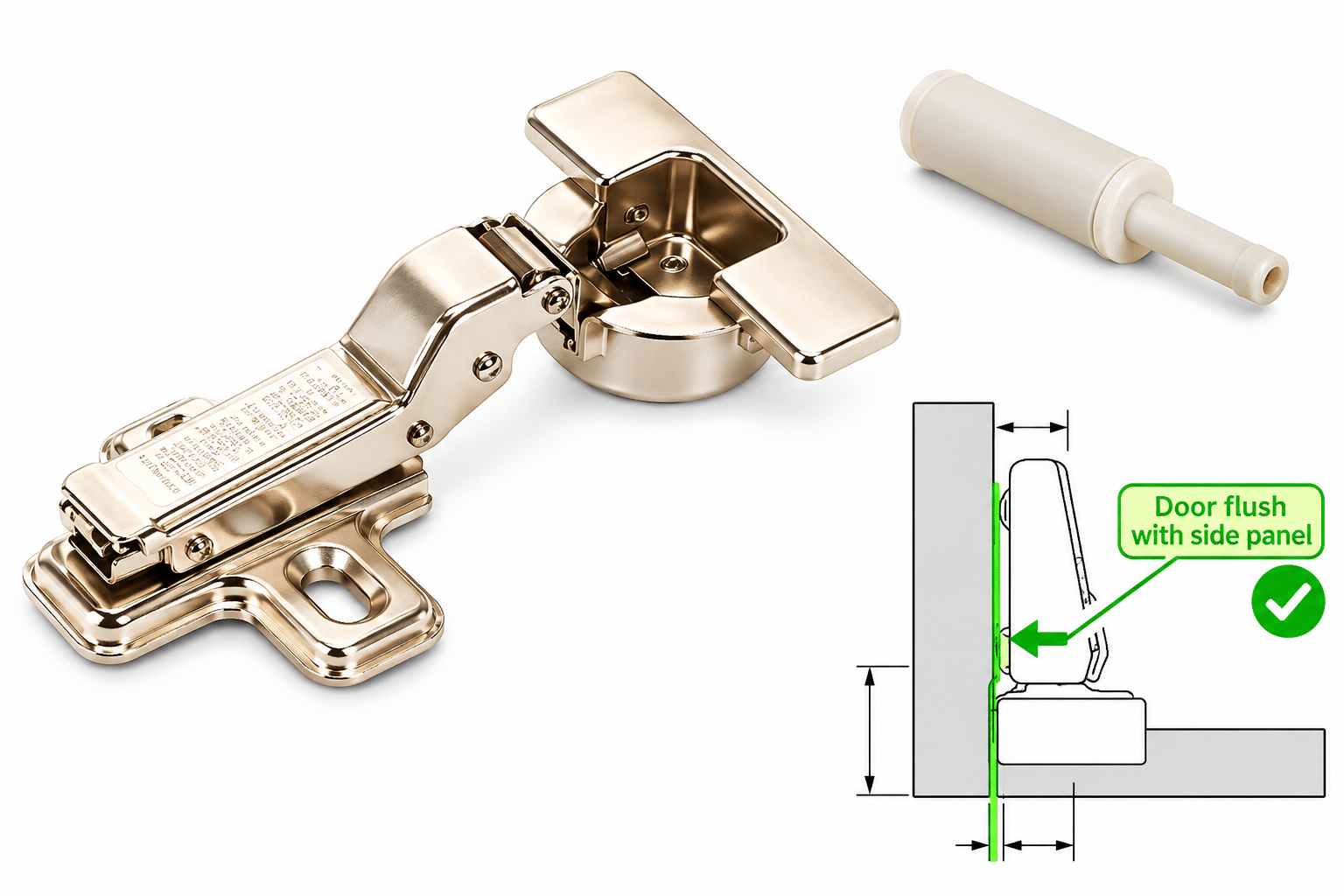
How a hinge sits: full overlay, half overlay, inset
- Full overlay: the door covers the cabinet's side panel completely. The most common look.
- Half overlay: two doors share one middle panel, each covering half of it.
- Inset: the door sits inside the cabinet frame, flush with the front.
Each needs a different hinge arm, so the door style decides the hinge.
Opening angle
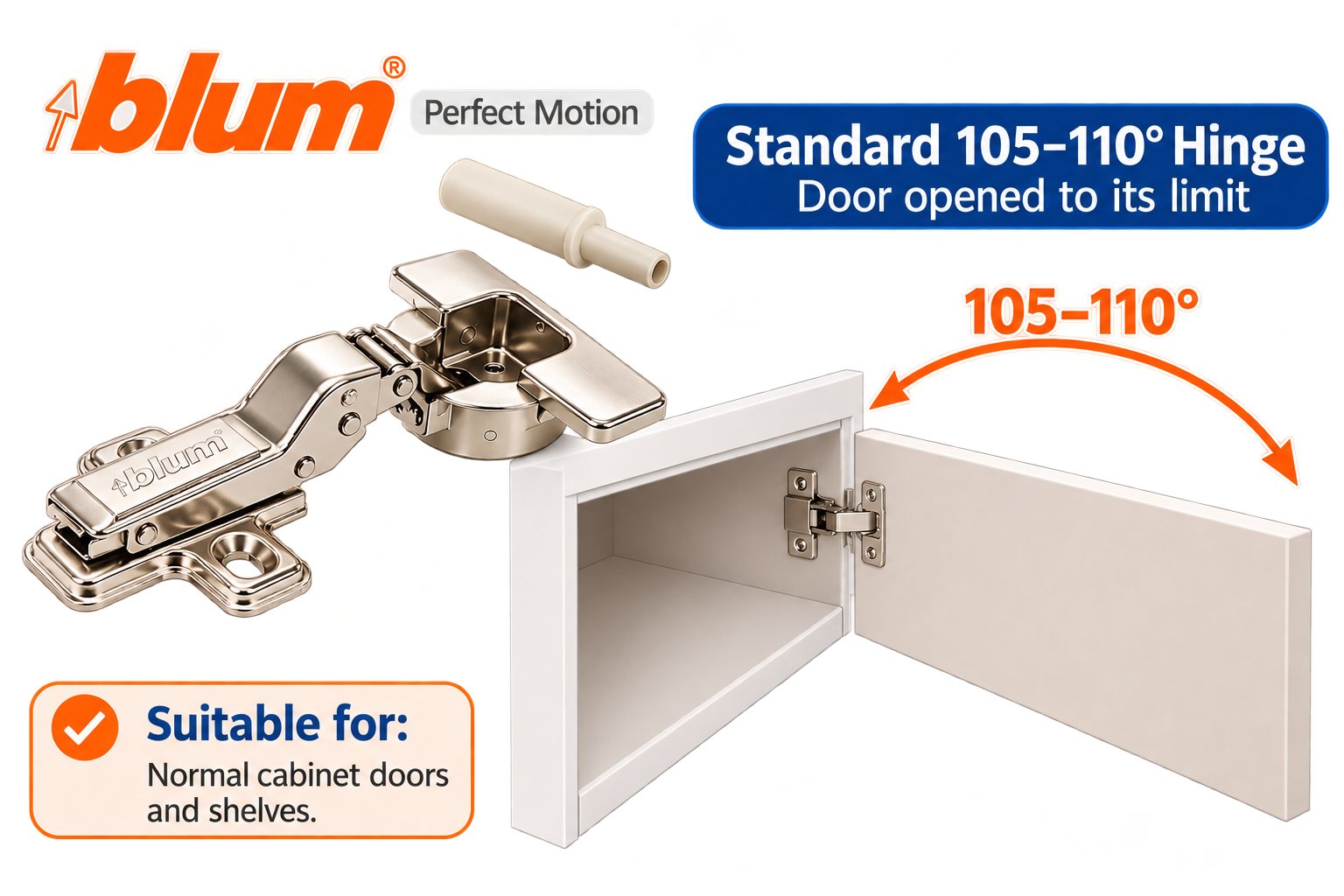
A standard hinge opens about 105–110°. That's fine for shelves. If there are internal drawers or a pull-out behind the door, the door has to swing wider so the drawer clears it. That's where wide-angle hinges (155–170°) come in. They're also used on corner cabinets. Our L-shaped custom built-in and HausSignature wardrobes use 170° wide-angle hinges on casement doors.
Soft-close and push-to-open
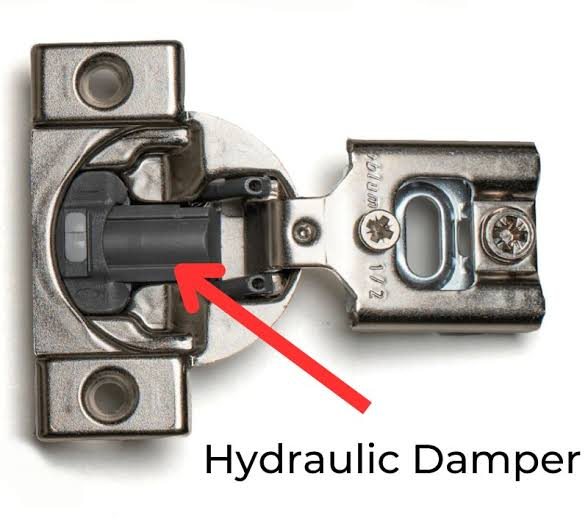
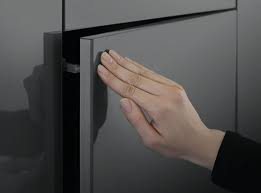
A soft-close hinge has a damper that slows the door in the last few centimetres. Push-to-open uses a spring that pops the door open when you press it, for handle-free designs. Ask how the two are combined on your doors, because not every push-to-open setup keeps the soft-close feel.
How many hinges, and why tall doors need more
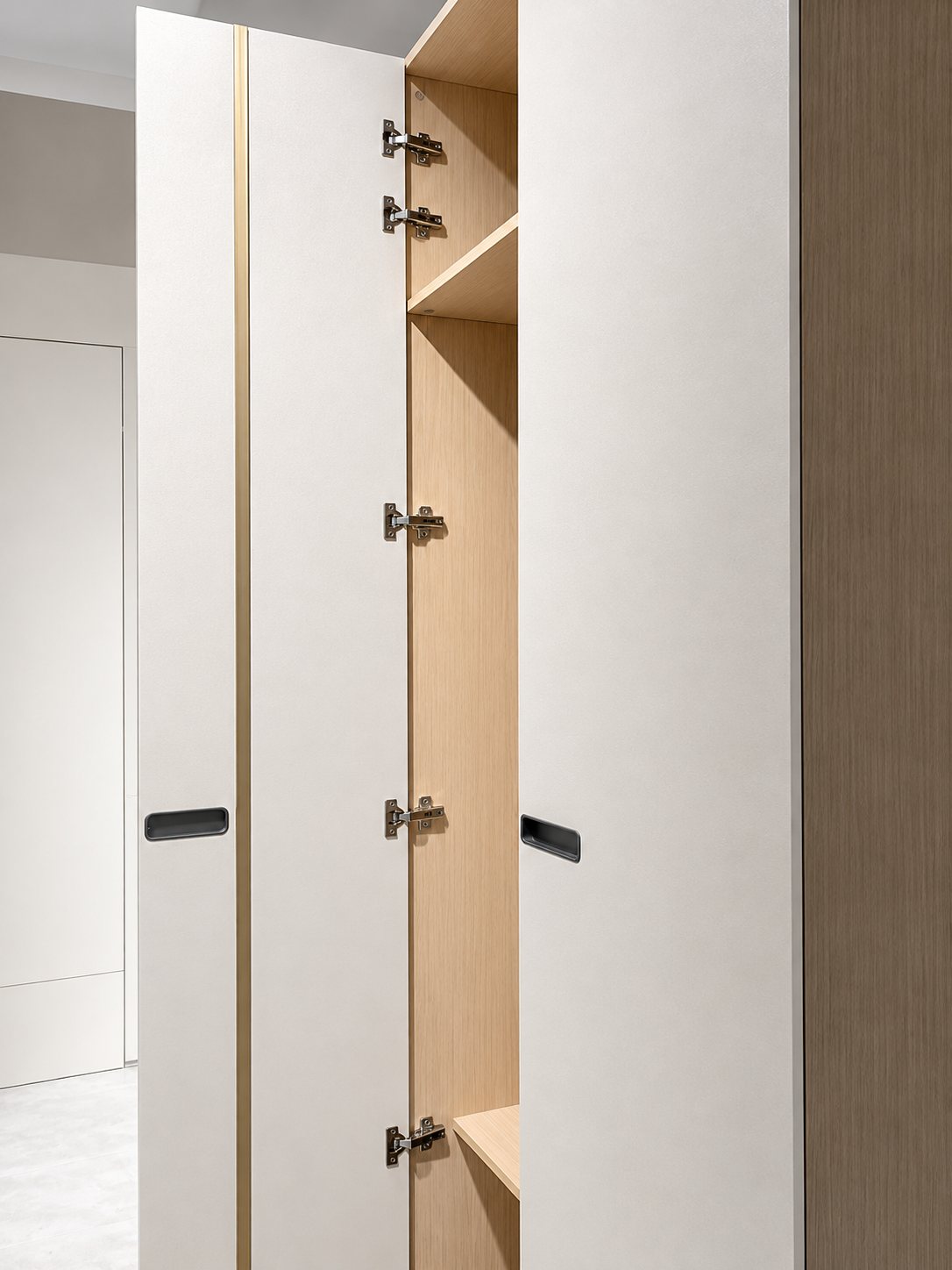
Taller and heavier doors need more hinges spread along the edge. Very tall doors, especially lacquer and veneer, can also bow over time, which is why factory manuals call for a hidden straightener on doors over about 2 m.
Fixing a sagging door yourself
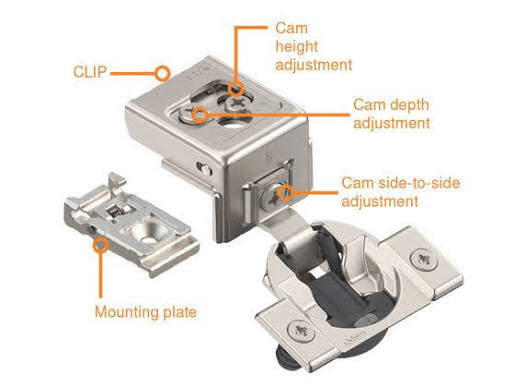
Most modern hinges have three adjustment screws: side to side, up and down, and in and out. If a door has dropped or the gaps look uneven, a quarter-turn on the right screw usually fixes it.
Lift-up and drop-down doors
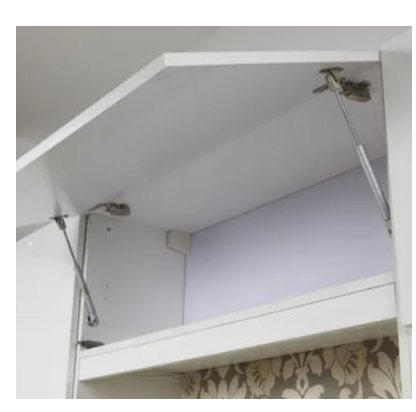
Top cabinets above a wardrobe and kitchen wall cabinets often use doors that lift up instead of swinging out. In a small room, that means no door swinging at head height.
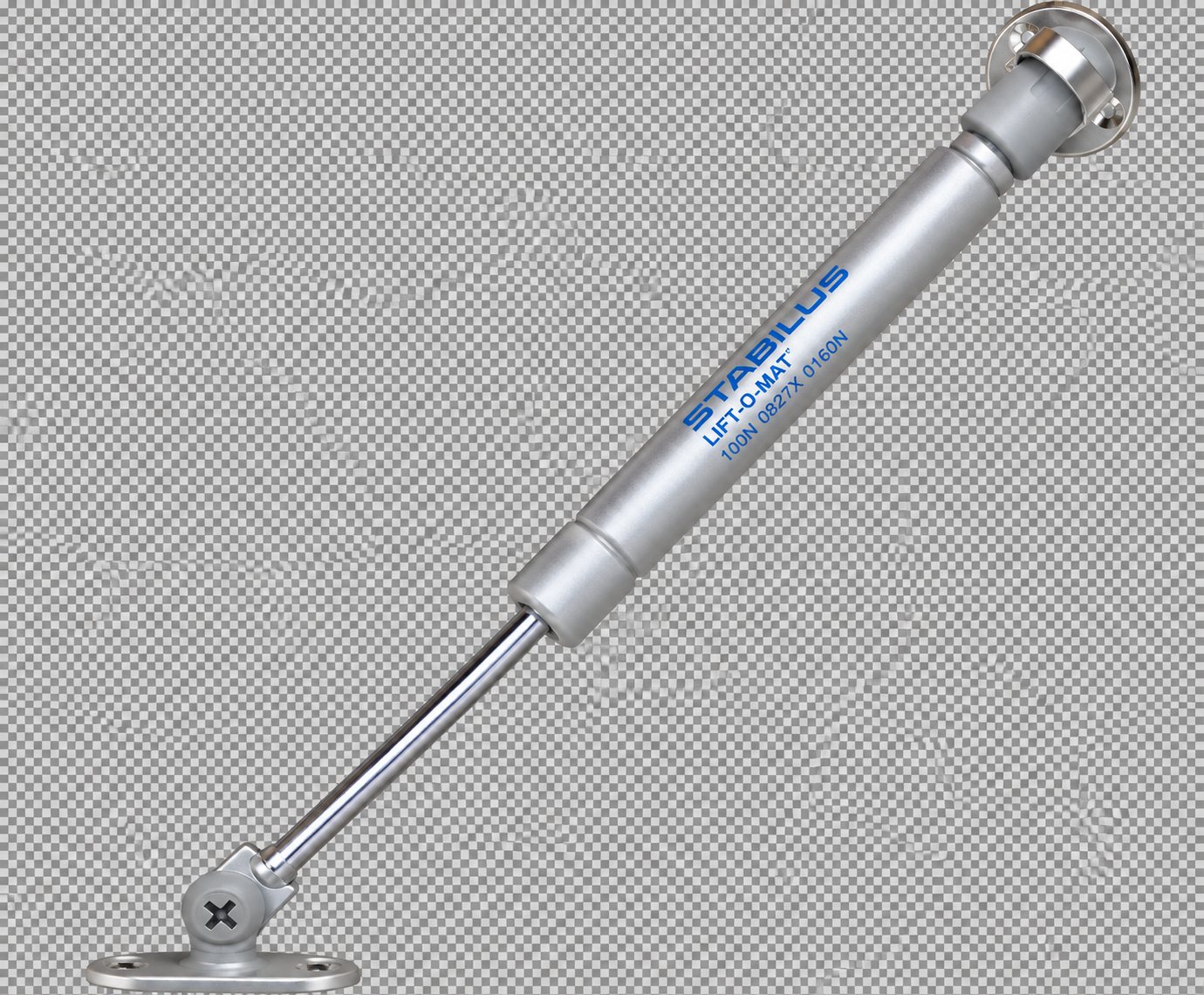
- Lift-up supports are sized to the door's width, height and weight. The factory manual sizes them with a torque calculation for exactly this reason. Too weak and the door drifts down; too strong and it springs open.
- Drop-down doors (hinged at the bottom) suit low, shallow compartments. The factory spec limits them to doors 300–500 mm tall.
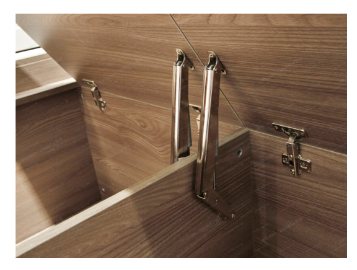
- Platform and tatami lids use gas springs rated by force. The factory range runs from 60 N to 180 N.
- Don't mix systems: the factory manual notes that lift-up supports and drop-down stays don't work with push-to-open mechanisms.
Want to open and close them yourself?
Book a showroom visitDrawer runners
The three types
| Type | How it works | Good for | Watch for |
|---|---|---|---|
| Side-mounted ball-bearing | Metal slides on each side of the drawer, often 3-section full extension | Budget drawers | Visible metal sides, can rattle, takes width from the drawer |
| Concealed undermount | Runners hidden under the drawer, usually with built-in soft-close | Most modern wardrobes and kitchens | Runner length must match cabinet depth |
| Push-to-open undermount | Undermount runner with a spring that opens the drawer when pressed | Handle-free fronts | Opens if bumped; check the soft-close feel |
Load and lifespan
Runners are rated by the weight they carry and the open-close cycles they're tested to. As an example from the factory manual, one imported undermount runner is rated 25 kg and 50,000 cycles. Kitchen pot drawers need more than a wardrobe underwear drawer. Ask for the rating of the runner on your quotation.
Runner length and cabinet depth
Undermount runners come in set lengths (for example 250–500 mm in 50 mm steps) matched to the inside depth of the cabinet. A shallow cabinet gets a shorter runner and a shorter drawer. That's one reason a shallow wardrobe loses drawer capacity faster than you'd expect.
What we use
- Custom built-in and HausSignature: Blum hinges and runners.
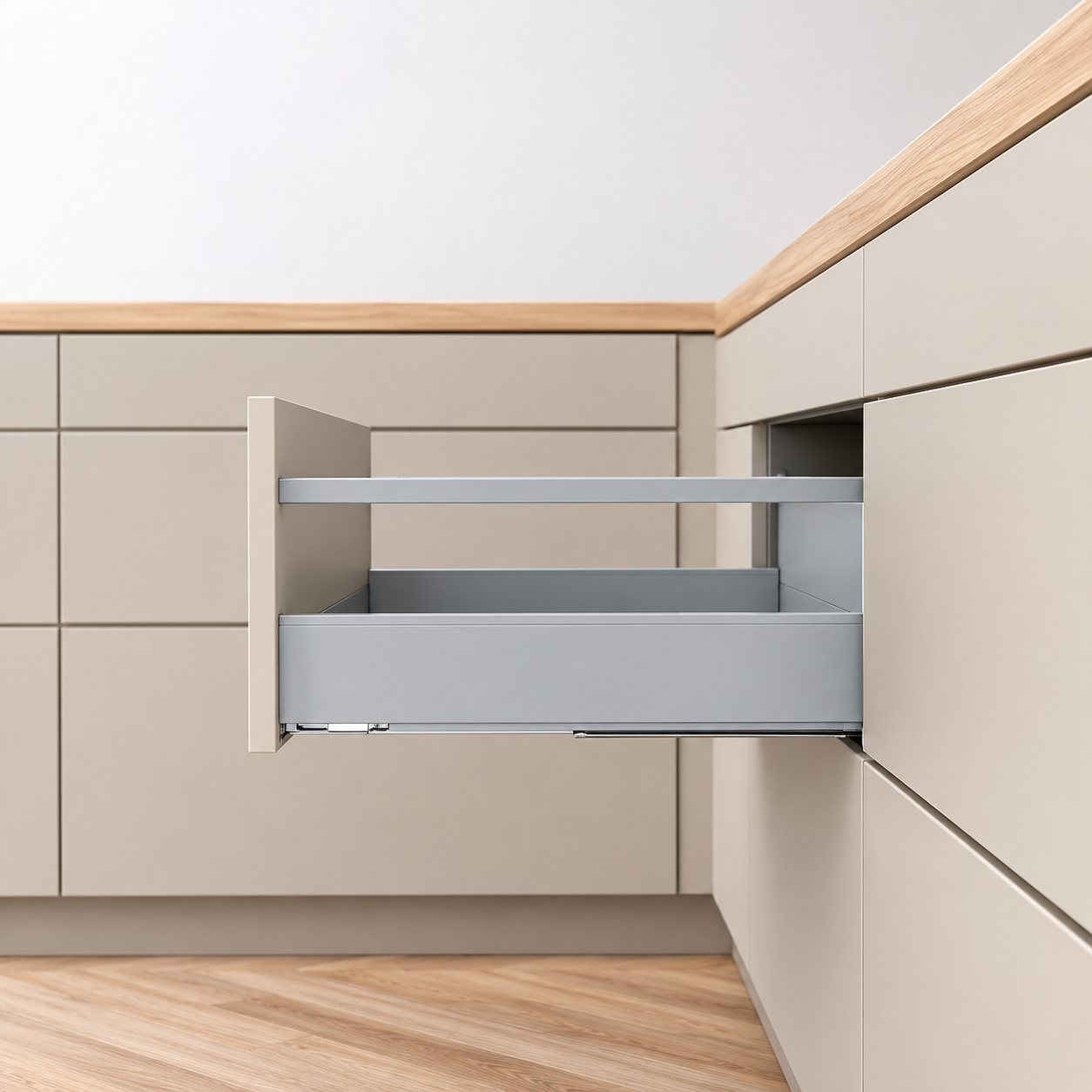
- HausAluminium: Blum hinges and soft-close, and Blum Merivobox drawers.
- HausFlex: soft-close wooden drawer modules.
- HausPole: drawers suspended on the poles.
How to check hardware in a showroom: 1 minute
- Close a door with a flick. It should slow down and close quietly, not bang.
- Look at the gaps. Even gaps between doors mean the hinges are aligned.
- Open a drawer fully. You should see the back of the drawer (full extension).
- Press down on the open drawer front. A little give is normal. A lot of sag means light runners.
- Push one corner of a wide drawer shut. It should close straight, not twist.
- Look for the brand. Blum and other branded hinges usually have the logo stamped on the hinge arm or cup.
Frequently asked questions
Are Blum hinges worth paying for?
For doors and drawers you use daily, branded hardware holds its alignment and soft-close longer. It's one of the few places where paying more is easy to justify.
Why does my cabinet door sag?
Usually the hinge has shifted or loosened. Most hinges have adjustment screws that fix it in a minute. If the screw holes in the board have worn, the panel may need repair.
What is a wide-angle hinge for?
It lets a door open far enough (155–170°) for internal drawers to slide out past it, and suits corner cabinets.
Undermount or side-mount runners?
Undermount runners are hidden, usually soft-close and give a cleaner look. Side-mount ball-bearing runners cost less but show on the drawer sides.
Can I have push-to-open and soft-close together?
It depends on the hardware. Some push-to-open setups keep a soft-close action and some don't, so try the exact doors in our showroom before you decide.
Free advice
Want to feel the difference?
Want to feel the difference? Open and close the doors and drawers at our Eunos Technolink showroom (Mon–Sat, 9:30am–6:30pm), or WhatsApp +65 6842 1514 with your quote and we'll tell you what hardware it specifies.