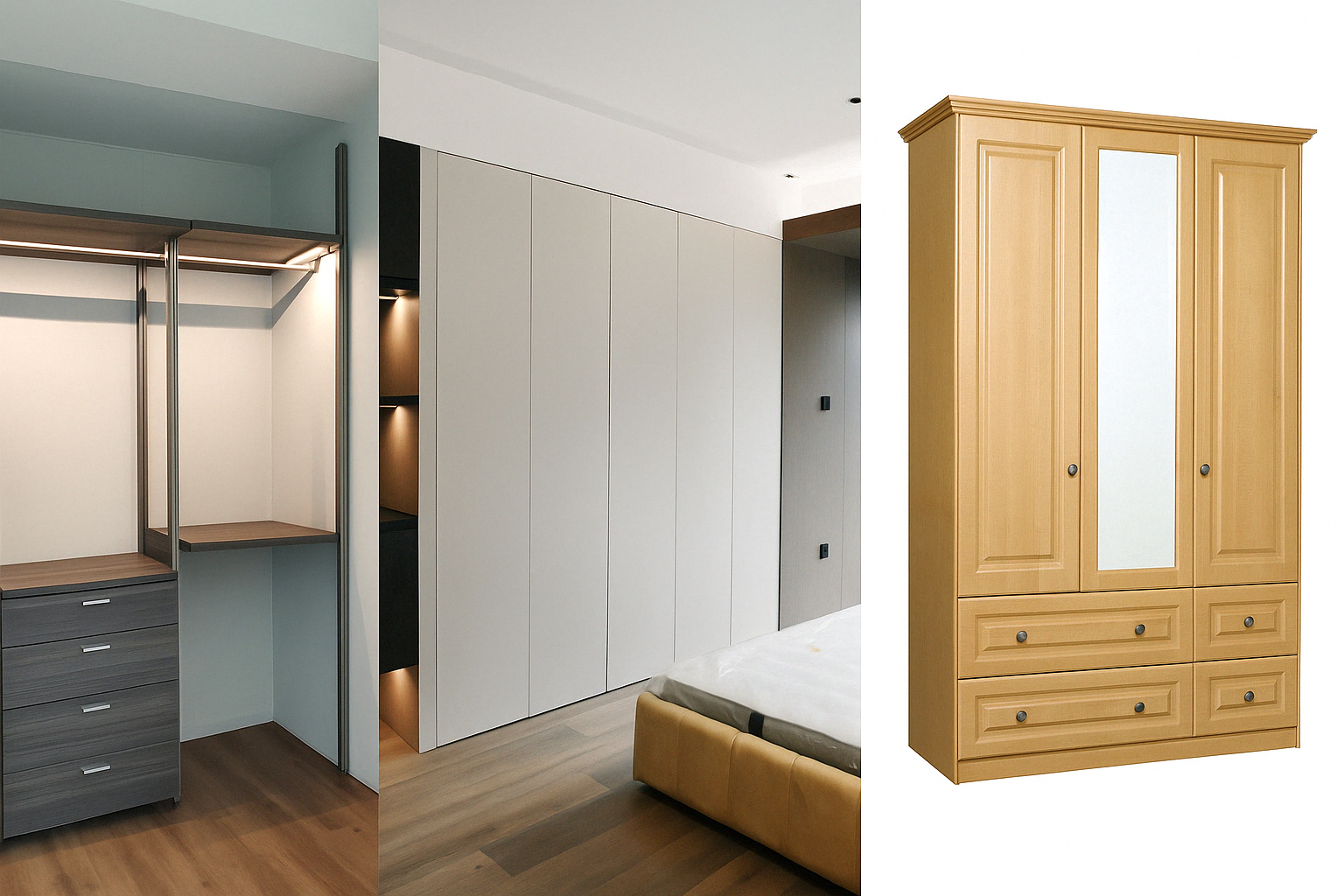
Pole System Wardrobes: The Better and Smarter Choice for Singapore Homes? (Updated in 2026)
TL;DR
Pole system wardrobes maximize vertical space and adapt to ductwork, beams, niches and narrow walls.
They install in 1–2 days, relocate easily and cost about 15% less than traditional built-ins.
Modular layout reconfiguration post-installation lets you extend, split or move the system as needed.
Perfect for HDB, BTO and condo renovations—no boxing up, no permanent drilling, 2-year warranty.
TL;DR
Pole system wardrobes maximise vertical space and adapt to beams, trunking, niches, slanted walls, bay windows and DB boxes — without costly box-ups.
Install in 1–2 days. Relocate after MOP. Reconfigure as your needs change.
Costs about 15% less than traditional built-ins. 2-year warranty.
11 real Singapore case studies — HDB, BTO and condo.
Introduction
Maximising bedroom storage is a real challenge in Singapore's space-constrained homes — whether you're collecting keys to a new BTO, renovating a resale HDB, or fitting out a condo unit. The conventional answer — built-in carpentry — sounds straightforward until you encounter a structural beam, a DB box on the wall, a bay window ledge eating into your floor space, or an aircon trunking that changes the wall profile entirely.
Most contractors respond to these obstacles the same way: box them up, fill the gap, lose the space. It works. But it's permanent, and it's wasteful.
HausBedroom's HausPole system was built for exactly these situations. This guide covers 11 real installation case studies across Singapore — each one a layout problem that a pole system solved cleanly, without hacking or expensive box-ups.
What Is a Pole System Wardrobe?
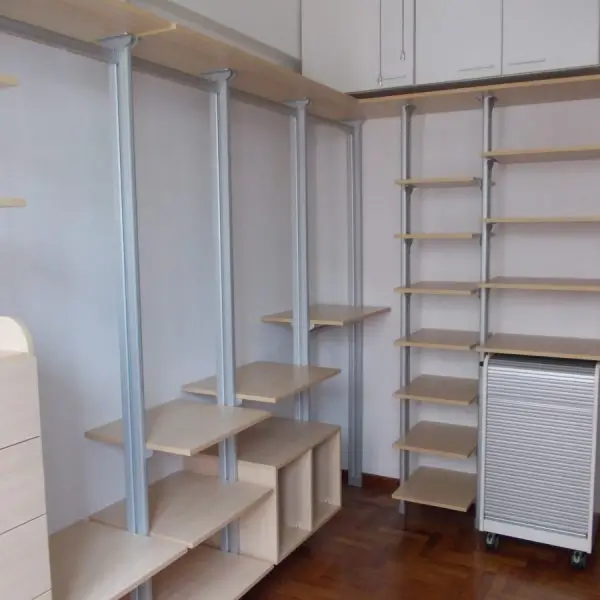
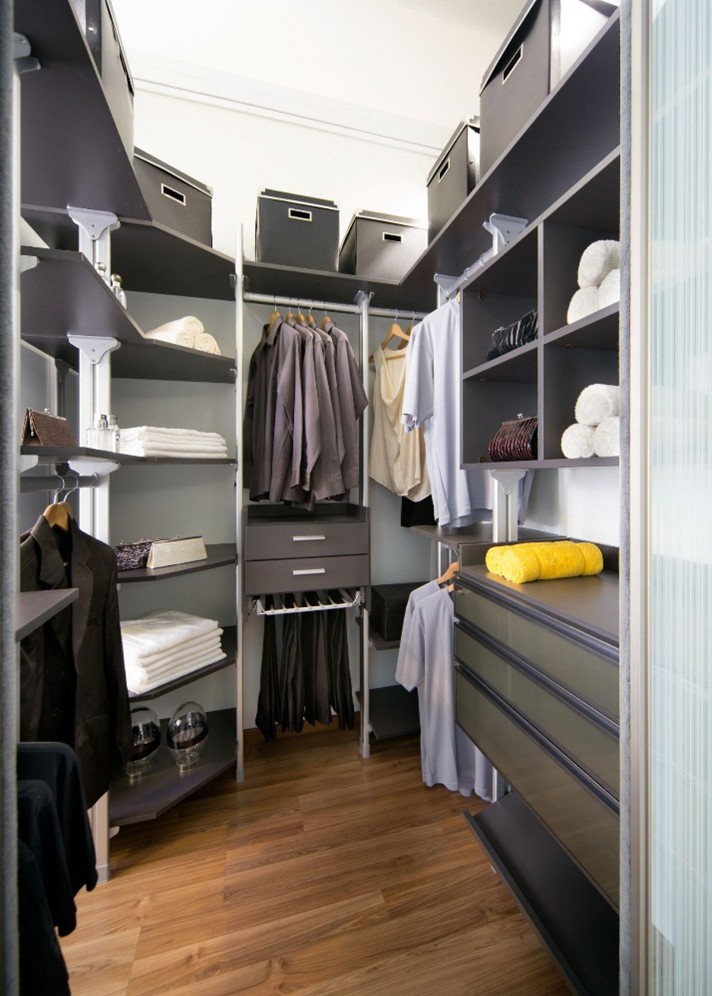
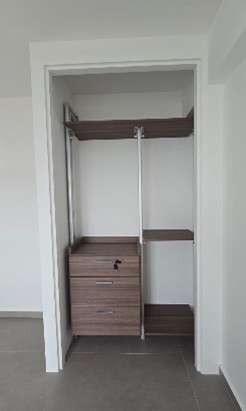
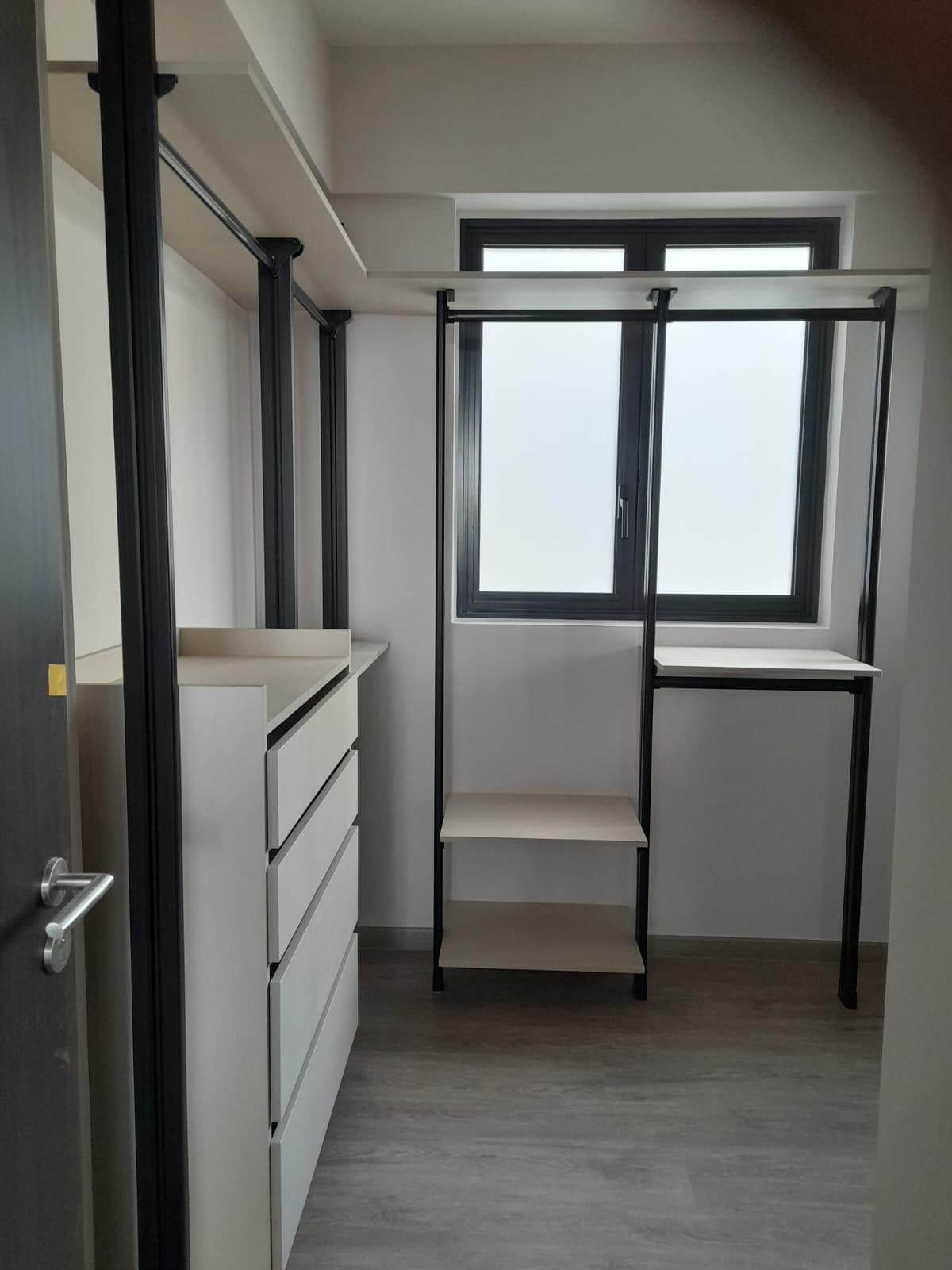
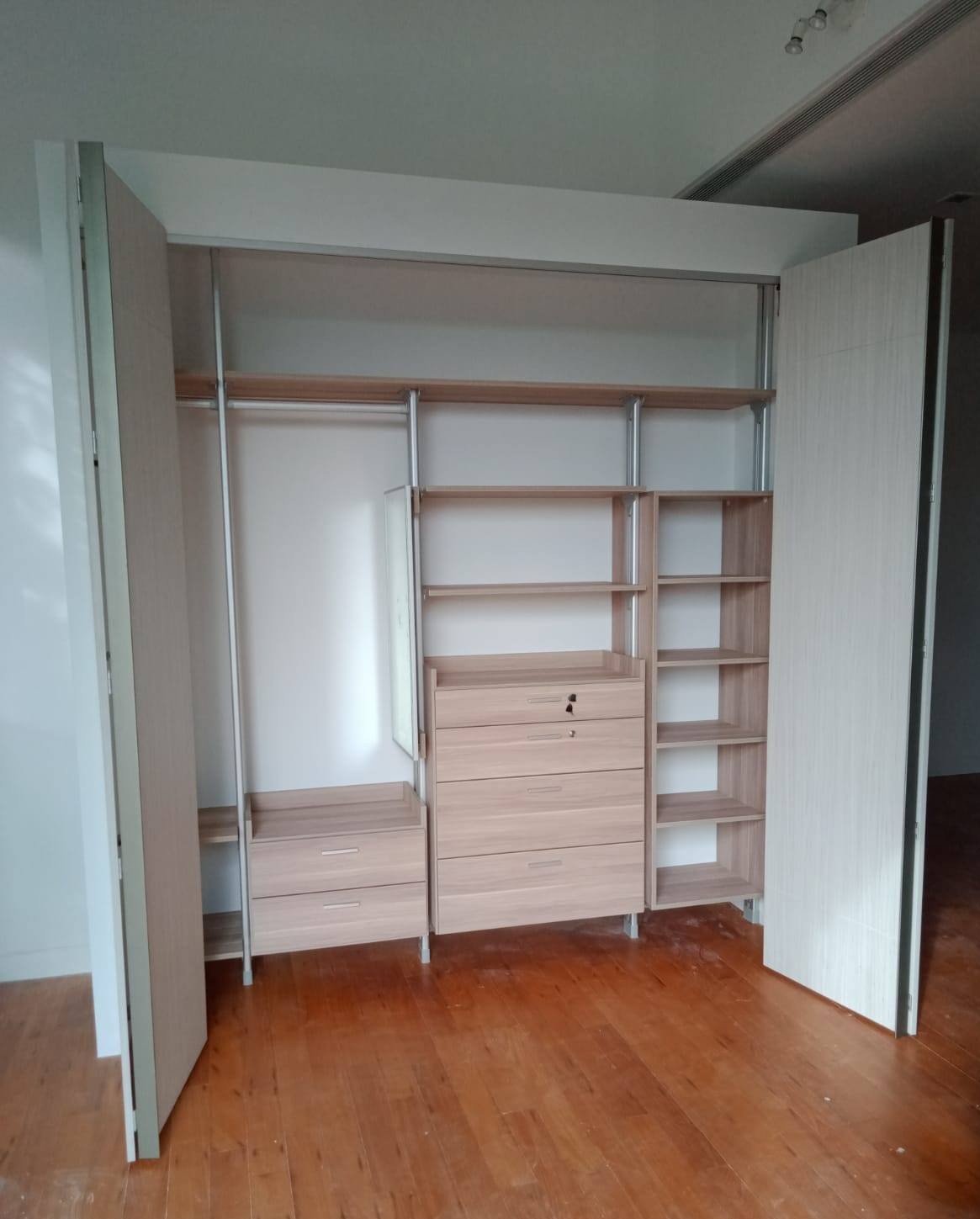
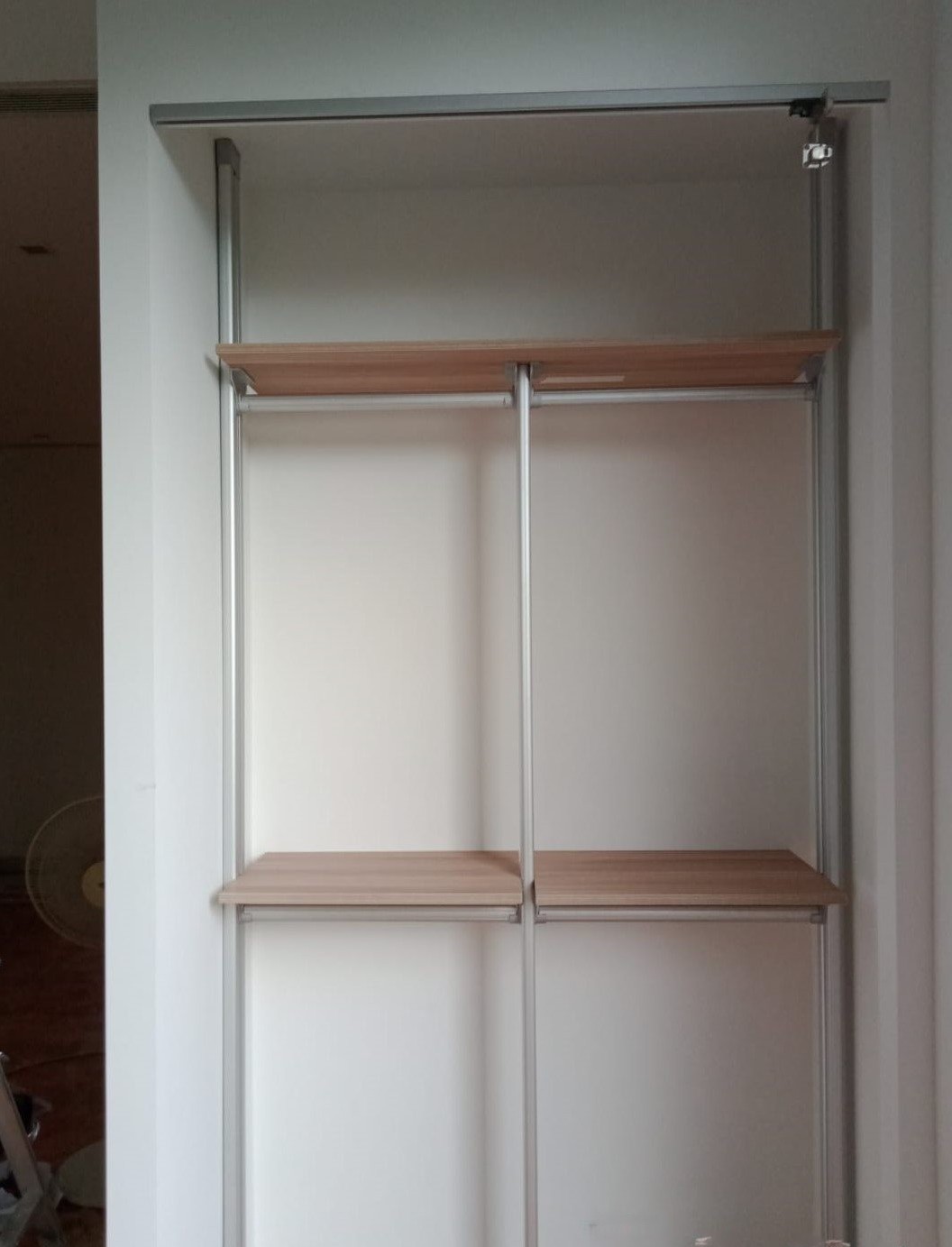
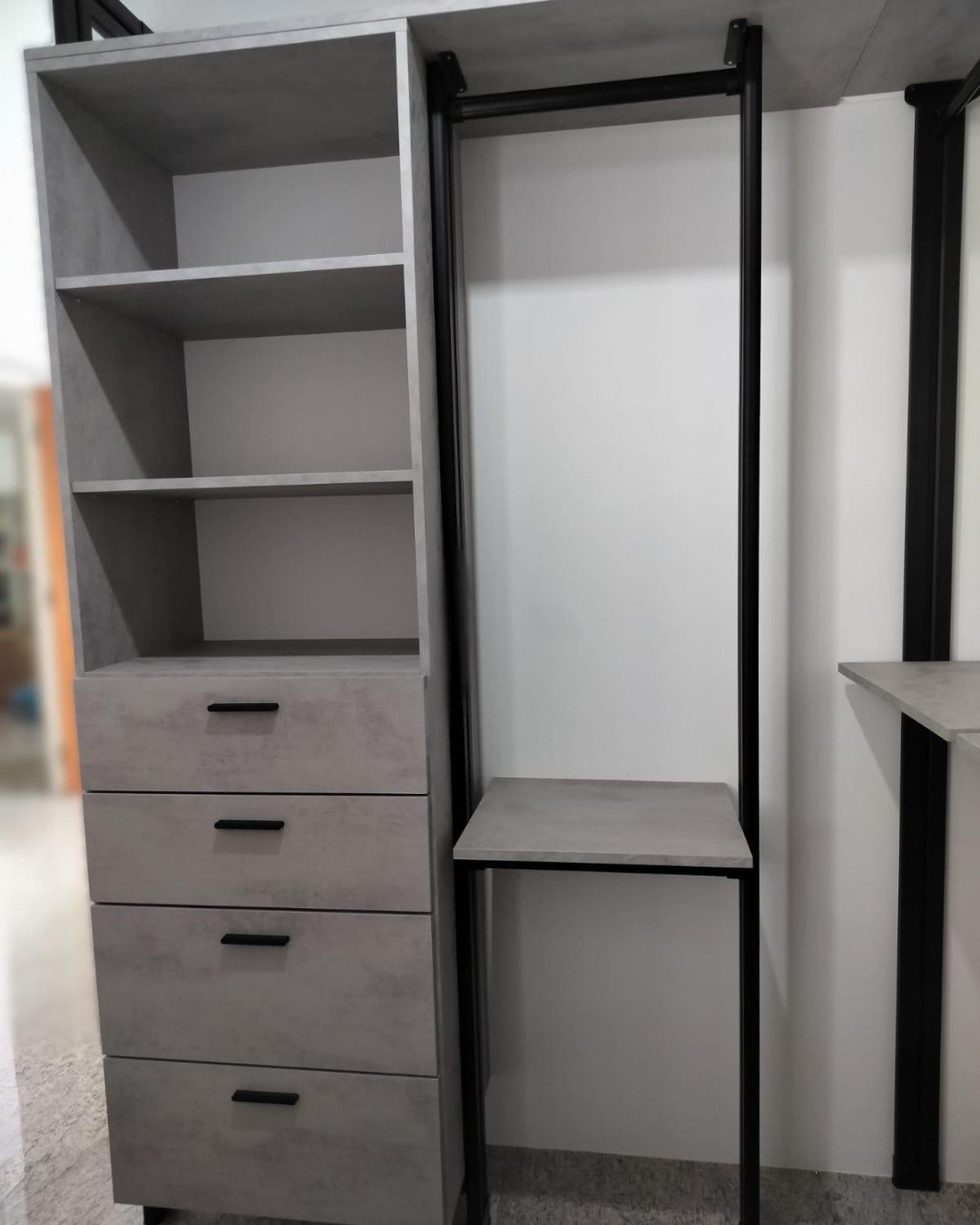
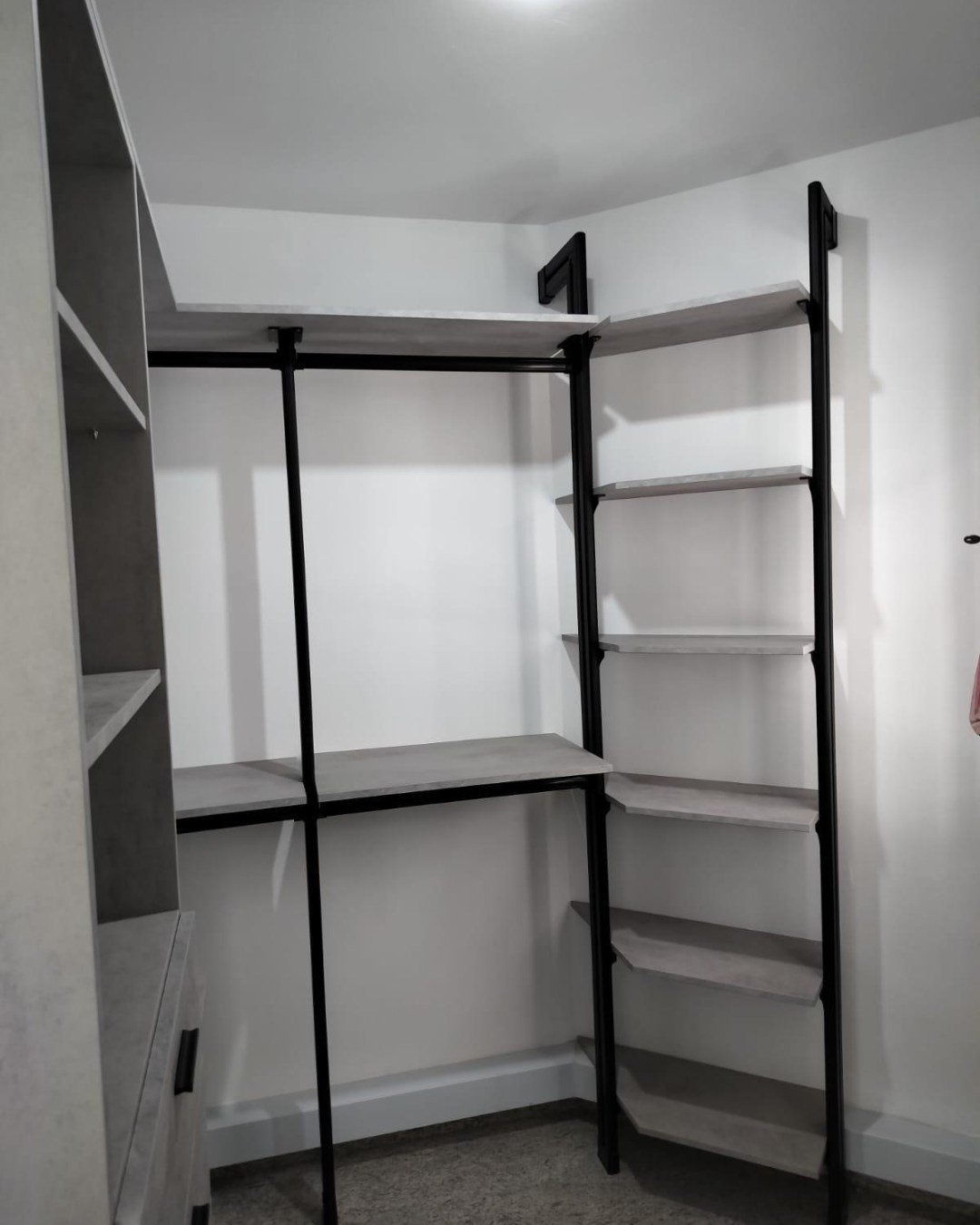
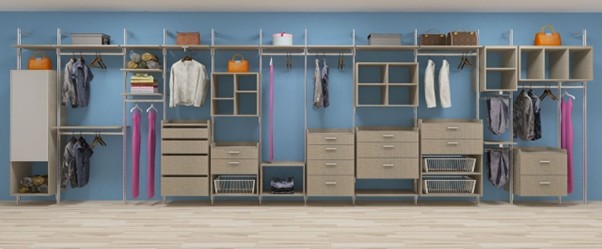
A pole system wardrobe is a modular, reconfigurable storage solution built from floor-to-ceiling vertical poles with adjustable components — hanging rails, shelves, drawers, baskets and accessory trays. Unlike traditional built-ins, the system is designed around your space and lifestyle, not the other way around.
Poles can be positioned at any point on the wall, at different depths, and at varying heights. That flexibility is what makes them uniquely suited to Singapore's HDB and condo layouts, where no two walls behave exactly the same way.
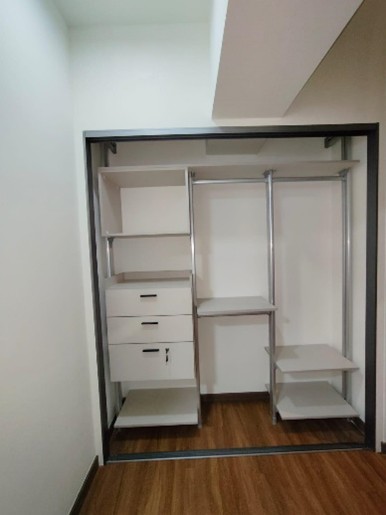
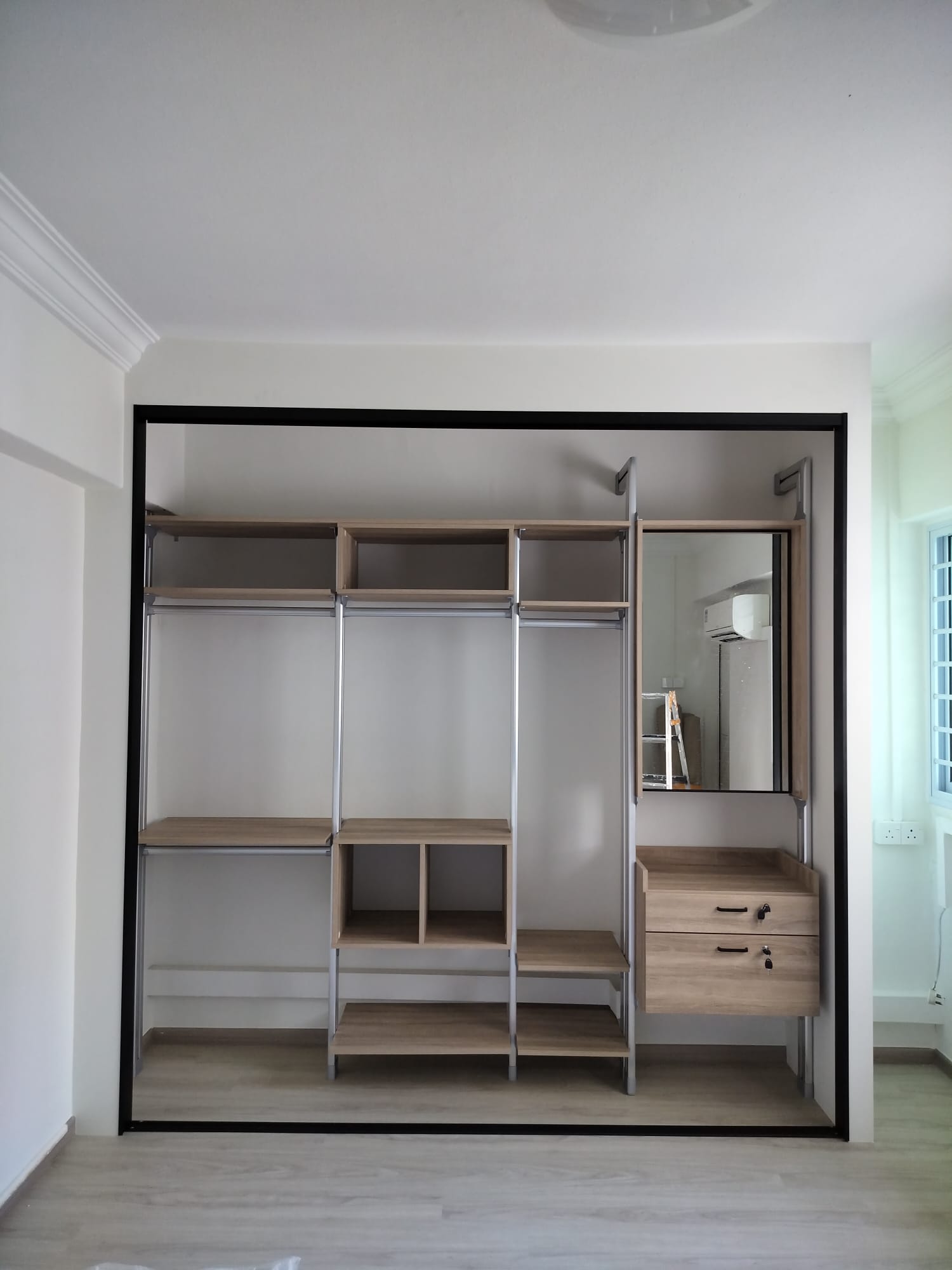
Modular HausPole system adapting beneath a beam — open configuration
Why It Matters in Singaporean Homes
Singapore bedrooms present a consistent set of obstacles that traditional carpentry handles poorly:
Ducted aircon trunking running along walls and ceilings
Structural beam drops at varying heights and depths
Recessed niches and bomb shelter walls
DB boxes and power points embedded mid-wall
Bay window ledges reducing usable floor area
Slanted or irregular wall profiles
Narrow wall widths under 2,400mm
Window placements that interrupt wardrobe runs
The need to relocate or reconfigure after MOP
Pole systems address all of the above without hacking, permanent fixtures, or wasted voids. The 11 case studies below show exactly how.
Case Study 1
Aircon Trunking
Challenge
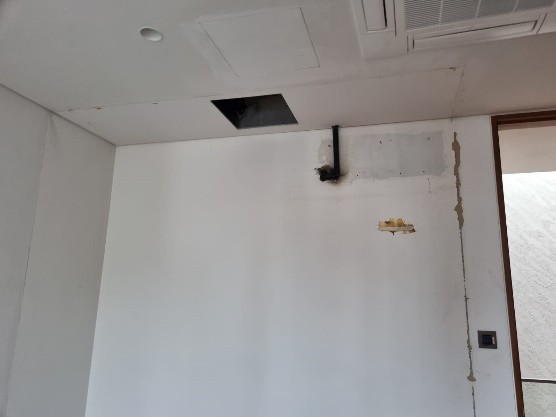
In a 4-room BTO in Toa Payoh, bulky aircon trunking ran along the ceiling line. Traditional wardrobes would either clash with it or require boxing that reduced the usable depth of every shelf.
Solution
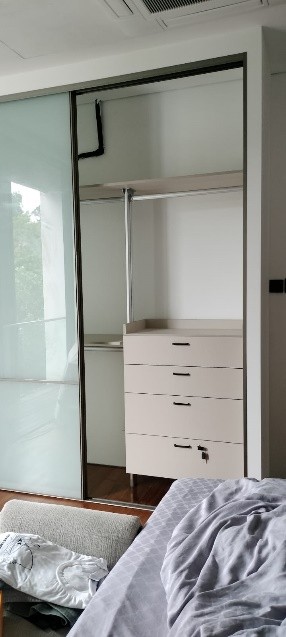
The HausPole system was installed just below the trunking, integrating cleanly without blocking maintenance access. Usable storage increased by 30% compared to a comparable built-in design.
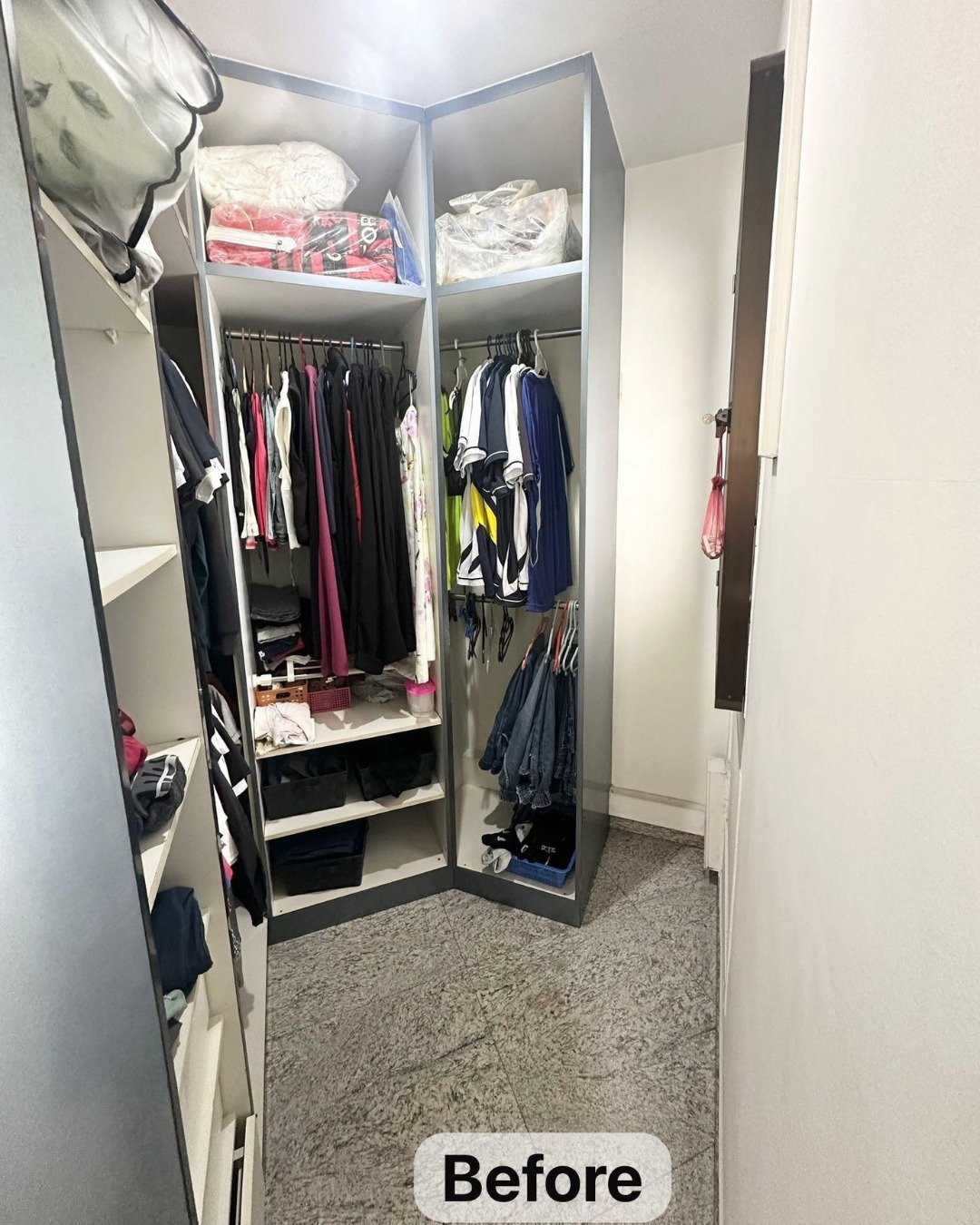
Before: boxed-up trunking reduces storage depthAfter: pole system fits beneath trunking with full depth maintained
Case Study 2
Beam Drops
Challenge
A resale flat in Yishun had a structural beam running across the ceiling edge, leaving no clean wall surface for a conventional wardrobe run.
Solution
Poles were anchored above and below the beam, allowing rails and shelves to pass through unobstructed. Full-height storage, clean lines — with or without doors.
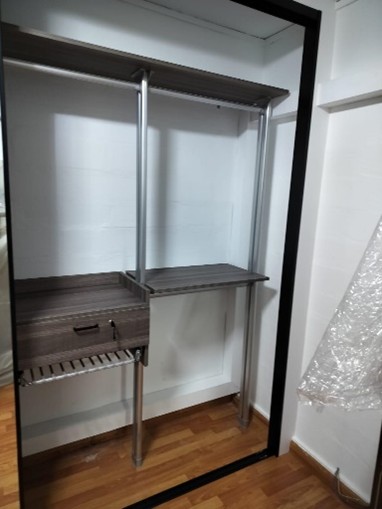
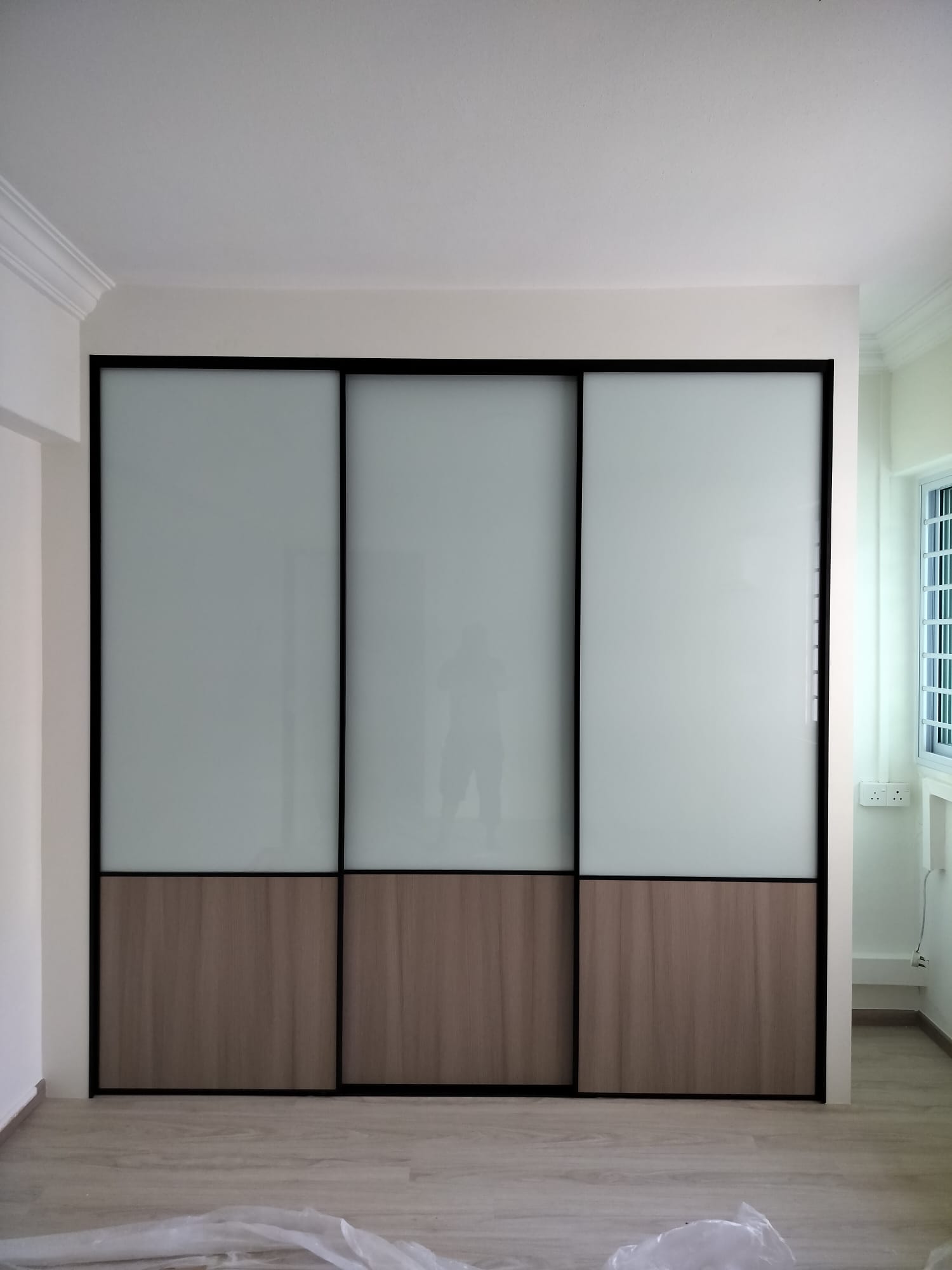
Closed: sliding doors conceal beam and system seamlesslyOpen: modular system integrates neatly around the beam
Case Study 3
Recessed Niches
Challenge
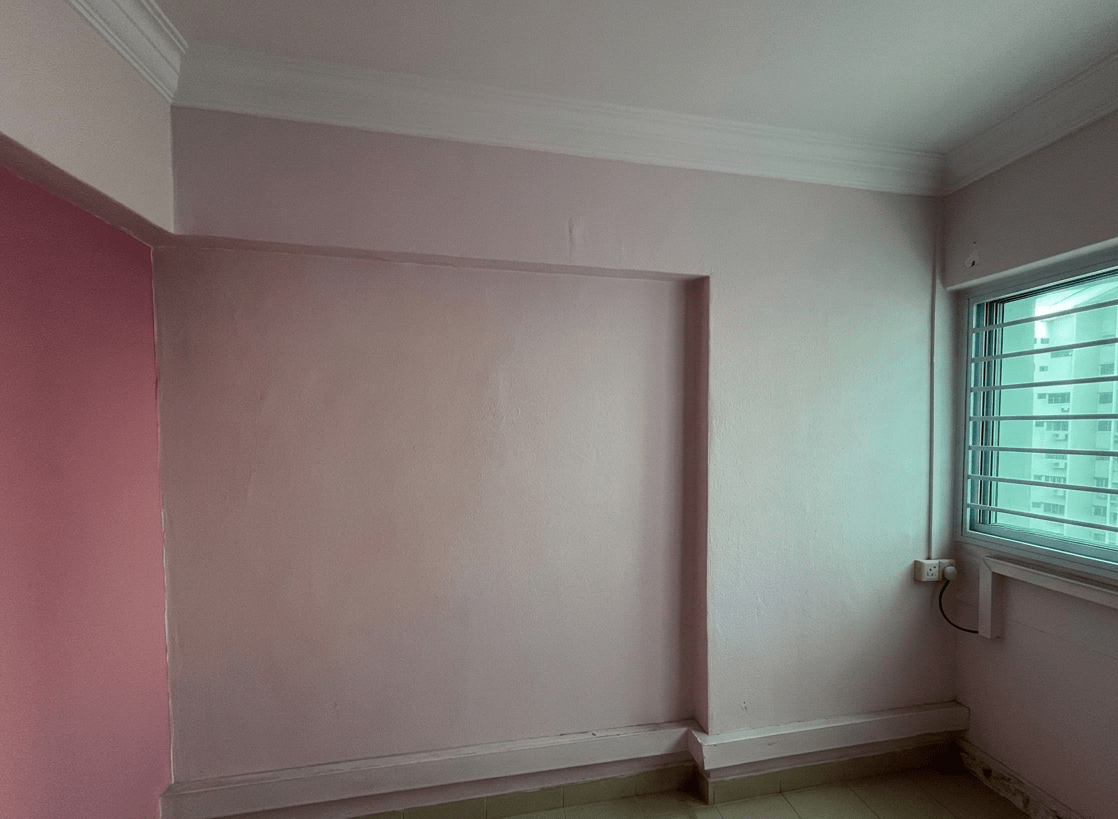
A Jurong West BTO had a 15cm wall recess in the bedroom. Flush built-in cabinetry would either lose that depth entirely or require a custom carpentry insert to fill it.
Solution
HausPole rails followed the niche contour, recovering 7.5cm of additional shelf depth at no extra carpentry cost. The system sits flush at the front.
Before: recessed niche wastes depth with a conventional wardrobeCase Study 4
Narrow Walls & Door Clearance
Challenge
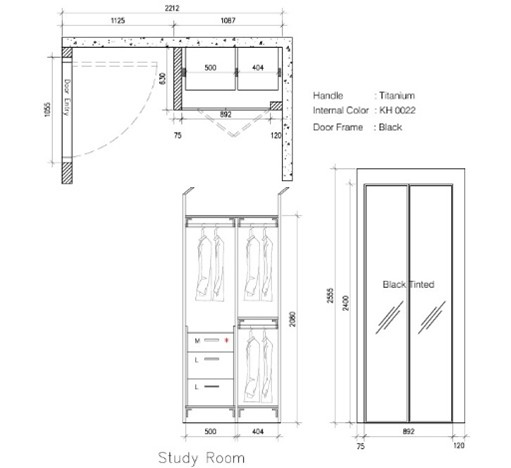
In a Tampines condo, a 1.1m-wide wall left only 40cm between the bed and the wardrobe face. Swing doors were completely impractical.
Solution
A two-module pole system with sliding doors was installed, enabling comfortable access. When the family grew, the layout was reconfigured to add hanging space — without replacing the system.
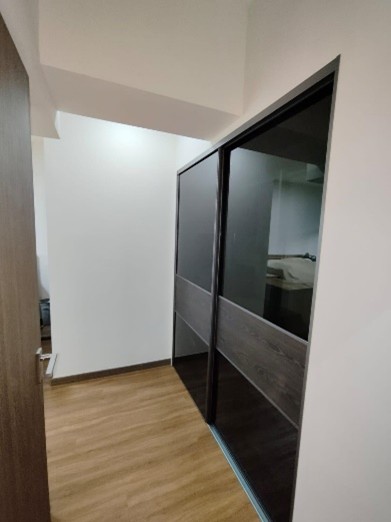
Design plan: wall clearance dimensions and sliding door configurationCompleted: pole system with sliding doors in narrow wall space
Case Study 5
Window Interference
Challenge
A Punggol resale flat owner wanted a U-shaped walk-in wardrobe around a mid-wall window — without blocking natural light or airflow into the room.
Solution
An open-concept pole layout was configured around the window, preserving full light and ventilation while providing hanging space on both sides and in front.
Open-concept pole system maximising light and airflow around the windowCase Study 6
Frequent Moves
Challenge
A client in a landed property moved every two years due to tenancy changes. Installing a new wardrobe at each address would be prohibitively expensive.
Solution
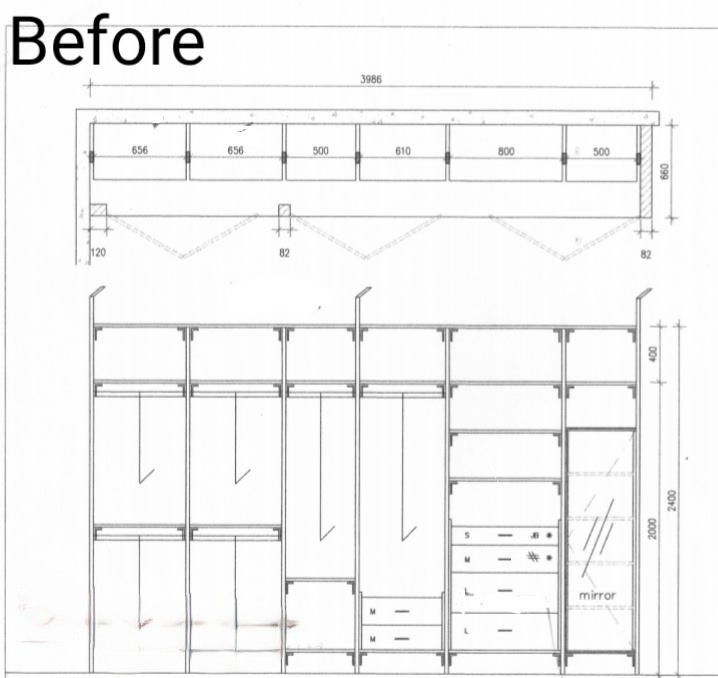
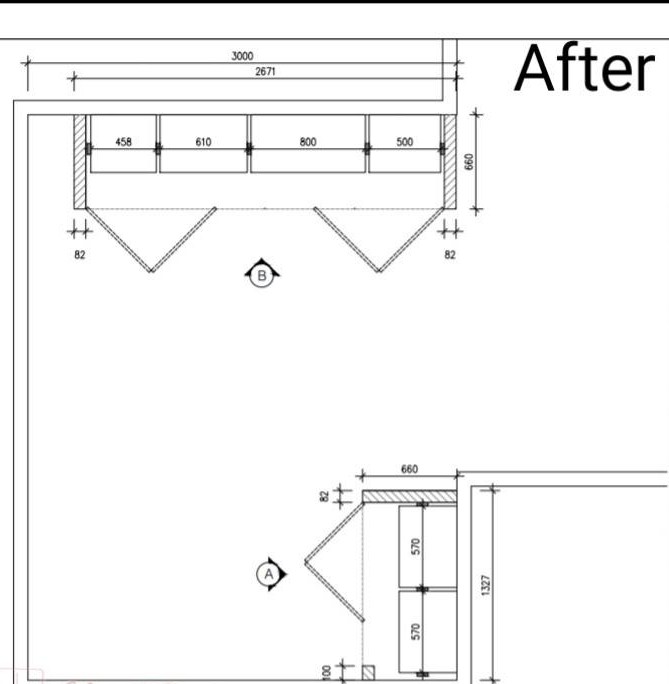
A 3m HausPole with bi-fold doors installed in 2015 was split into two separate systems when the client moved — each reconfigured to fit the new layout. Fraction of the cost of a replacement.
Before: layout in original homeAfter: reconfigured layout in new homeReinstalled Unit 1 — new master bedroomReinstalled Unit 2 — second wall, same room
Case Study 7 · New
DB Box Enclosure
Challenge
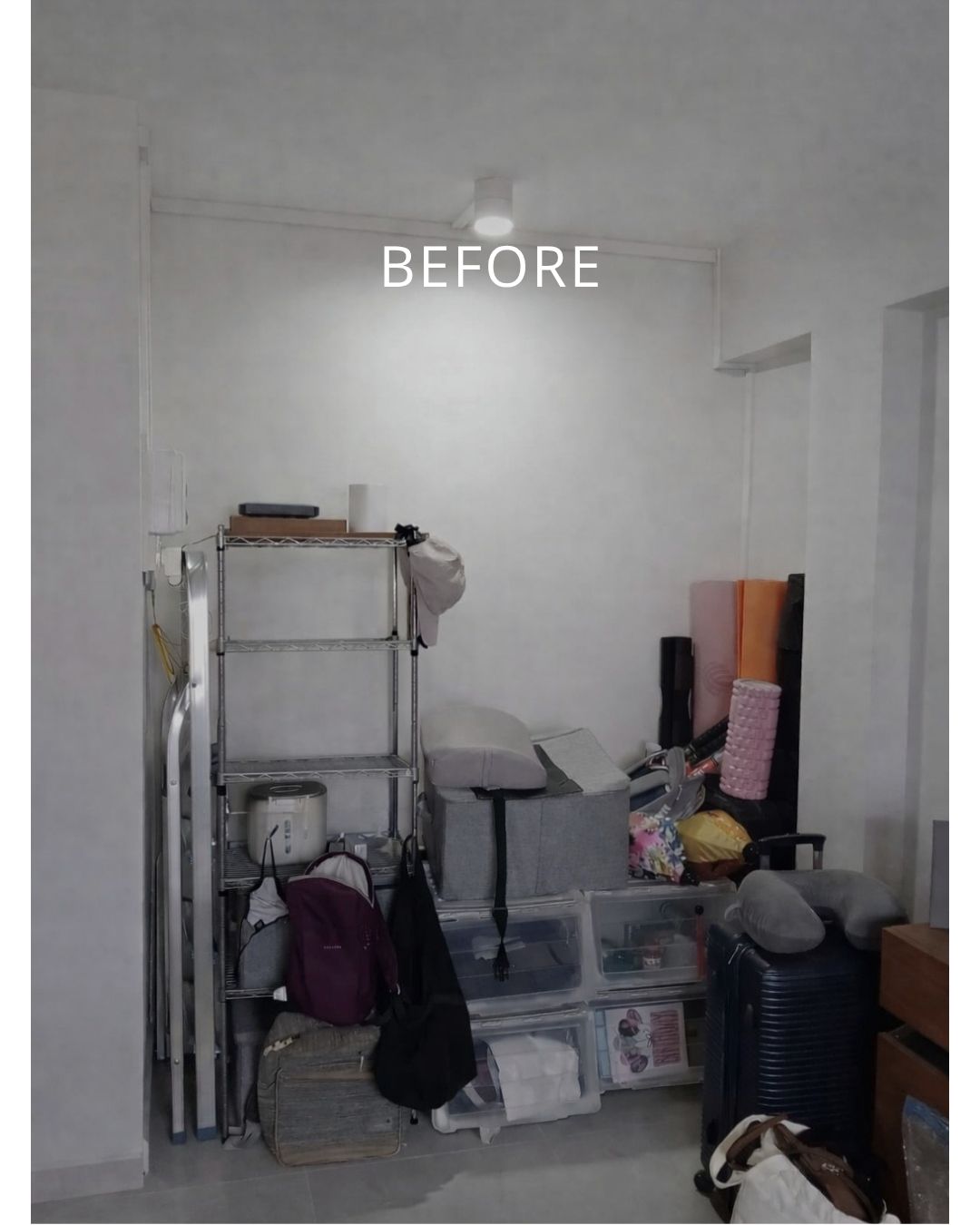
An Old Airport Road home had a recessed wall in the living room that had become a dumping ground — ladders, yoga mats, luggage — with a DB box and live power points embedded mid-wall. The standard carpentry approach would box everything up and permanently seal off access.
Solution
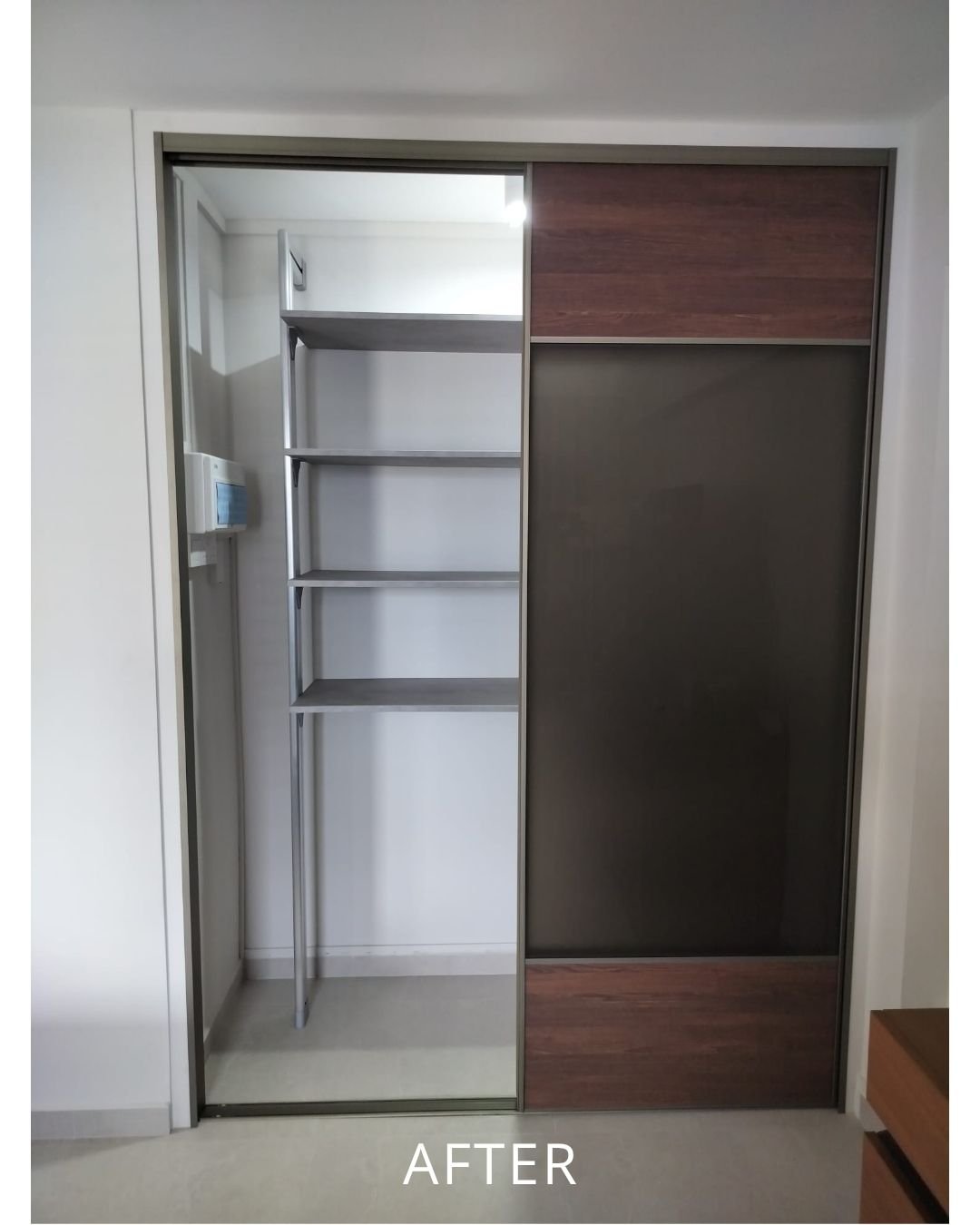
A HausPole system was designed around the household's actual storage needs — bulky items, daily-use access, and full clearance around the DB box and power points. Sliding doors enclose the entire recessed space for a clean finish. No hacking. No permanent boxing. DB box stays fully accessible.
No hackingDB box accessibleAdjustable anytime
Before: recessed wall doubling as storage dumping ground — DB box and power points mid-wallAfter: HausPole with shelving, drawers and mirror — DB box and power points fully accessible
Case Study 8 · New
Beam + Aircon Trunking on the Same Wall
Challenge
A Potong Pasir HDB flat had a structural beam projecting 100mm from one side of the wall, creating two surfaces at different depths. Aircon trunking ran the full length of that wall at 400mm above floor level. Traditional carpentry would require boxing the entire wall to a single flush face — wasting the full 100mm projection depth across every cabinet.
Solution
HausPole poles were positioned at both wall depths independently — the deeper side and the shallower beam side. The system maintains a flush front elevation throughout. Trunking runs cleanly under the lowest shelf line. No boxing on the beam side. No depth lost. From the front, it reads as one unified wardrobe.
No box-up on beam side100mm depth savedTrunking access retained
Before: recessed wall with beam projecting 100mm and aircon trunking running at floor levelAfter open: poles positioned at both wall depths, flush front elevation maintained throughout
After closed: sliding doors present a single unified face — no visible beam or trunking
Case Study 9 · New
Slanted Wall
Challenge
A Yishun Ring Road HDB owner needed to replace a carpentry wardrobe that had been destroyed by an aircon pipe leak — a hard lesson in why permanent built-ins have zero tolerance for water damage. One wall of the room was also slanted, which would require a carpentry box-up to compensate, creating a dead void behind the panels.
Solution
An L-shaped 4m HausPole in black was installed as an open-concept system across both walls. Poles follow the slanted wall profile directly — no fillers, no boxed voids, no wasted footprint. Every centimetre of the layout is used. And if the aircon ever leaks again, the system reconfigures rather than gets discarded.
Follows slanted wallZero dead voidsWater damage — reconfigure, not replace
Before: original carpentry wardrobe damaged by aircon pipe leak — slanted wall visible at cornerAfter: L-shaped 4m HausPole (black) — open concept, poles follow the slanted wall with no voids
Detail: drawer tower and hanging section — every centimetre of the layout used
Case Study 10 · New
Above Bay Window
Challenge
A condo owner in Tampines had a bay window ledge running the full width of the bedroom wall. The ledge couldn't be hacked (it's structural in most condos), and building a conventional wardrobe in front of it would mean losing the ledge entirely and ending up with a wardrobe that sat on the floor — eating into an already tight room.
Solution
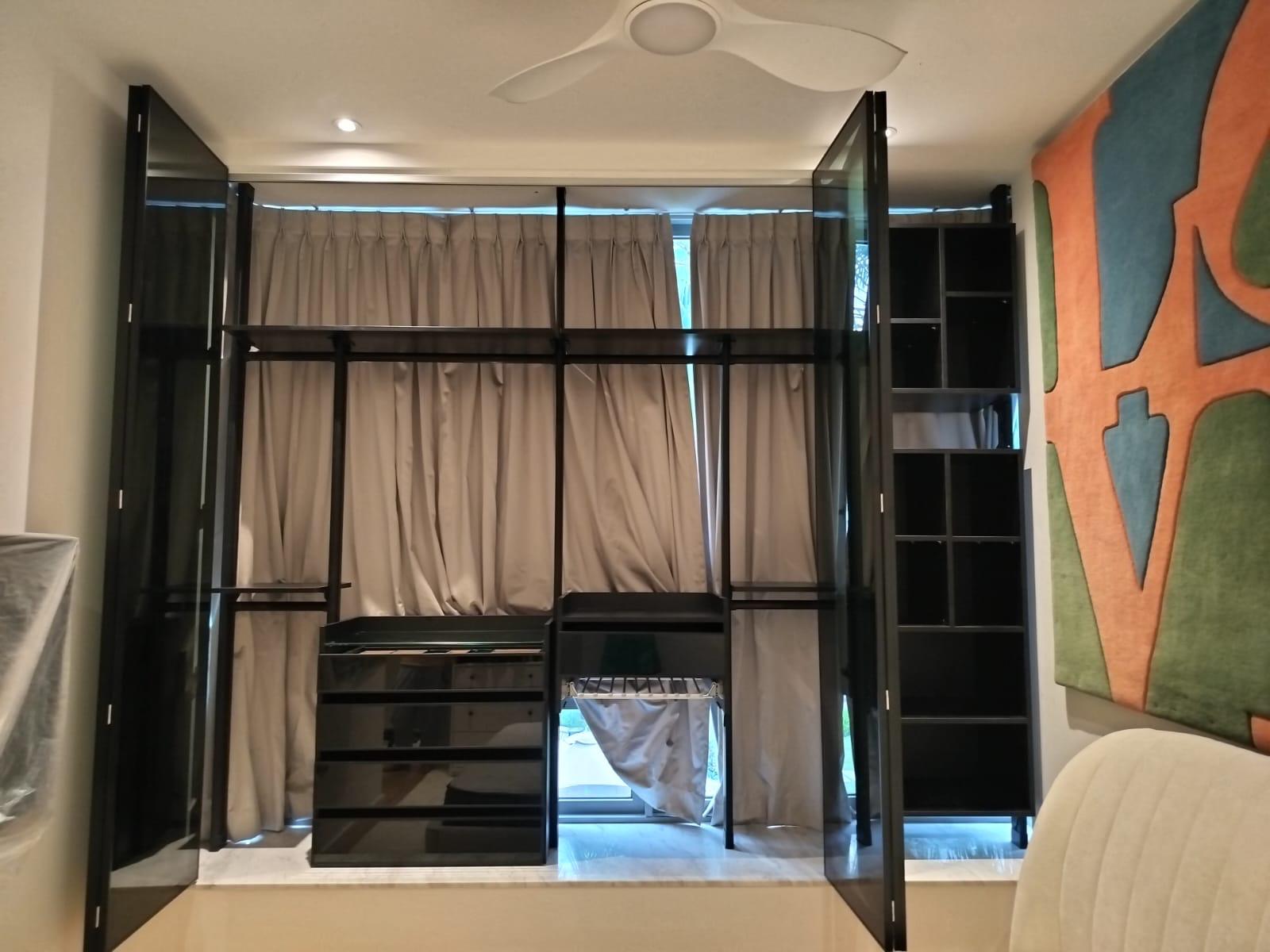
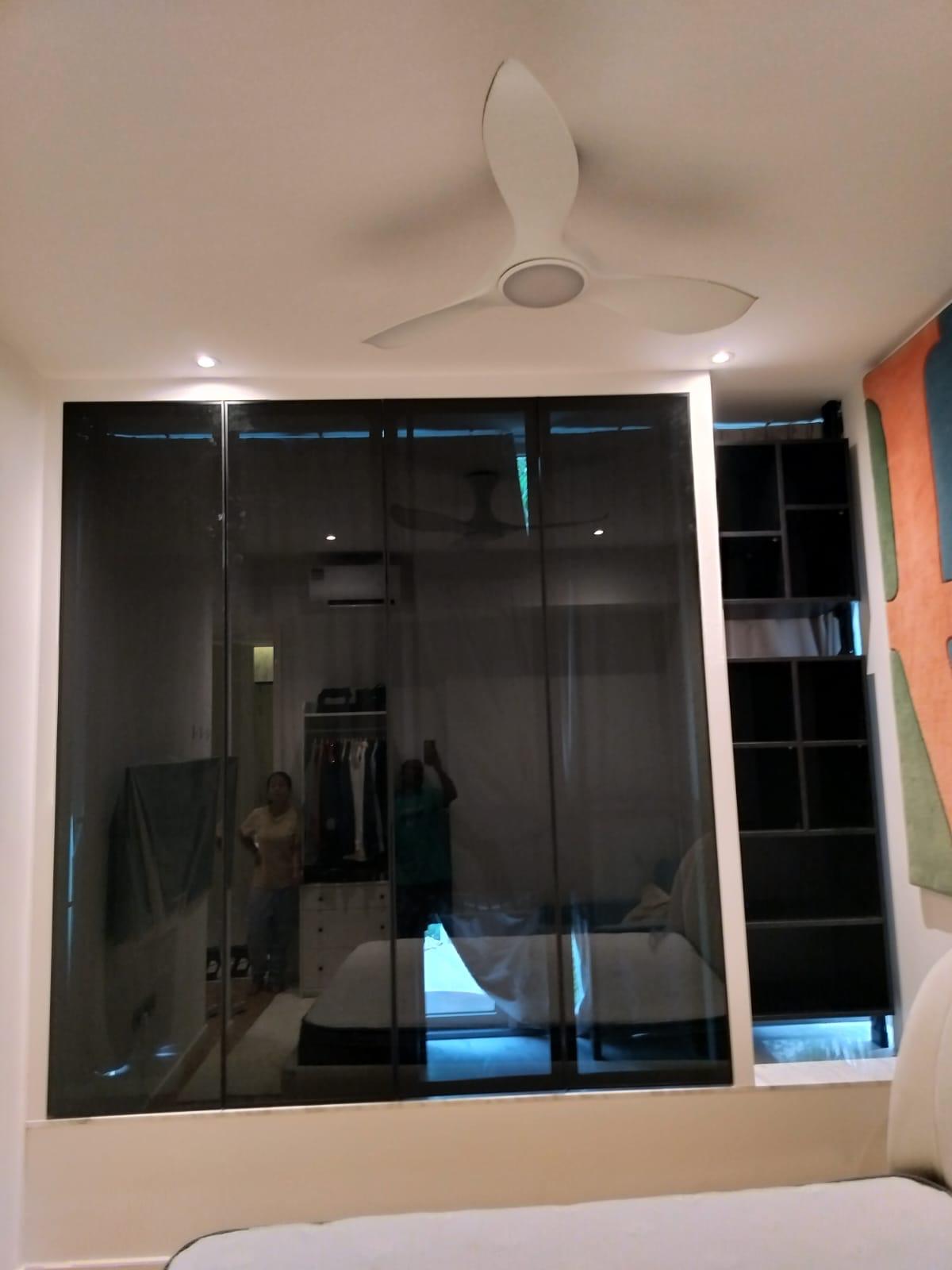
HausPole was configured to sit directly above the bay window ledge, treating the ledge top as the base platform. The 1.5–1.8m of height above the ledge is fully recovered as wardrobe space — hanging rails, shelves and drawer units. Sliding glass doors enclose everything flush to the wall. The ledge below stays fully usable. No hacking required.
No hackingLedge remains usable1.5–1.8m recovered above ledge
Open: full shelving and hanging rail configuration above the bay window ledgeClosed: sliding glass doors enclose the system flush to the wall
Case Study 11 · New
In Between Two Rooms
Challenge
A Tampines Street 45 HDB owner had taken over a unit where two common rooms had been hacked into one larger space. Rather than re-partition, they wanted a shared wardrobe that two occupants could access from either side — effectively serving as the divider between the two zones.
Solution
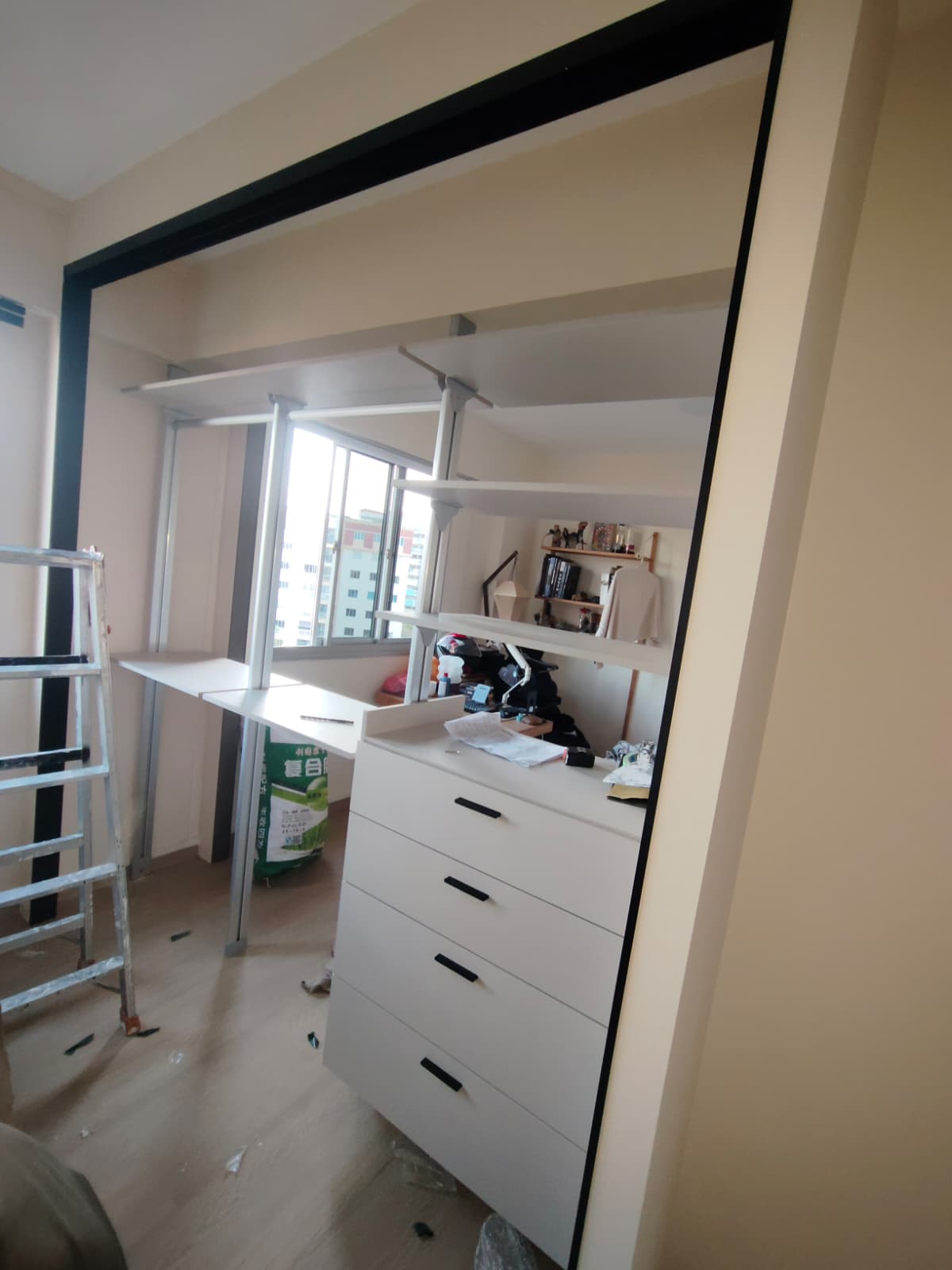
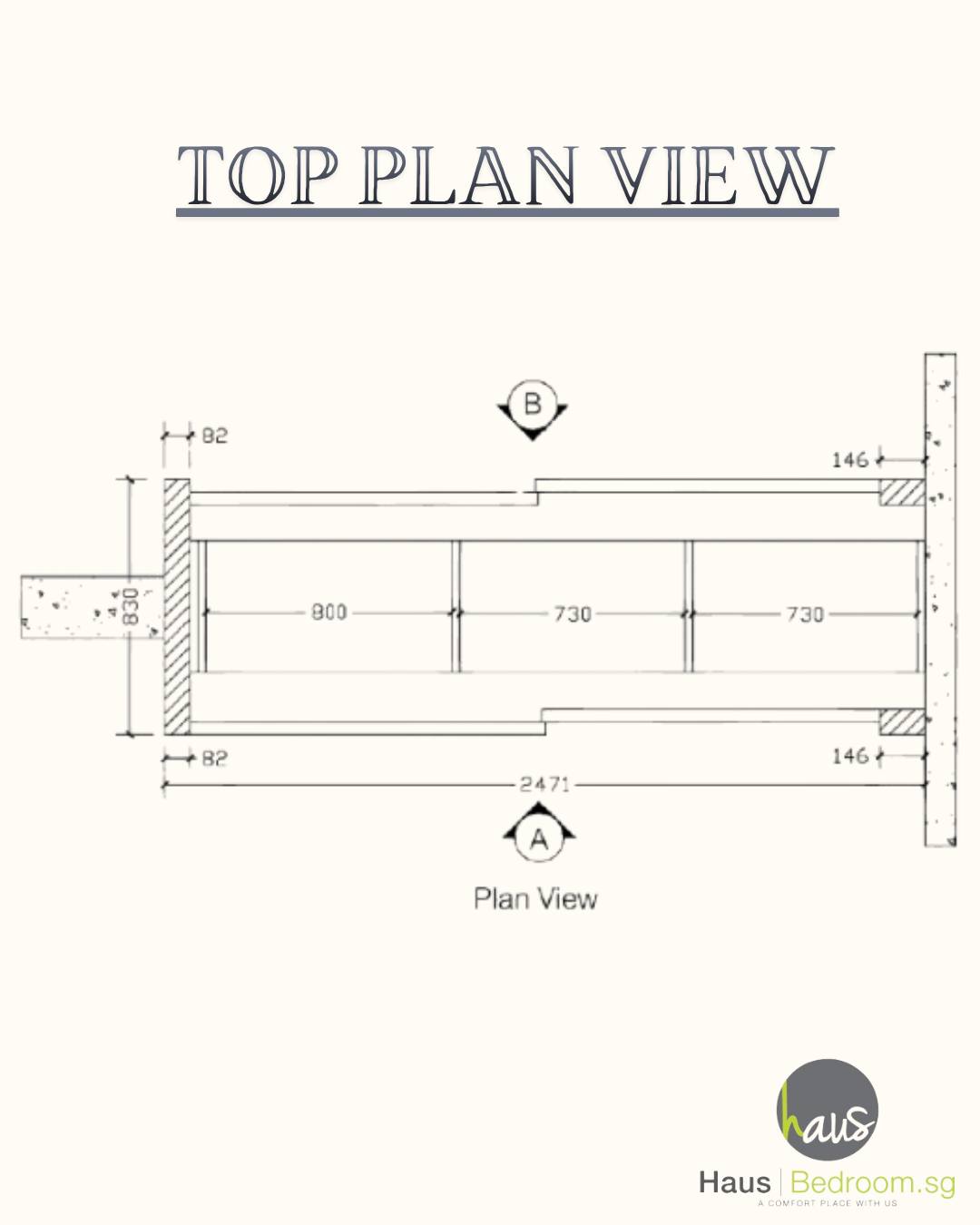
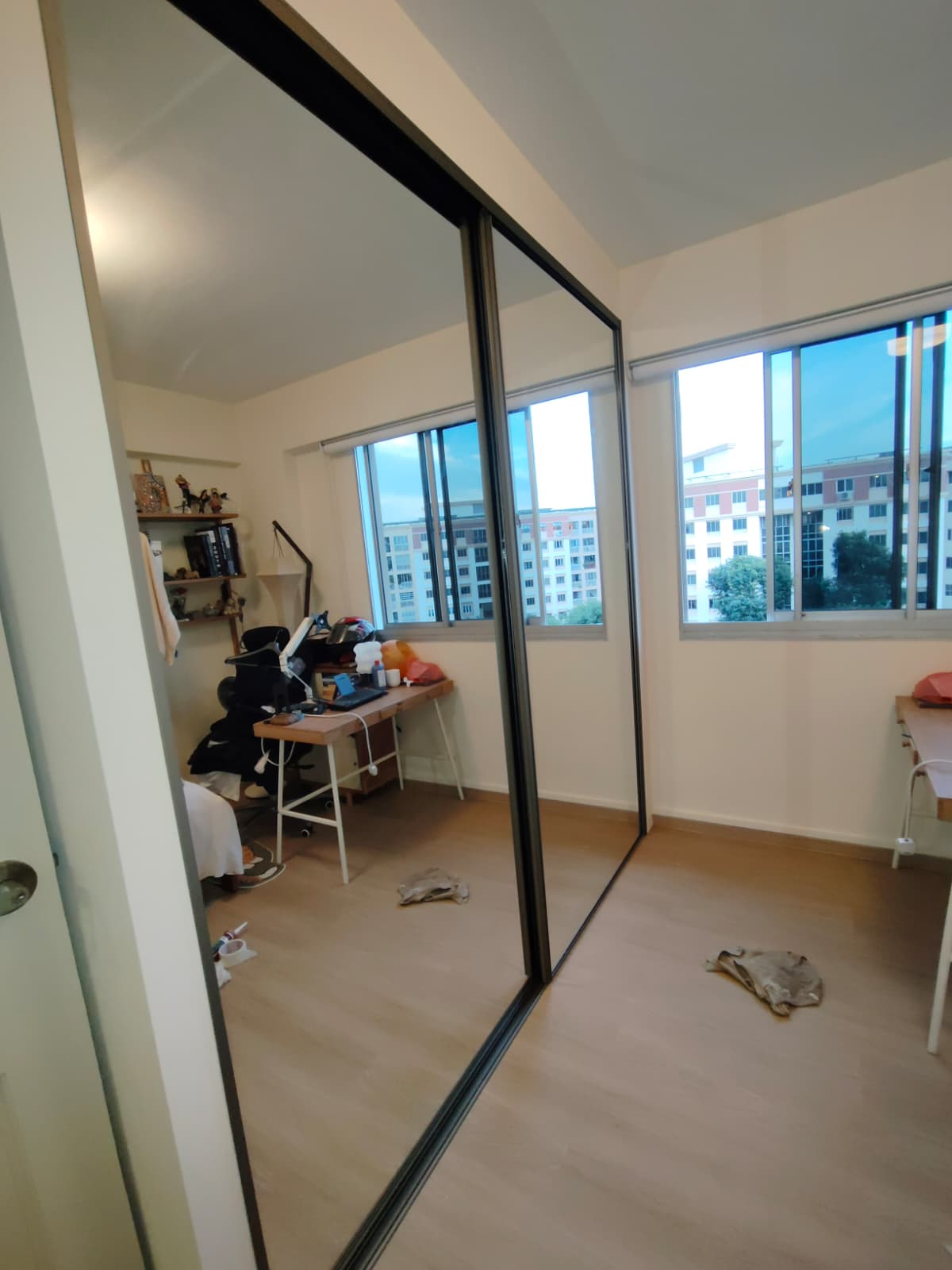
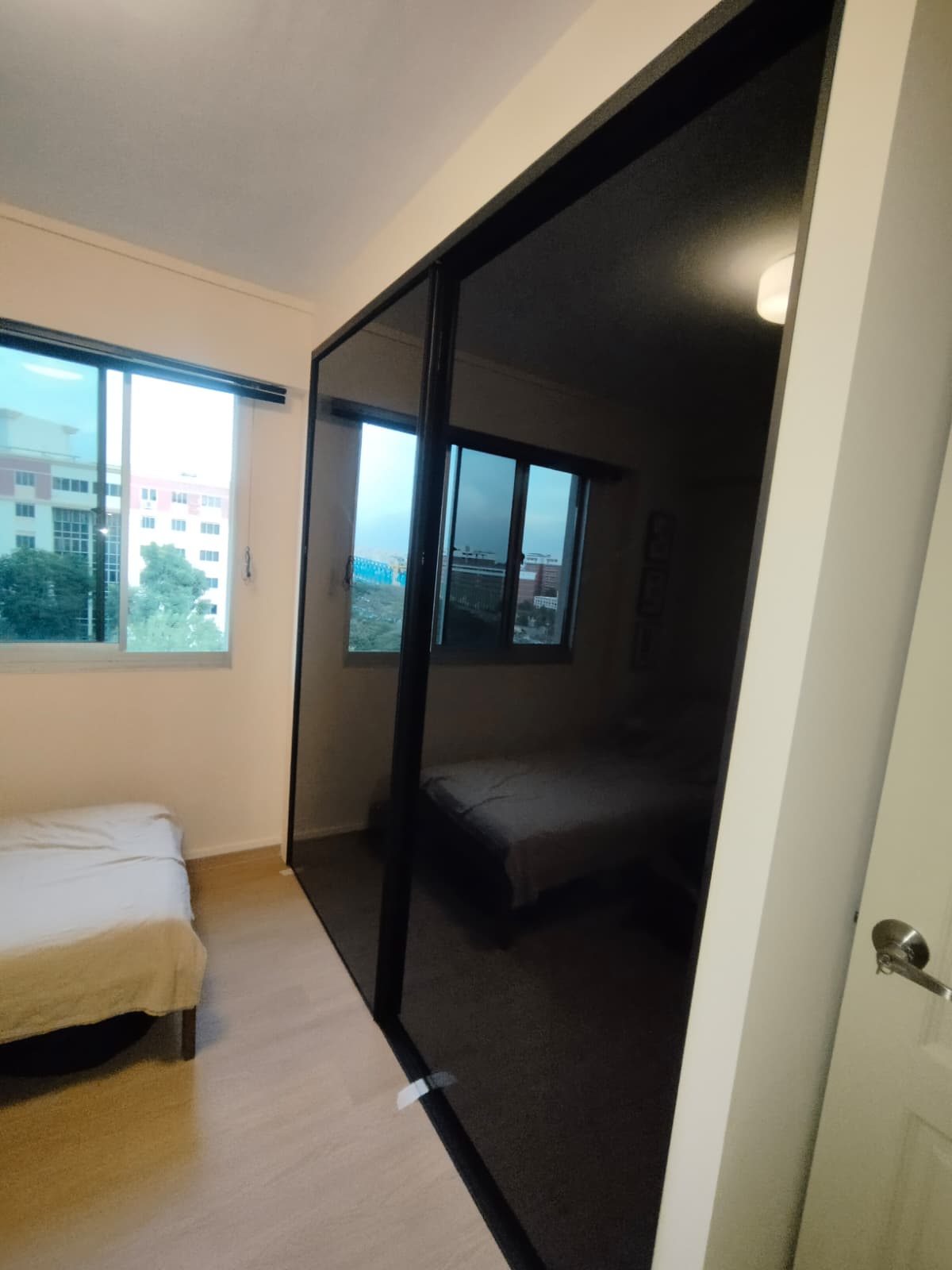
A HausPole system was installed as a two-sided wardrobe with two independent sets of sliding doors — one per side. Clear mirror glass faces one room; black opaque glass faces the other. Each side accesses shared storage from its own direction. One wardrobe. Two users. Clean visual division within a single open space.
Open interior: shared storage accessible from both sides — shelves, hanging rails and drawers2D layout: dual-access wardrobe positioned between both rooms
Side A: full-height clear mirror glass sliding doorsSide B: full-height black opaque glass sliding doors
HausPole vs. Other Wardrobe Types
Visual comparison: space usage, flexibility and adaptability across wardrobe types
Feature
HausPole
Built-In Carpentry
Free-Standing
Reconfigurable post-install
Yes
No
No
Vertical space maximised
Yes
Limited by panel height
Often wasted
Adapts to beams / trunking
Yes — no boxing needed
Requires boxing
Generic size only
Handles slanted walls
Yes — poles follow profile
Requires box-up void
No
Relocatable after MOP
Yes
Fixed permanently
Fragile in transit
Water damage resilience
Reconfigure, not replace
Discard and replace
Discard and replace
Installation time
1–2 days
5–10 days typical
Half day
DB box / power point access
Retained
Often sealed
N/A
Why Choose a Pole System Wardrobe?
Custom layout flexibilityReconfigure shelves, rails and drawers post-installation as your needs evolve.
Full vertical useHigh zones for seasonal items; daily-use zones within ergonomic reach.
Move it with youSplit, extend or relocate the system after MOP or tenancy change.
Fast installationMost installations complete in 1–2 days with minimal disruption.
Cost-effectiveUp to 15% less than equivalent traditional carpentry.
Obstacle-readyBeams, trunking, DB boxes, bay windows, slanted walls — all handled.
What to Look For in a Pole System
Anodised aluminium poles — corrosion-resistant, rated for Singapore humidity
Secure ceiling and floor anchoring — no wobble under load
Full accessory compatibility — drawers, trays, hanging rails, baskets
Ceiling height adaptability — 2.4m to 3m without modification
Modular extension — add width or height after initial install
Local after-sales support for reconfiguration and repairs
Why HausBedroom's HausPole Stands Out
HausPole was designed specifically for Singapore homes — not adapted from a European or flat-pack product. Every component is sized and tested for local HDB ceiling heights, wall materials and humidity conditions.
Tailored for HDB BTO, resale and condo layouts
2-year warranty on materials and workmanship
Relocatable modules that split or extend at any point
Cost savings of up to 15% vs. traditional carpentry
In-house team — same people who consult, install and support
Real installation: HausPole configured around both trunking and ceiling drop
Who Should Consider HausPole?
BTO owners needing fast, flexible storageResale HDB renovators with awkward wallsHomeowners with DB boxes on bedroom wallsCondo owners with bay window ledgesFamilies planning to move post-MOPTenants and expats needing relocatable solutionsAnyone recovering from a wardrobe damaged by water leaksMinimalists who value adaptability over permanent carpentry
Conclusion
Singapore homes throw up obstacles that traditional carpentry handles with one answer: box it up. Beams, trunking, DB boxes, slanted walls, bay windows — all get enclosed, and the wasted space gets built in permanently.
HausPole takes the opposite approach. The system follows your wall, works around your obstacles, and stays reconfigurable as your life changes. Faster to install, easier to move, and consistently less expensive than the carpentry alternative.
Eleven case studies. Eleven problems solved without a single chisel.
Plan Your Wardrobe with HausBedroom
Tell us your wall constraints — trunking, beams, bay window, DB box — and we'll design around them. Free consultation, no obligation.